3D Hologram Improved Understanding of COVID-19 Lung Lesions
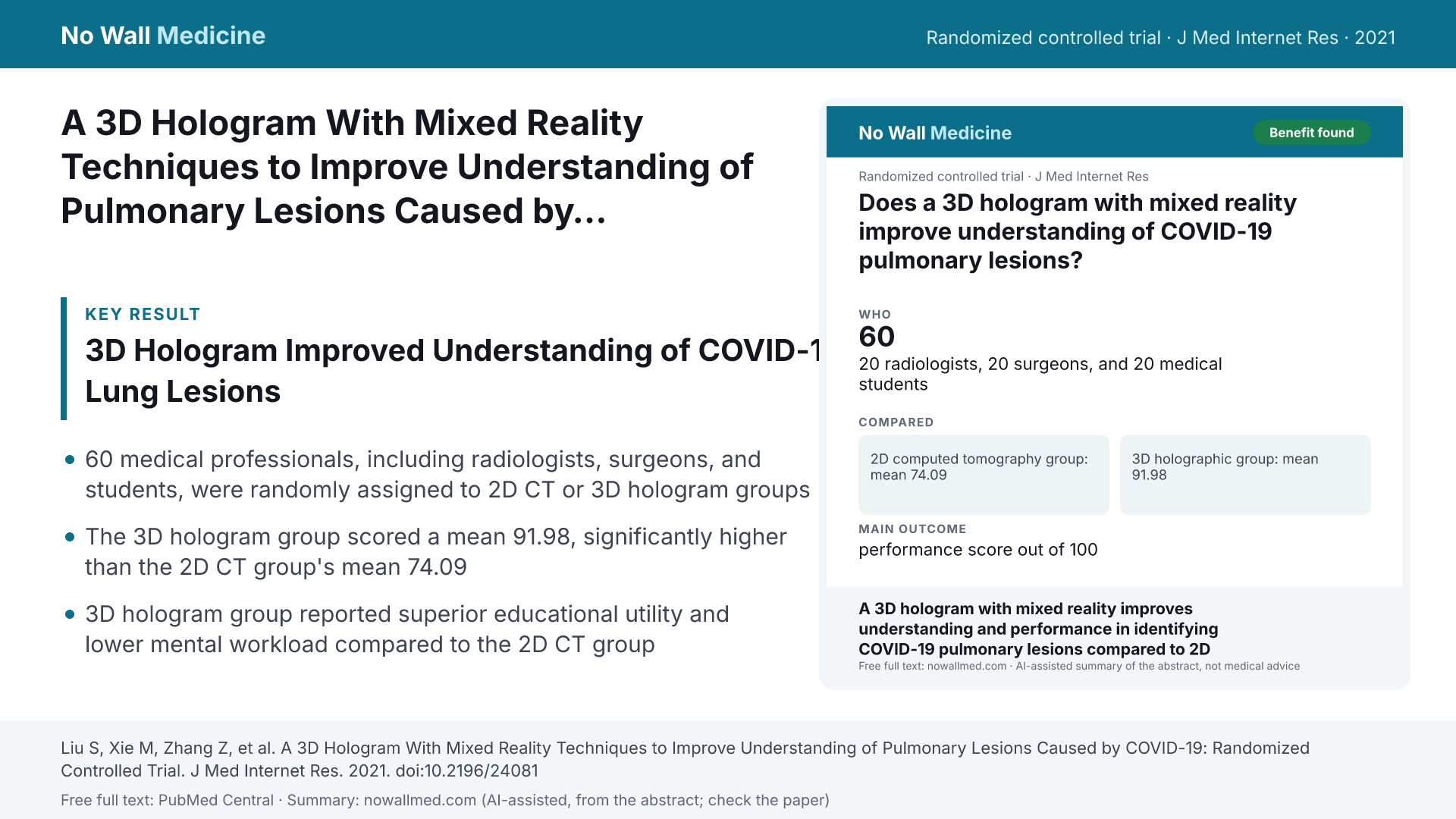
A 3D Hologram With Mixed Reality Techniques to Improve Understanding of Pulmonary Lesions Caused by COVID-19: Randomized Controlled Trial
Randomized controlled trialBenefit found
Does a 3D hologram with mixed reality improve understanding of COVID-19 pulmonary lesions?
Who
60
20 radiologists, 20 surgeons, and 20 medical students
Compared
2D computed tomography group: mean 74.09
3D holographic group: mean 91.98
Main outcome
performance score out of 100
Bottom line: A 3D hologram with mixed reality improves understanding and performance in identifying COVID-19 pulmonary lesions compared to 2D imaging.
J Med Internet Res · 2021-09-10Download image
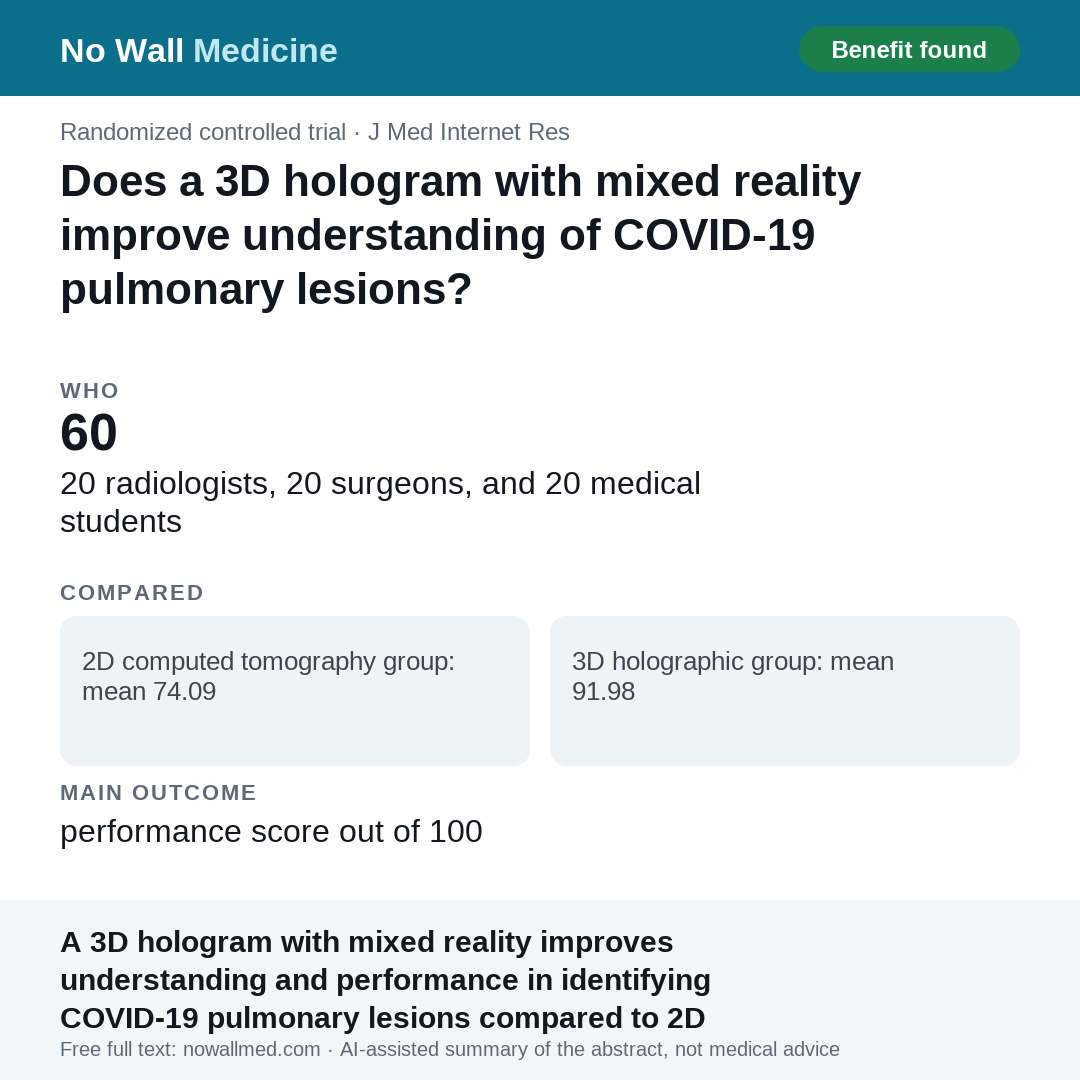
Clinical question: Does a 3D hologram with mixed reality improve understanding of COVID-19 pulmonary lesions?
Why it matters: The effect of COVID-19 on lungs is hard to determine with 2D computed tomography imaging alone
Key points
- 60 medical professionals, including radiologists, surgeons, and students, were randomly assigned to 2D CT or 3D hologram groups.
- The 3D hologram group scored a mean 91.98, significantly higher than the 2D CT group's mean 74.09.
- 3D hologram group reported superior educational utility and lower mental workload compared to the 2D CT group.
Headline and key points written with AI from the paper’s abstract, with every number checked against it. Read the paper before relying on them.
Was this summary helpful?
Subject terms
Cite this article
Liu S, Xie M, Zhang Z, Wu X, Gao F, Lu L. A 3D Hologram With Mixed Reality Techniques to Improve Understanding of Pulmonary Lesions Caused by COVID-19: Randomized Controlled Trial. J Med Internet Res. 2021. doi:10.2196/24081
Spotted a mistake? Suggest a correction
Top studies every Monday
The week’s key trials and guidelines in your specialties, plus any topics you follow. By email, free.
Get the weekly digest