Brief intervention by doctors did not significantly reduce inappropriate sedative use in older patients
A brief intervention to discontinue inappropriate z-hypnotics use by older patients in primary care: a randomised controlled trial
Double-blind, randomised controlled trialNo clear difference
Does a brief intervention by general practitioners reduce inappropriate z-hypnotic use in older patients?
Who
45
Older patients with inappropriate z-hypnotic use in primary care · Primary care
Compared
57%Brief intervention
71%Business as usual
Main outcome
Proportion of participants with no inappropriate z-hypnotic use
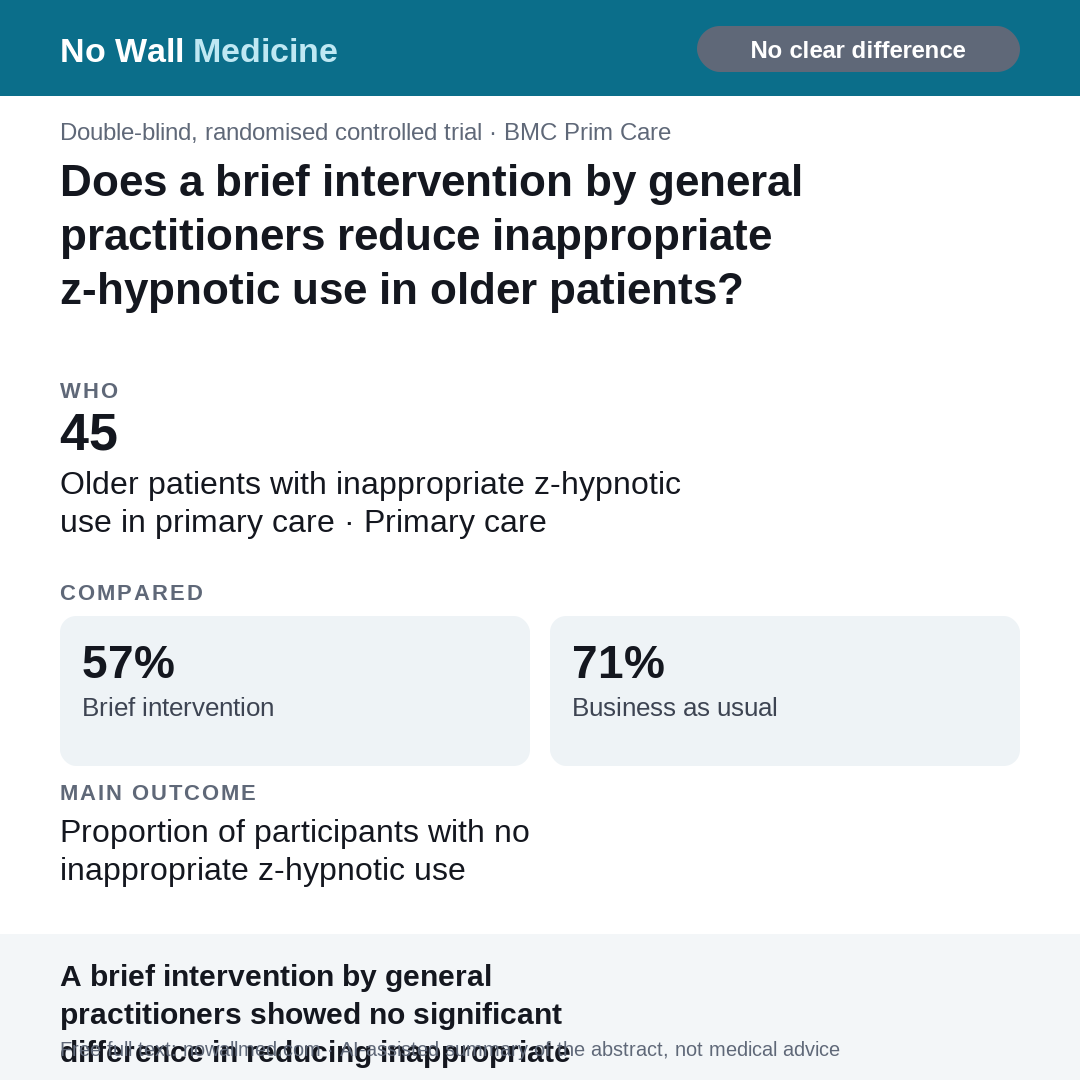
Bottom line: A brief intervention by general practitioners showed no significant difference in reducing inappropriate z-hypnotic use compared to business as usual.
Limitation: The study became underpowered.
BMC Prim Care · 2026-02-13Download image
Clinical question: Does a brief intervention by general practitioners reduce inappropriate z-hypnotic use in older patients?
Why it matters: Healthcare guidelines advise against long-term use of z-hypnotics in older patients, but inappropriate use remains common.
Key points
- Researchers studied 45 older patients to compare a brief intervention by general practitioners against business as usual for stopping inappropriate use of z-hypnotics, which are sedative medications.
- At six-week follow-up, there was no significant difference in inappropriate use between the intervention group (57%) and the control group (71%), with a p-value of 0.51.
- No significant differences were found between groups regarding cognitive function, pain intensity, or insomnia symptoms at the six-week follow-up.
Limitation the authors note: The authors stated that the study became underpowered.
Headline and key points written with AI from the paper’s abstract, with every number checked against it. Read the paper before relying on them.
Topics
Cite this article
Siddiqui TG, Simonsen TB, Bjelkarøy MT, Selle ML, Lundqvist C. A brief intervention to discontinue inappropriate z-hypnotics use by older patients in primary care: a randomised controlled trial. BMC Prim Care. 2026. doi:10.1186/s12875-026-03212-w
Spotted a mistake? Suggest a correction