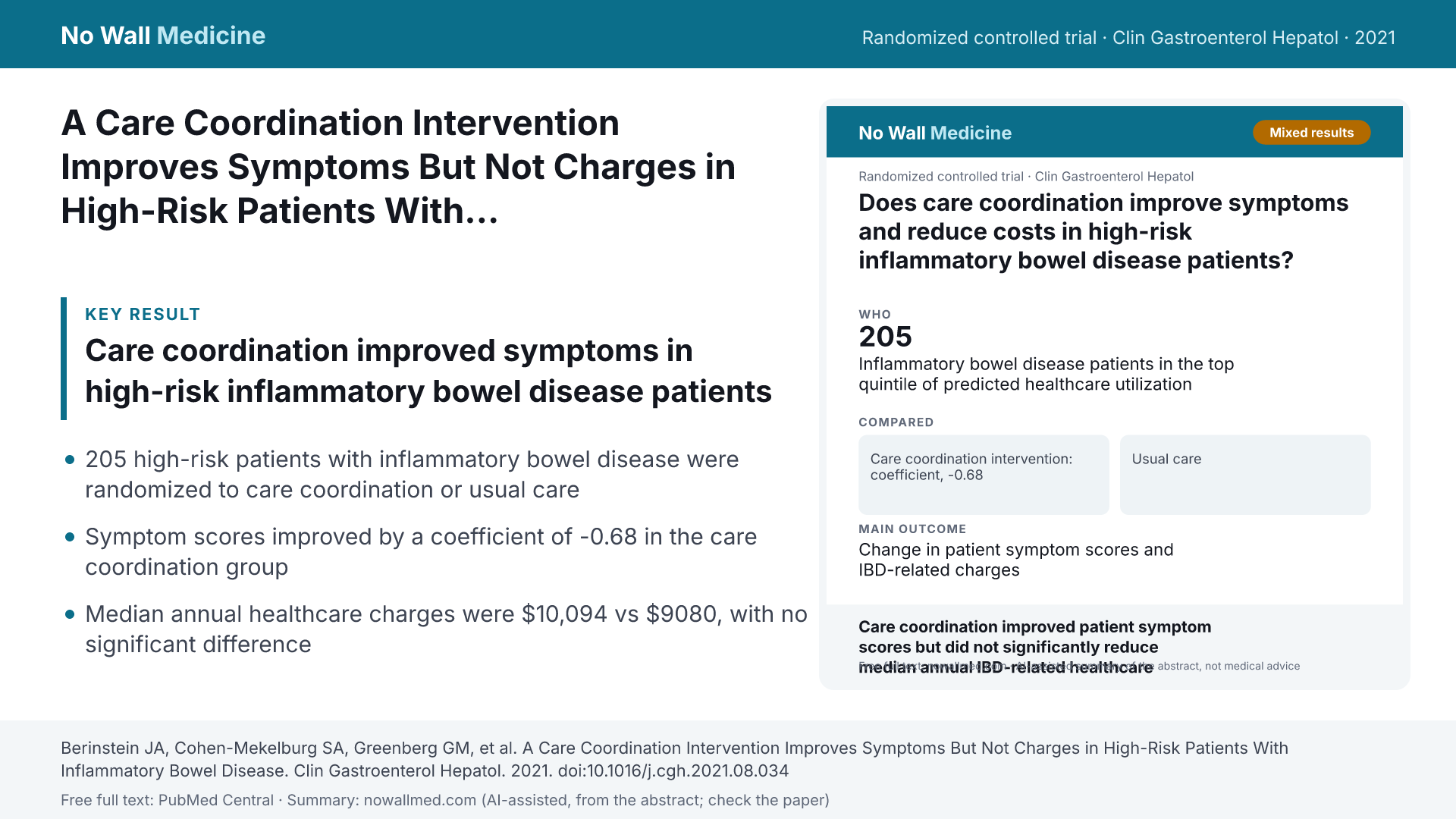
A Care Coordination Intervention Improves Symptoms But Not Charges in High-Risk Patients With Inflammatory Bowel Disease
Key result: Care coordination improved symptoms in high-risk inflammatory bowel disease patients
Randomized controlled trialMixed results
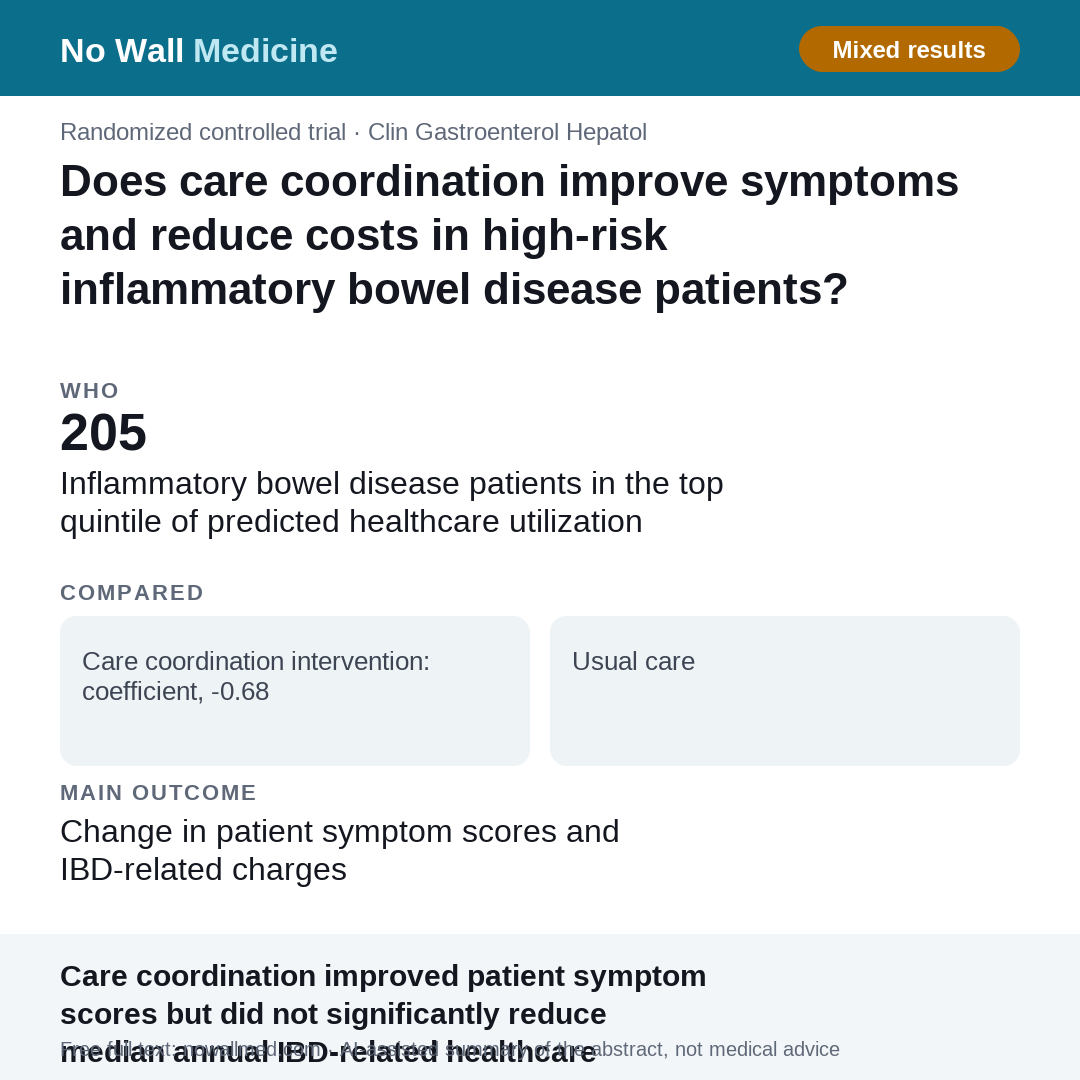
Does care coordination improve symptoms and reduce costs in high-risk inflammatory bowel disease patients?
Who
205
Inflammatory bowel disease patients in the top quintile of predicted healthcare utilization
Compared
Care coordination intervention: coefficient, -0.68
Usual care
Main outcome
Change in patient symptom scores and IBD-related charges
Result: coefficient, -0.68 (95% confidence interval, -1.18 to -0.18)
Bottom line: Care coordination improved patient symptom scores but did not significantly reduce median annual IBD-related healthcare charges.
Clin Gastroenterol Hepatol · 2021-08-28Download image
Key points
- 205 high-risk patients with inflammatory bowel disease were randomized to care coordination or usual care.
- Symptom scores improved by a coefficient of -0.68 in the care coordination group.
- Median annual healthcare charges were $10,094 vs $9080, with no significant difference.
Why it matters: Whether care coordination can improve symptoms and reduce costs in high-risk inflammatory bowel disease patients was unknown
Discussion prompts
- Would these patients look like yours? Who was left out?
- Is the main outcome one that matters to patients?
- Is the difference large enough to change what you do?
Cite: Berinstein JA, Cohen-Mekelburg SA, Greenberg GM, Wray D, Berry SK, Saini SD. A Care Coordination Intervention Improves Symptoms But Not Charges in High-Risk Patients With Inflammatory Bowel Disease. Clin Gastroenterol Hepatol. 2021. doi:10.1016/j.cgh.2021.08.034
Free full text: PubMed Central · Summary and visual abstract: nowallmed.com/a/a-care-coordination-intervention-improves-symptoms-but-not-charges-in-1mkhtlt/ (AI-assisted from the abstract; check the paper before relying on it).