Glial cell DNA methylation changes are linked to biological aging and Alzheimer's disease
A cell-type-resolved meta-analysis reveals glial DNA methylation changes associated with aging and Alzheimer's disease
Meta-analysis of 13 cohortsMixed results
What are the glial cell DNA methylation changes associated with aging and Alzheimer's disease?
Who
Archived DNA methylation data from 13 cohorts · Prefrontal cortex and entorhinal cortex
Compared
Aging
Alzheimer's disease
Main outcome
Glial cell DNA methylation signatures
Bottom line: Glial-specific methylation patterns are associated with epigenetic aging and Alzheimer's disease in specific brain regions.
Alzheimers Dement · 2026-09-24Download image
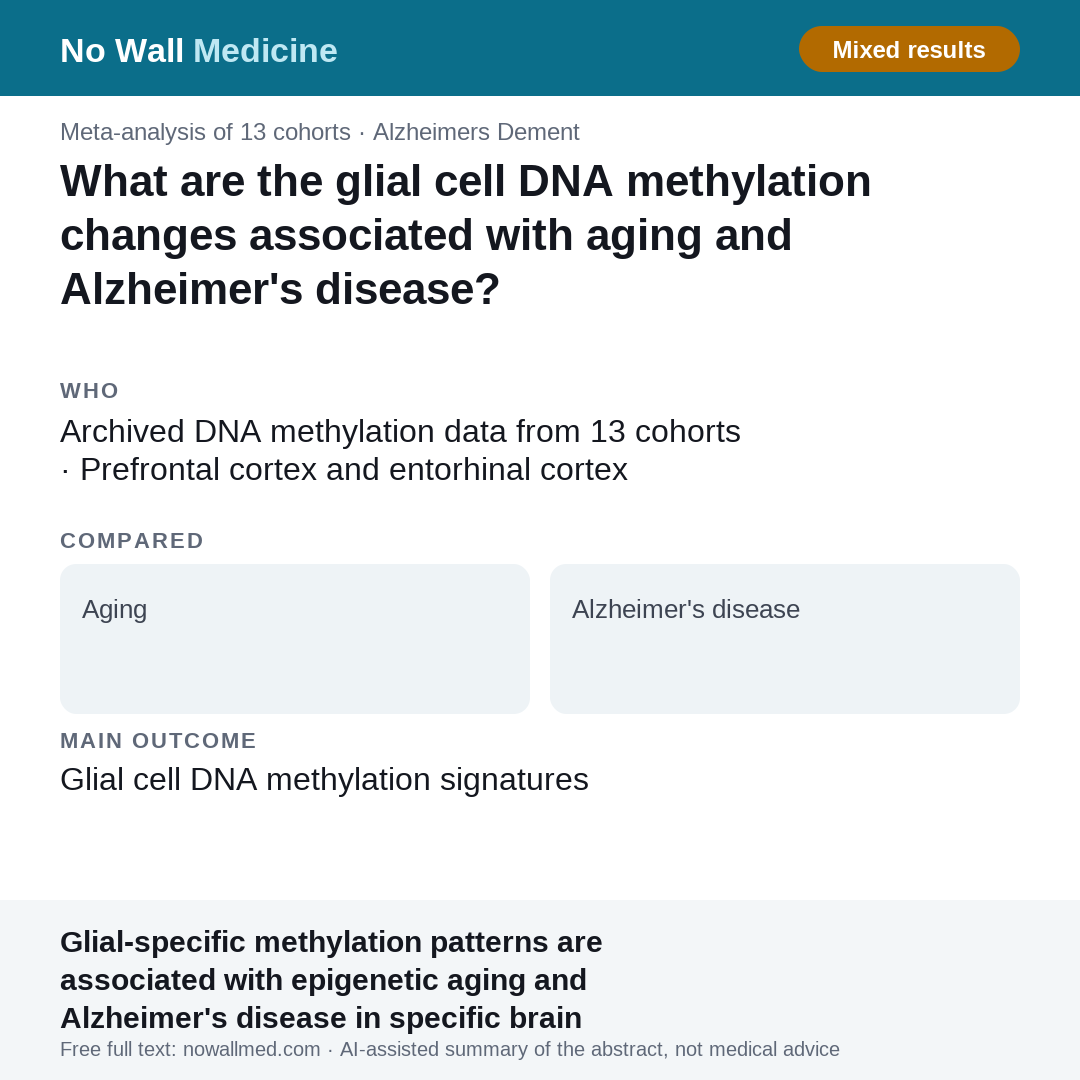
Clinical question: What are the glial cell DNA methylation changes associated with aging and Alzheimer's disease?
Why it matters: The role of the methylome, or chemical modifications to DNA, in glial cells like astrocytes and oligodendrocytes during aging and Alzheimer's disease is unclear.
Key points
- Researchers analyzed archived DNA methylation data across 13 cohorts using computer modeling to identify specific signatures in non-neuronal cells.
- Astrocytes in the prefrontal cortex showed age-related methylation changes, while oligodendrocytes in the entorhinal cortex showed signatures associated with Alzheimer's disease.
- The study found that Alzheimer's disease amplifies the age-related effects of DNA methylation signatures within oligodendrocytes.
Headline and key points written with AI from the paper’s abstract, with every number checked against it. Read the paper before relying on them.
Topics
Spotted a mistake? Suggest a correction
More in Neurology
Automated model correctly identified 68 out of 90 seizure events as epileptic or nonepileptic
Video-Based Automated Seizure Classification Using Multimodal Large Language Models
Neuroimmune interactions contribute to migraine headache generation
Cortical and meningeal neuroimmune interactions contribute to the generation of migraine headaches
Pain and depressive symptoms linked to lower cognitive performance in older adults
Joint trajectories of pain and depressive symptoms in relation to repeated cognitive performance: a harmonized longitudinal analysis of four aging cohorts
AD biomarker-positive participants with DLB had faster cognitive decline than biomarker-negative ones
Biomarker-informed differences in treatment-associated cognitive decline in dementia with Lewy bodies