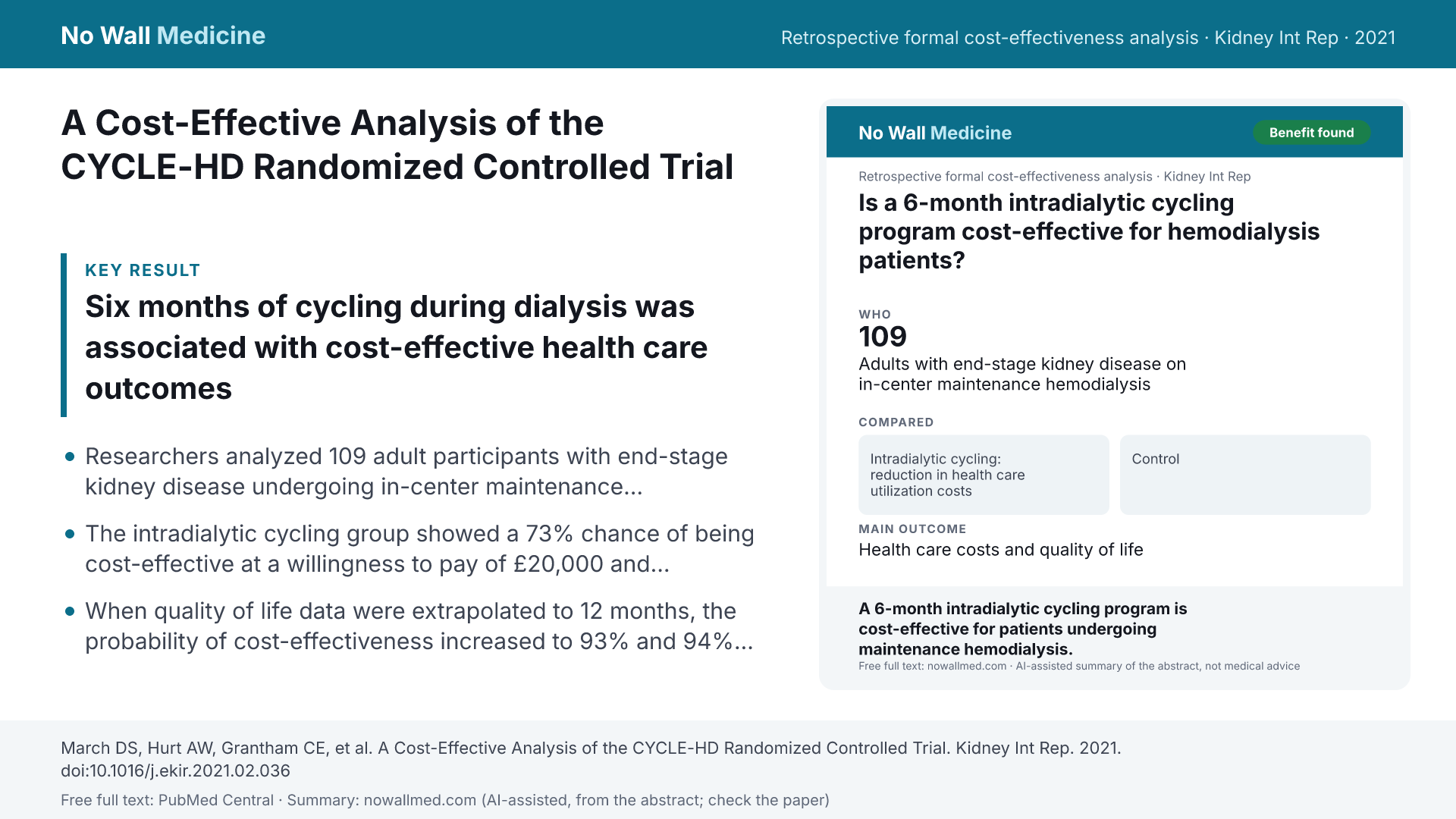
A Cost-Effective Analysis of the CYCLE-HD Randomized Controlled Trial
Key result: Six months of cycling during dialysis was associated with cost-effective health care outcomes
Retrospective formal cost-effectiveness analysisBenefit found
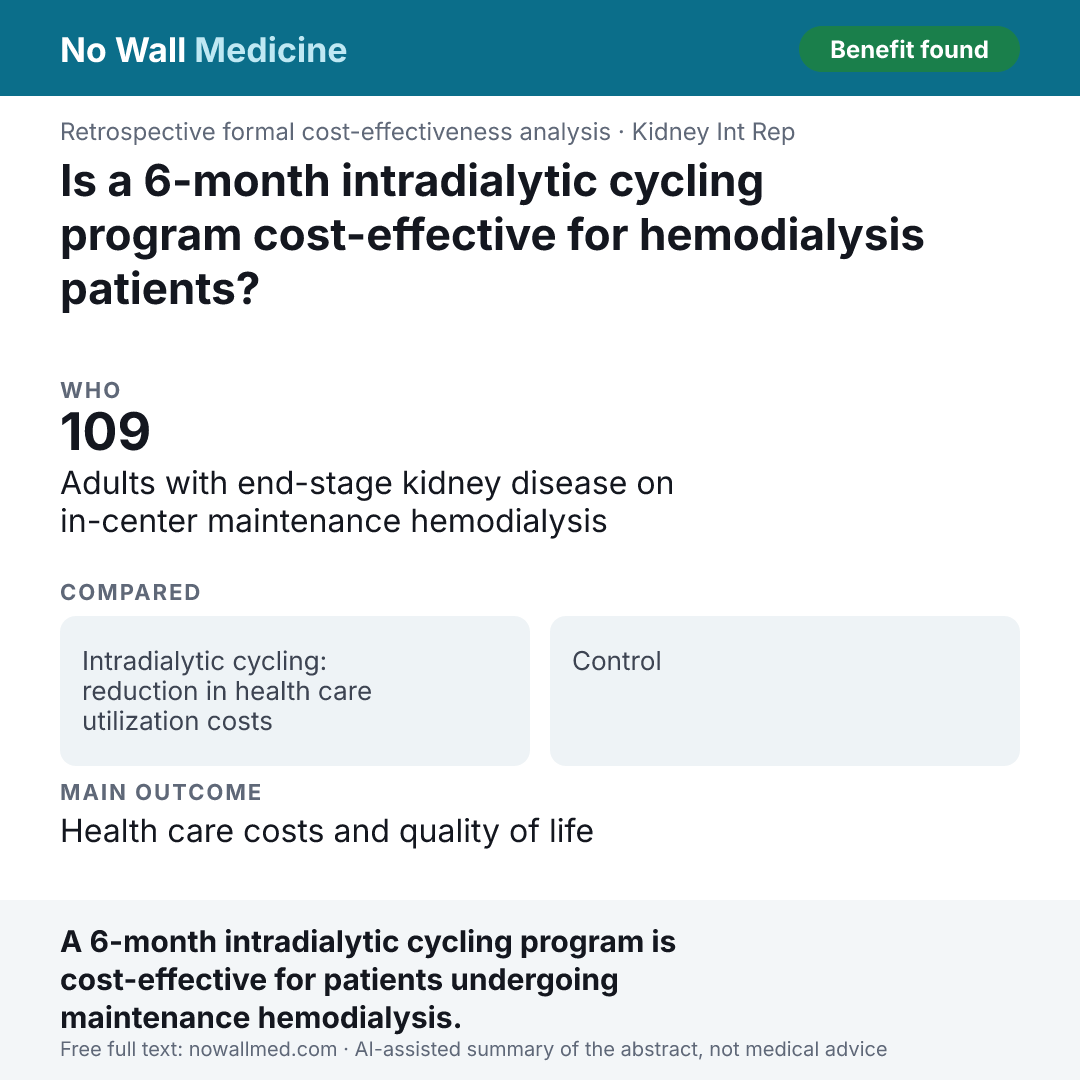
Is a 6-month intradialytic cycling program cost-effective for hemodialysis patients?
Who
109
Adults with end-stage kidney disease on in-center maintenance hemodialysis
Compared
Intradialytic cycling: reduction in health care utilization costs
Control
Main outcome
Health care costs and quality of life
Result: 73% chance of being cost-effective at £20,000 and £30,000 per quality-adjusted life year
Bottom line: A 6-month intradialytic cycling program is cost-effective for patients undergoing maintenance hemodialysis.
Kidney Int Rep · 2021-04-08 · Save PNG
Key points
- Researchers analyzed 109 adult participants with end-stage kidney disease undergoing in-center maintenance hemodialysis, comparing a 6-month intradialytic cycling program to a control group.
- The intradialytic cycling group showed a 73% chance of being cost-effective at a willingness to pay of £20,000 and £30,000 per quality-adjusted life year gained.
- When quality of life data were extrapolated to 12 months, the probability of cost-effectiveness increased to 93% and 94% at the same willingness to pay levels.
Discussion prompts
- Would these patients look like yours? Who was left out?
- Is the main outcome one that matters to patients?
- Is the difference large enough to change what you do?
Cite: March DS, Hurt AW, Grantham CE, et al. A Cost-Effective Analysis of the CYCLE-HD Randomized Controlled Trial. Kidney Int Rep. 2021. doi:10.1016/j.ekir.2021.02.036
Free full text: PubMed Central · Summary and visual abstract: nowallmed.com/a/a-cost-effective-analysis-of-the-cycle-hd-randomized-controlled-6oy88i/ (AI-assisted from the abstract; check the paper before relying on it).