Couple-based diabetes intervention showed no significant difference in blood sugar control compared to individual care
A Couple-Based Intervention for Chinese Older Adults With Type 2 Diabetes: A Randomized Clinical Trial
Multicenter randomized clinical trialNo clear difference
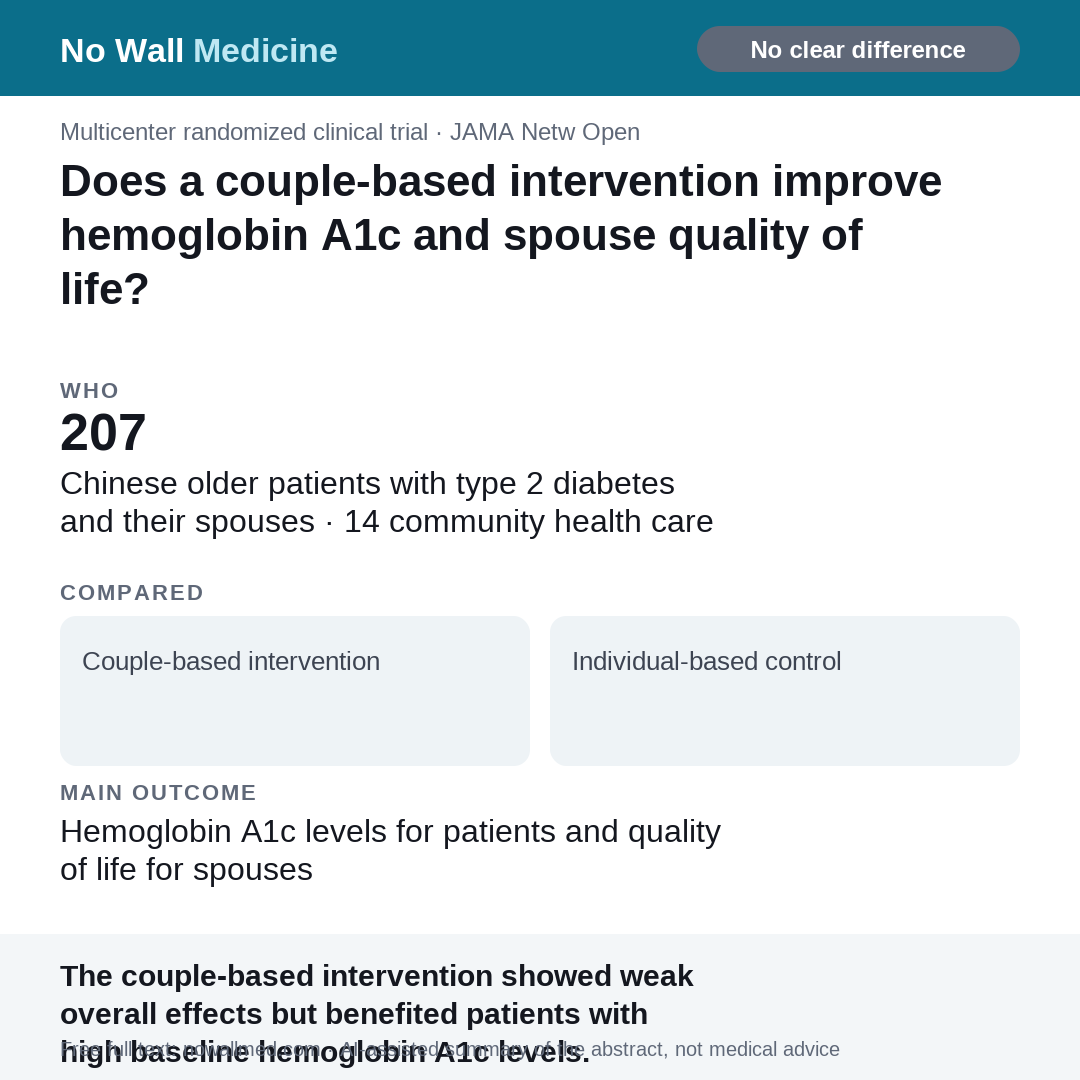
Does a couple-based intervention improve hemoglobin A1c and spouse quality of life?
Who
207
Chinese older patients with type 2 diabetes and their spouses · 14 community health care centers in Guangzhou, China
Compared
Couple-based intervention
Individual-based control
Main outcome
Hemoglobin A1c levels for patients and quality of life for spouses
Result: β = -0.08 (95% CI, -0.57 to 0.42)
Bottom line: The couple-based intervention showed weak overall effects but benefited patients with high baseline hemoglobin A1c levels.
JAMA Netw Open · 2025-01-02Download image
Clinical question: Does a couple-based intervention improve hemoglobin A1c and spouse quality of life?
Why it matters: The effectiveness of involving spouses in diabetes care for diverse populations and clinical settings is unclear.
Key points
- Researchers studied 207 couples in China, comparing a couple-based intervention to an individual-based control for patients with type 2 diabetes aged 55 years or older.
- There were no significant differences between groups in hemoglobin A1c levels, which measures average blood sugar, or in spouse quality of life at 12 months.
- A subgroup analysis showed that patients with high baseline hemoglobin A1c levels of 8.0% or higher had a statistically significant difference in blood sugar decreases.
Headline and key points written with AI from the paper’s abstract, with every number checked against it. Read the paper before relying on them.
Was this summary helpful?
Subject terms
Cite this article
Yang C, Zhi J, Xu Y, Fan X, Wu X, Xu DR. A Couple-Based Intervention for Chinese Older Adults With Type 2 Diabetes: A Randomized Clinical Trial. JAMA Netw Open. 2025. doi:10.1001/jamanetworkopen.2024.52168
Spotted a mistake? Suggest a correction
Top studies every Monday
The week’s key trials and guidelines in your specialties, plus any topics you follow. By email, free.
Get the weekly digest