Culturally adapted problem-solving therapy did not significantly reduce self-harm repetition in Pakistani adults
A culturally adapted manual-assisted problem-solving intervention (CMAP) for adults with a history of self-harm: a multi-centre randomised controlled trial
Rater-blind, multicenter randomised controlled trialMixed results
Is a culturally adapted manual-assisted problem-solving intervention effective for adults with self-harm history?
Who
901
Adults presenting after a self-harm episode · Five cities in Pakistan
Compared
17CMAP plus enhanced treatment as usual
23Enhanced treatment as usual
Main outcome
Repetition of self-harm at 12-month post-randomisation
Result: p = 0.407
Bottom line: The intervention showed significant improvements in depression and quality of life, but did not significantly reduce self-harm repetition.
Limitation: The improvement in both arms is explained by the established role of enhanced care in suicide prevention.
BMC Med · 2023-07-31Download image
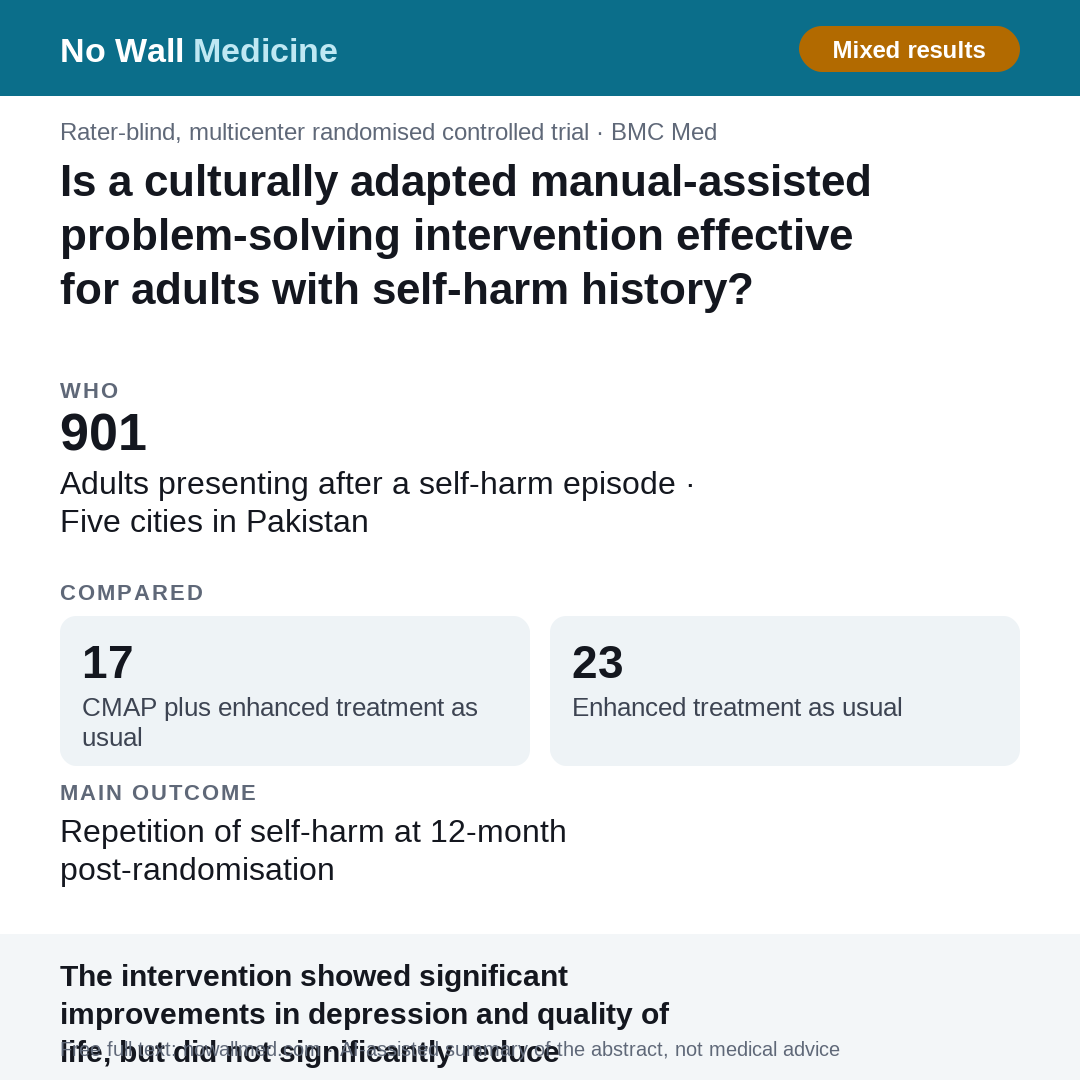
Clinical question: Is a culturally adapted manual-assisted problem-solving intervention effective for adults with self-harm history?
Why it matters: Culturally appropriate strategies for preventing self-harm and suicide are needed, but evidence from low- and middle-income countries is very limited.
Key points
- Researchers randomized 901 patients in Pakistan to either a culturally adapted manual-assisted problem-solving intervention or enhanced treatment as usual.
- At 12 months, the number of self-harm repetitions was 17 in the intervention group and 23 in the usual care group, but the difference was not statistically significant (p=0.407).
- The intervention group showed statistically significant reductions in suicidal ideation, depression, and hopelessness, as well as improvements in quality of life and coping resources.
Headline and key points written with AI from the paper’s abstract, with every number checked against it. Read the paper before relying on them.
Was this summary helpful?
Subject terms
Cite this article
Husain N, Kiran T, Chaudhry IB, Williams C, Emsley R, Arshad U. A culturally adapted manual-assisted problem-solving intervention (CMAP) for adults with a history of self-harm: a multi-centre randomised controlled trial. BMC Med. 2023. doi:10.1186/s12916-023-02983-8
Spotted a mistake? Suggest a correction
Top studies every Monday
The week’s key trials and guidelines in your specialties, plus any topics you follow. By email, free.
Get the weekly digest