Surfactant-based wound dressings showed no difference in tissue salvage compared to bacitracin for burns
A double-blind, randomized, controlled trial evaluating a surfactant-based wound dressing for tissue salvage and reduction in surgical burden of partial-thickness burns (EARLY)
Double-blind, randomized controlled studyMixed results
Does surfactant-based wound dressing improve tissue salvage and reduce surgical burden in partial-thickness burns?
Who
26
Patients with paired, non-contiguous partial thickness burn wounds
Compared
6.1%Water-soluble surfactant dressings (95% CI -9.7, 21.9)
Bacitracin: 26.9% vs 38.5% wound conversion
Main outcome
Percent of salvaged tissue and patient reported pain
Result: -0.61 (95% CI -1.04, -0.17)
Bottom line: Surfactant dressings did not improve tissue salvage but significantly reduced patient reported pain during wound care.
Burns · 2025-05-04Download image
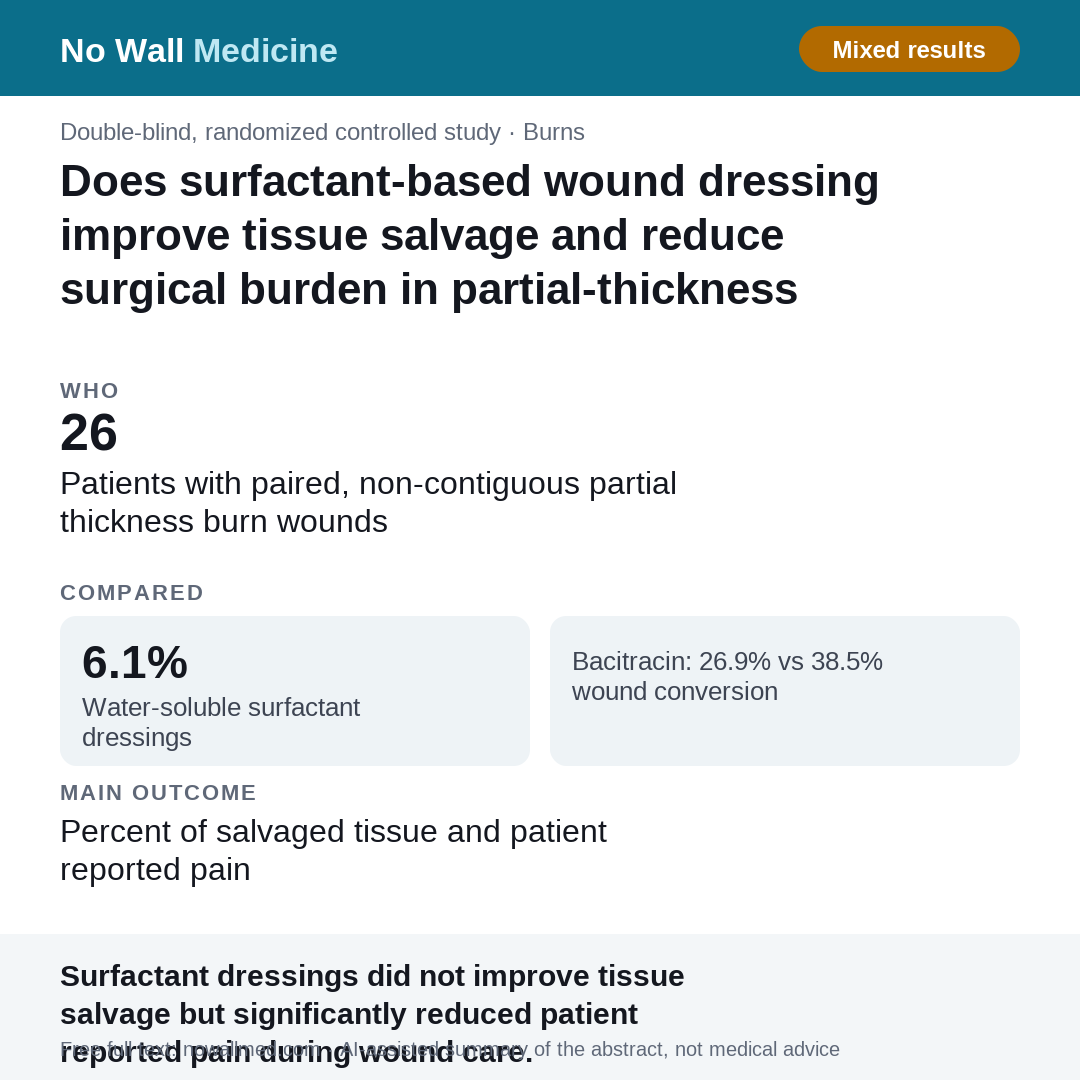
Clinical question: Does surfactant-based wound dressing improve tissue salvage and reduce surgical burden in partial-thickness burns?
Why it matters: It is unclear if early application of water-soluble surfactant dressings can reduce wound conversion or the surgical burden for partial-thickness burns.
Key points
- Researchers conducted a randomized trial with 26 patients comparing water-soluble surfactant dressings to bacitracin for paired, non-contiguous partial-thickness burn wounds.
- The surfactant dressing was not different from bacitracin in the percentage of salvaged tissue, which was 6.1% (95% CI -9.7, 21.9), p = 0.4363.
- The surfactant dressing was associated with a significant difference in patient-reported pain compared to bacitracin, with a value of -0.61 (95% CI -1.04, -0.17), p = 0.0065.
Headline and key points written with AI from the paper’s abstract, with every number checked against it. Read the paper before relying on them.
Topics
Cite this article
Hill DM. A double-blind, randomized, controlled trial evaluating a surfactant-based wound dressing for tissue salvage and reduction in surgical burden of partial-thickness burns (EARLY). Burns. 2025. doi:10.1016/j.burns.2025.107529
Spotted a mistake? Suggest a correction
Top studies every Monday
The week’s key trials and guidelines in your specialties, by email. Free.
Get the weekly digest