Monlunabant did not significantly change urine albumin levels in adults with diabetic kidney disease
A double-blind, randomized, placebo-controlled, phase 2 trial examined the efficacy and safety of monlunabant in adults with diabetic kidney disease
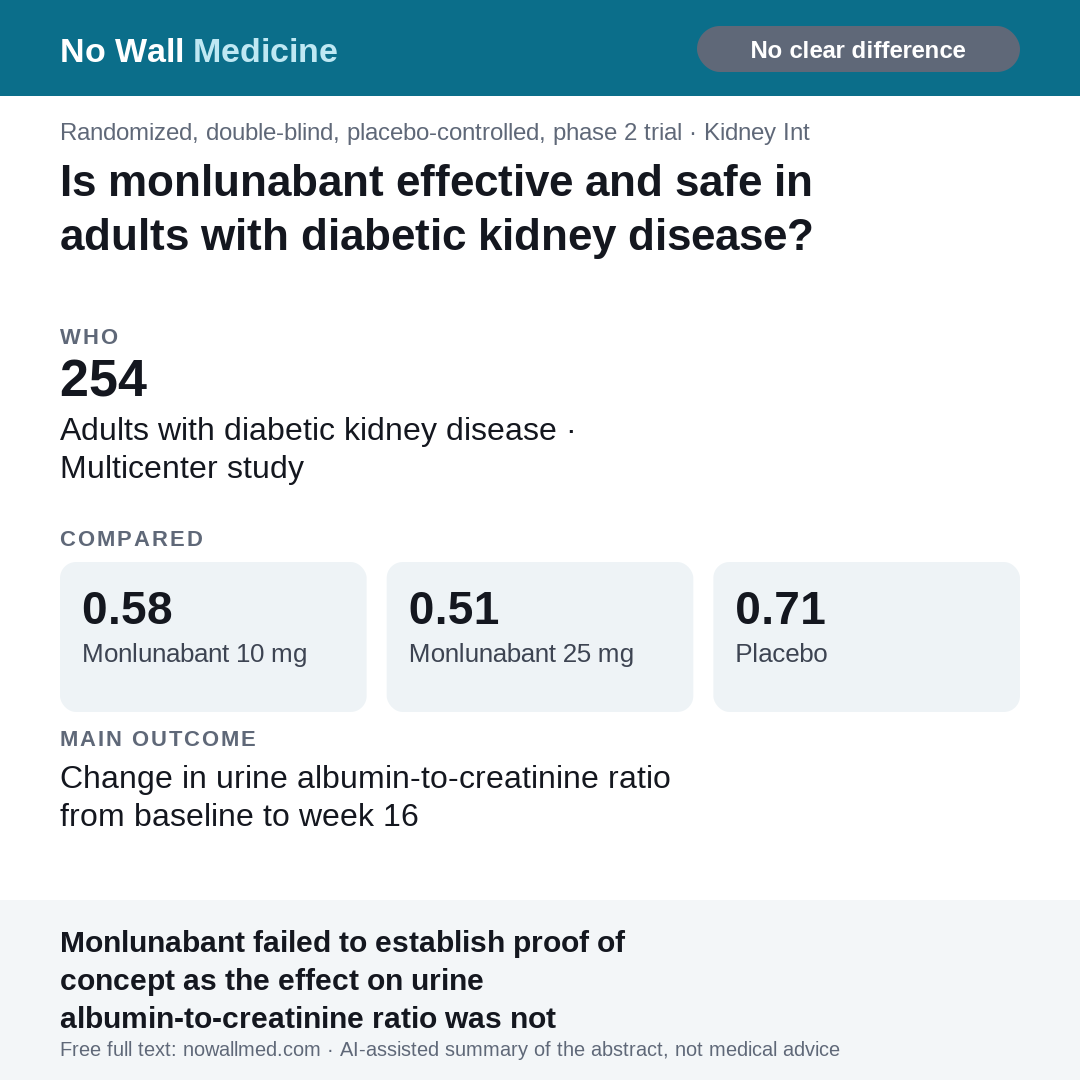
Randomized, double-blind, placebo-controlled, phase 2 trialNo clear difference
Is monlunabant effective and safe in adults with diabetic kidney disease?
Who
254
Adults with diabetic kidney disease · Multicenter study
Compared
0.58Monlunabant 10 mg
0.51Monlunabant 25 mg
0.71Placebo
Main outcome
Change in urine albumin-to-creatinine ratio from baseline to week 16
Result: estimated treatment ratio 0.72 (95% confidence interval 0.46 to 1.14)
Bottom line: Monlunabant failed to establish proof of concept as the effect on urine albumin-to-creatinine ratio was not significantly different from placebo.
Limitation: Greater than anticipated variability and a large placebo response affect interpretation.
Kidney Int · 2026-03-20Download image
Clinical question: Is monlunabant effective and safe in adults with diabetic kidney disease?
Why it matters: New therapeutic options are needed for diabetic kidney disease, which is a significant complication of diabetes.
Key points
- Researchers studied 254 adults with diabetic kidney disease, comparing daily doses of 10 mg or 25 mg of monlunabant against a placebo for 16 weeks.
- The 25 mg dose did not show a statistically significant difference in the urine albumin-to-creatinine ratio compared to placebo, with an estimated treatment ratio of 0.72.
- Common side effects included mild to moderate gastrointestinal issues like nausea, vomiting, and diarrhea, and more participants withdrew from the study as the dose increased.
Headline and key points written with AI from the paper’s abstract, with every number checked against it. Read the paper before relying on them.
Topics
Spotted a mistake? Suggest a correction