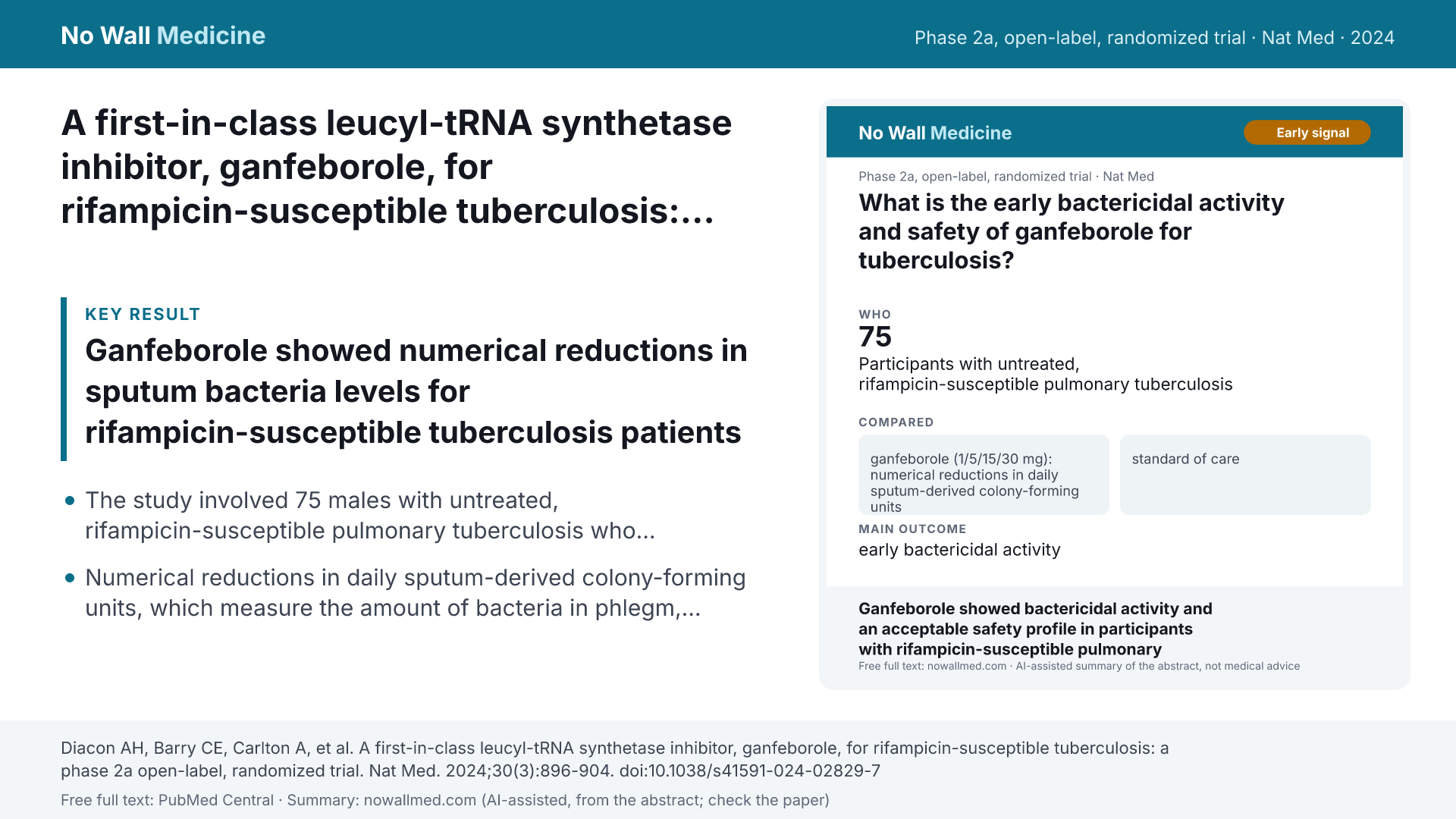
Ganfeborole showed numerical reductions in sputum bacteria levels for rifampicin-susceptible tuberculosis patients
A first-in-class leucyl-tRNA synthetase inhibitor, ganfeborole, for rifampicin-susceptible tuberculosis: a phase 2a open-label, randomized trial
Phase 2a, open-label, randomized trialEarly signal
What is the early bactericidal activity and safety of ganfeborole for tuberculosis?
Who
75
Participants with untreated, rifampicin-susceptible pulmonary tuberculosis · single-center
Compared
ganfeborole (1/5/15/30 mg): numerical reductions in daily sputum-derived colony-forming units
standard of care
Main outcome
early bactericidal activity
Bottom line: Ganfeborole showed bactericidal activity and an acceptable safety profile in participants with rifampicin-susceptible pulmonary tuberculosis.
Nat Med · 2024-02-16 · Save PNG
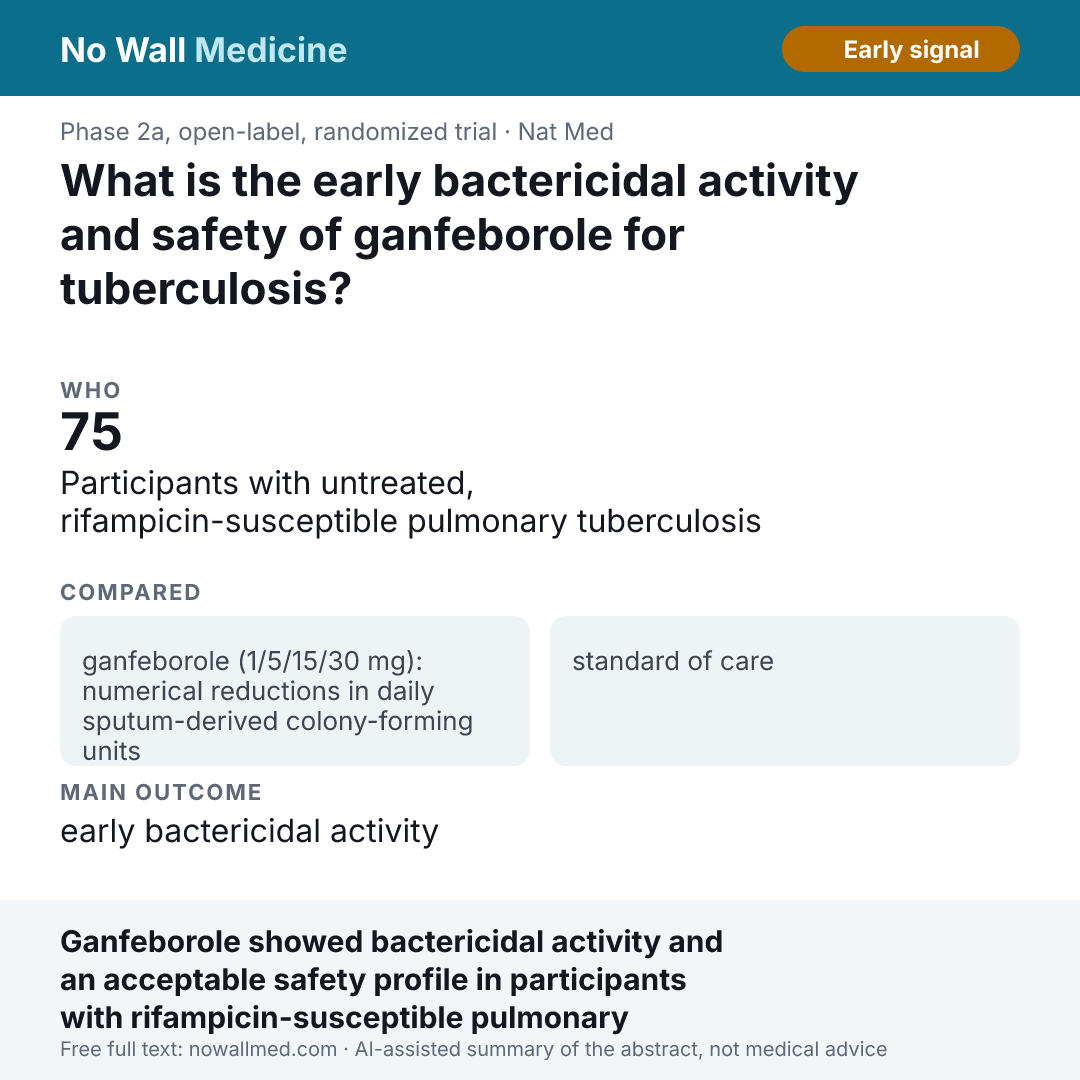
Clinical question: What is the early bactericidal activity and safety of ganfeborole for tuberculosis?
Why it matters: New tuberculosis treatments are needed to address drug resistance, lengthy treatment duration, and adverse reactions of available agents.
Key points
- The study involved 75 males with untreated, rifampicin-susceptible pulmonary tuberculosis who received either ganfeborole at doses of 1, 5, 15, or 30 mg or standard of care for 14 days.
- Numerical reductions in daily sputum-derived colony-forming units, which measure the amount of bacteria in phlegm, were observed in participants receiving 5, 15, and 30 mg doses but not the 1 mg dose.
- Adverse event rates were comparable across all groups, and all reported events were grade 1 or 2.
Limitation the authors note: This was a single-center, open-label, phase 2a randomized trial.
Headline and key points written with AI from the paper’s abstract, with every number checked against it. Read the paper before relying on them.
Was this summary helpful?
Subject terms
Headline, design, result, key points, caveat and citation as plain text.
Cite this article
Diacon AH, Barry CE, Carlton A, et al. A first-in-class leucyl-tRNA synthetase inhibitor, ganfeborole, for rifampicin-susceptible tuberculosis: a phase 2a open-label, randomized trial. Nat Med. 2024;30(3):896-904. doi:10.1038/s41591-024-02829-7
Spotted a mistake? Suggest a correction