Genetic variants are linked to how quickly solutes move during peritoneal dialysis in kidney failure patients
A genome-wide association study suggests correlations of common genetic variants with peritoneal solute transfer rates in patients with kidney failure receiving peritoneal dialysis
Genome-wide association studyBenefit found
Are common genetic variants associated with peritoneal solute transfer rate variability?
Who
2850
Patients receiving peritoneal dialysis · 69 centers in six countries
Compared
European ancestry
All participants
Main outcome
four-hour dialysate/plasma creatinine ratio
Result: estimated heritability of 19%
Bottom line: Common genetic variants and polygenic risk scores are associated with variability in peritoneal solute transfer rates.
Limitation: No signal reached genome-wide significance in participants of European ancestry
Kidney Int · 2021-06-29Download image
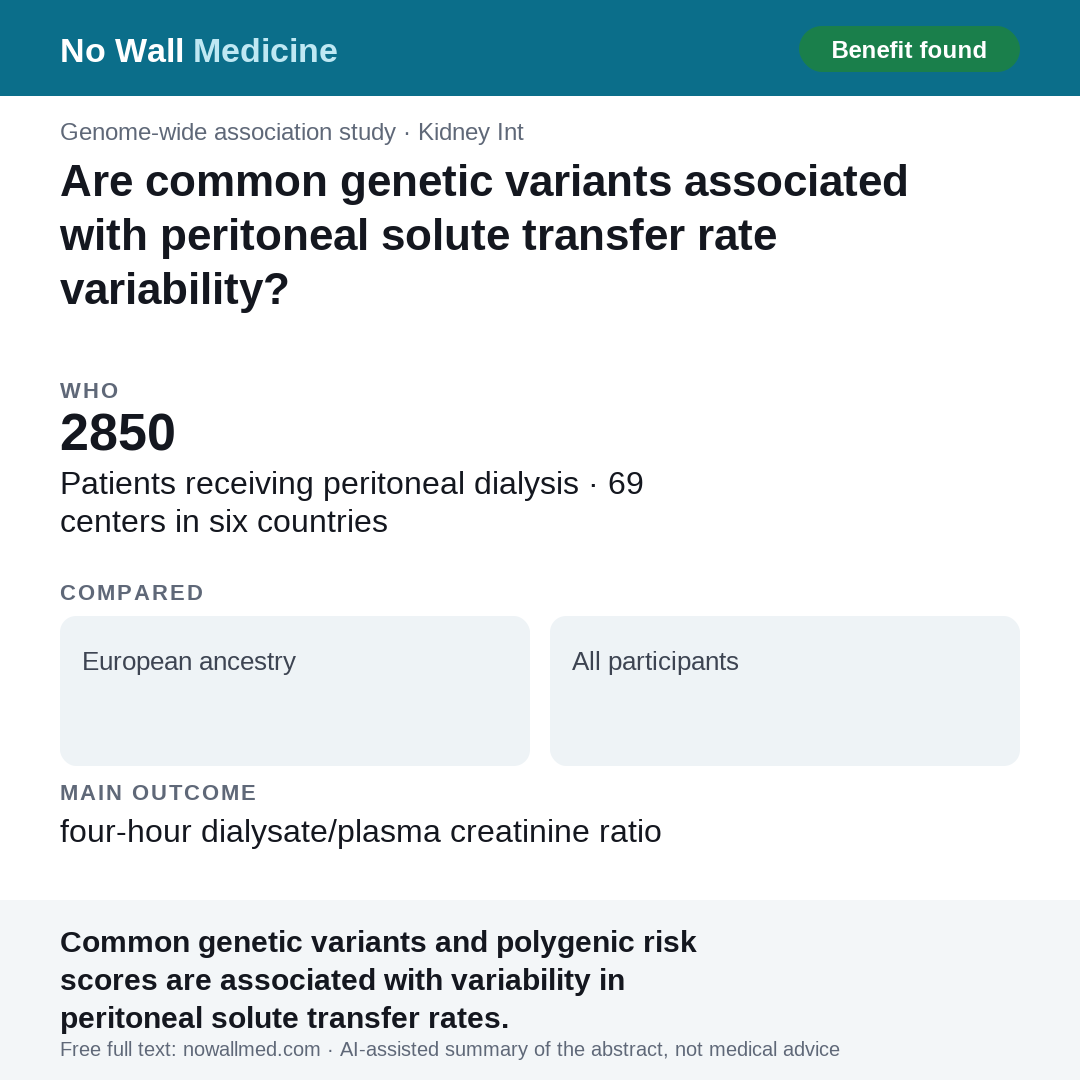
Clinical question: Are common genetic variants associated with peritoneal solute transfer rate variability?
Why it matters: There is large variability in how quickly solutes move across the peritoneum, and it is unknown if common genetic variants contribute to this difference.
Key points
- Researchers analyzed 2850 participants from 69 centers across six countries to study the relationship between genetic variants and the peritoneal solute transfer rate.
- The study estimated the heritability of the peritoneal solute transfer rate at 19% and found a polygenic risk score was significantly associated with this rate.
- In 2212 participants of European ancestry, 23 single nucleotide variants at four loci showed suggestive associations with the transfer rate, though no signal reached genome-wide significance.
Headline and key points written with AI from the paper’s abstract, with every number checked against it. Read the paper before relying on them.
Was this summary helpful?
Subject terms
Cite this article
Mehrotra R, Stanaway IB, Jarvik GP, Lambie M, Morelle J, Perl J. A genome-wide association study suggests correlations of common genetic variants with peritoneal solute transfer rates in patients with kidney failure receiving peritoneal dialysis. Kidney Int. 2021. doi:10.1016/j.kint.2021.05.037
Spotted a mistake? Suggest a correction
Top studies every Monday
The week’s key trials and guidelines in your specialties, plus any topics you follow. By email, free.
Get the weekly digest