Frequent non-severe low blood sugar is linked to severe episodes and cardiovascular events
A higher non-severe hypoglycaemia rate is associated with an increased risk of subsequent severe hypoglycaemia and major adverse cardiovascular events in individuals with type 2 diabetes in the LEADER study
Post hoc analysis of a randomized trialHarm found
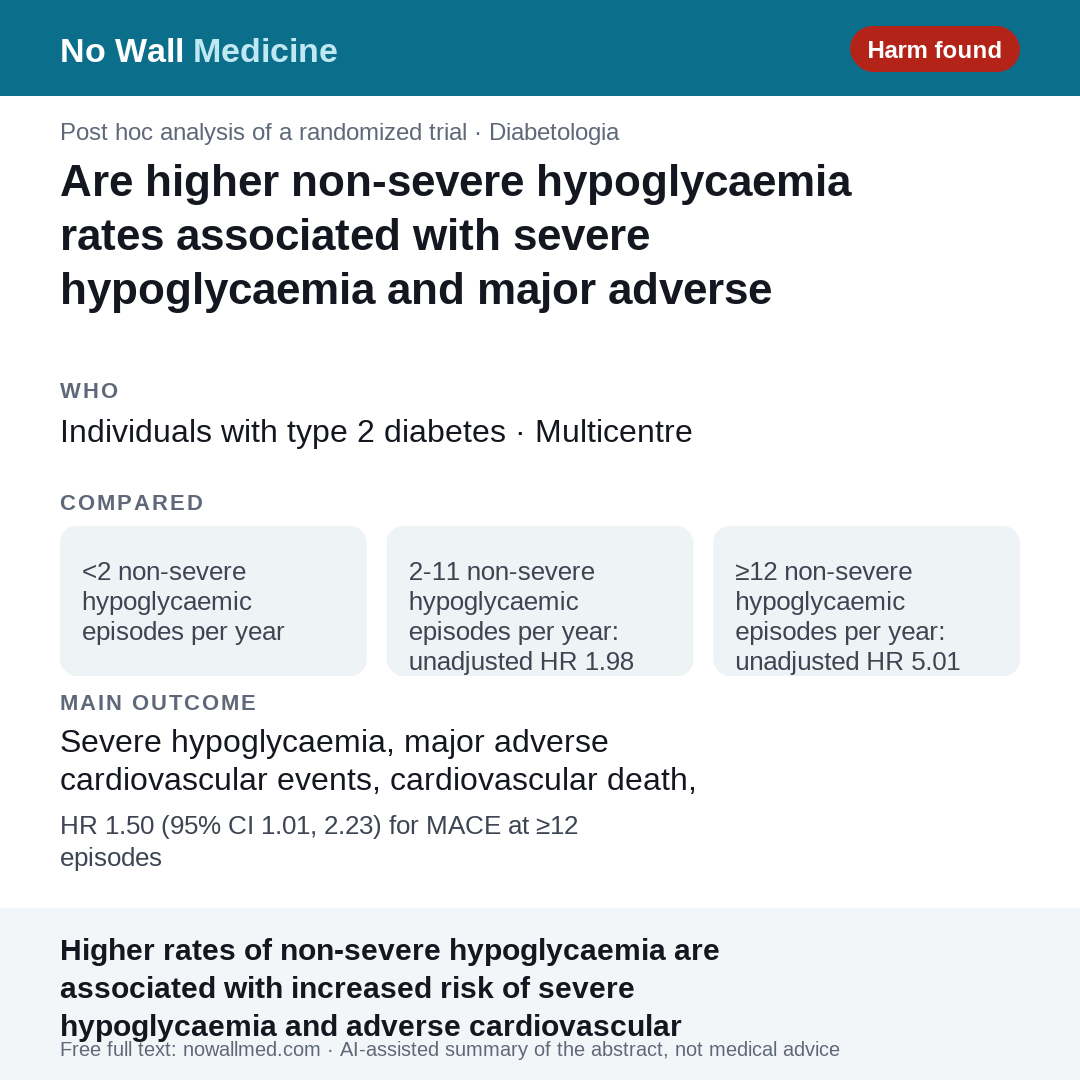
Are higher non-severe hypoglycaemia rates associated with severe hypoglycaemia and major adverse cardiovascular events?
Who
Individuals with type 2 diabetes · Multicentre
Compared
<2 non-severe hypoglycaemic episodes per year
2-11 non-severe hypoglycaemic episodes per year: unadjusted HR 1.98 (95% CI 1.43, 2.75) for severe hypoglycaemia
≥12 non-severe hypoglycaemic episodes per year: unadjusted HR 5.01 (95% CI 2.84, 8.84) for severe hypoglycaemia
Main outcome
Severe hypoglycaemia, major adverse cardiovascular events, cardiovascular death, and all-cause mortality
Result: HR 1.50 (95% CI 1.01, 2.23) for MACE at ≥12 episodes
Bottom line: Higher rates of non-severe hypoglycaemia are associated with increased risk of severe hypoglycaemia and adverse cardiovascular outcomes.
Diabetologia · 2021-10-26Download image
Clinical question: Are higher non-severe hypoglycaemia rates associated with severe hypoglycaemia and major adverse cardiovascular events?
Why it matters: It was unknown if frequent non-severe hypoglycemic episodes are associated with an increased risk of major adverse cardiovascular events or death in people with type 2 diabetes.
Key points
- Researchers analyzed participants from the LEADER trial to see if the annual rate of non-severe hypoglycemia, or low blood sugar, was linked to other health outcomes.
- Having 2-11 non-severe episodes per year was associated with a 1.98 hazard ratio for severe hypoglycemia, while 12 or more episodes per year was associated with a 5.01 hazard ratio.
- Rates of 12 or more non-severe episodes per year were associated with a 1.50 hazard ratio for major adverse cardiovascular events, a 2.08 hazard ratio for cardiovascular death, and a 1.80 hazard ratio for all-cause mortality.
Headline and key points written with AI from the paper’s abstract, with every number checked against it. Read the paper before relying on them.
Was this summary helpful?
Subject terms
Cite this article
Heller SR, Geybels MS, Iqbal A, Liu L, Wagner L, Chow E. A higher non-severe hypoglycaemia rate is associated with an increased risk of subsequent severe hypoglycaemia and major adverse cardiovascular events in individuals with type 2 diabetes in the LEADER study. Diabetologia. 2021. doi:10.1007/s00125-021-05556-7
Spotted a mistake? Suggest a correction
Top studies every Monday
The week’s key trials and guidelines in your specialties, plus any topics you follow. By email, free.
Get the weekly digest