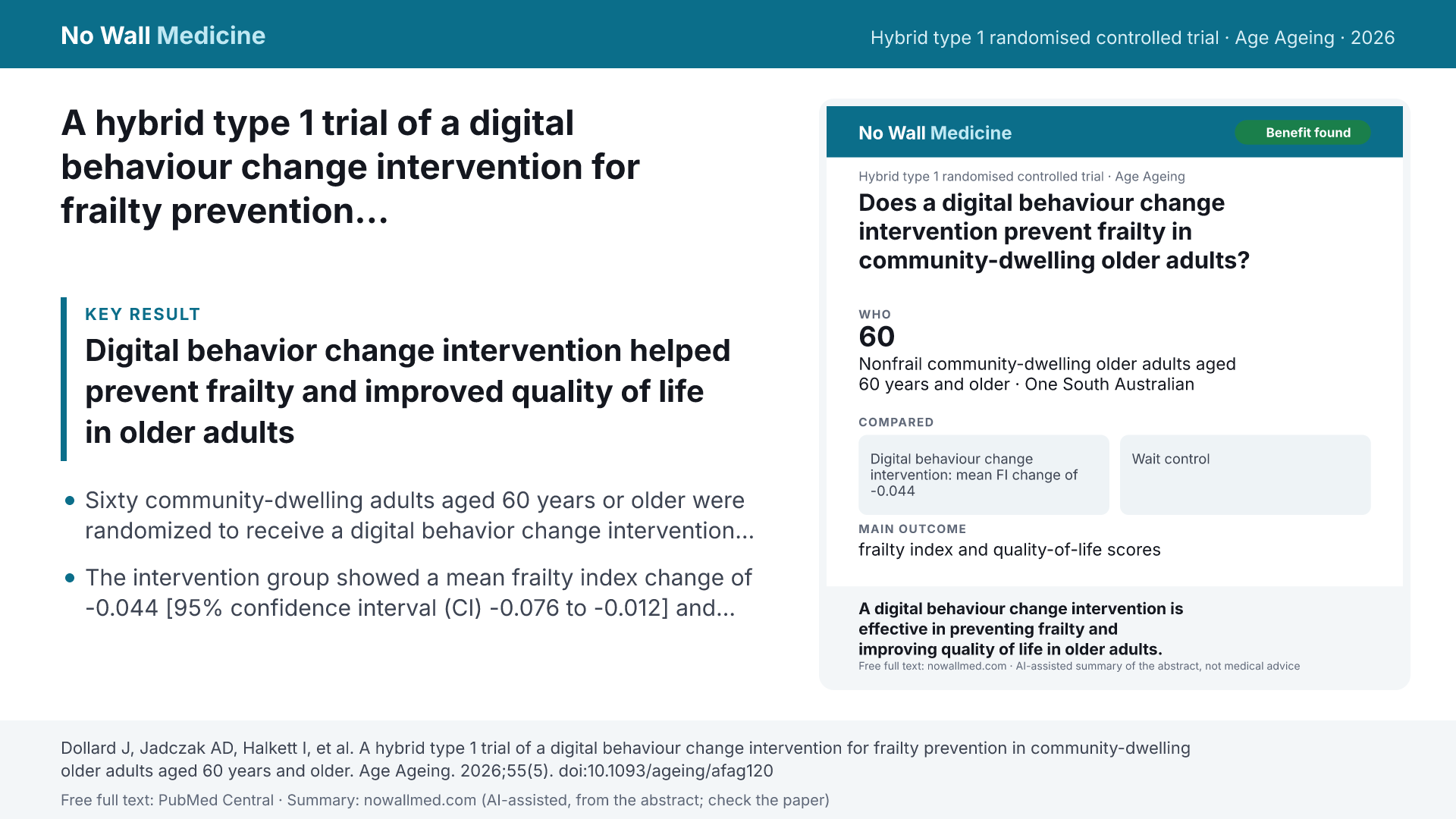
Digital behavior change intervention helped prevent frailty and improved quality of life in older adults
A hybrid type 1 trial of a digital behaviour change intervention for frailty prevention in community-dwelling older adults aged 60 years and older
Hybrid type 1 randomised controlled trialBenefit found
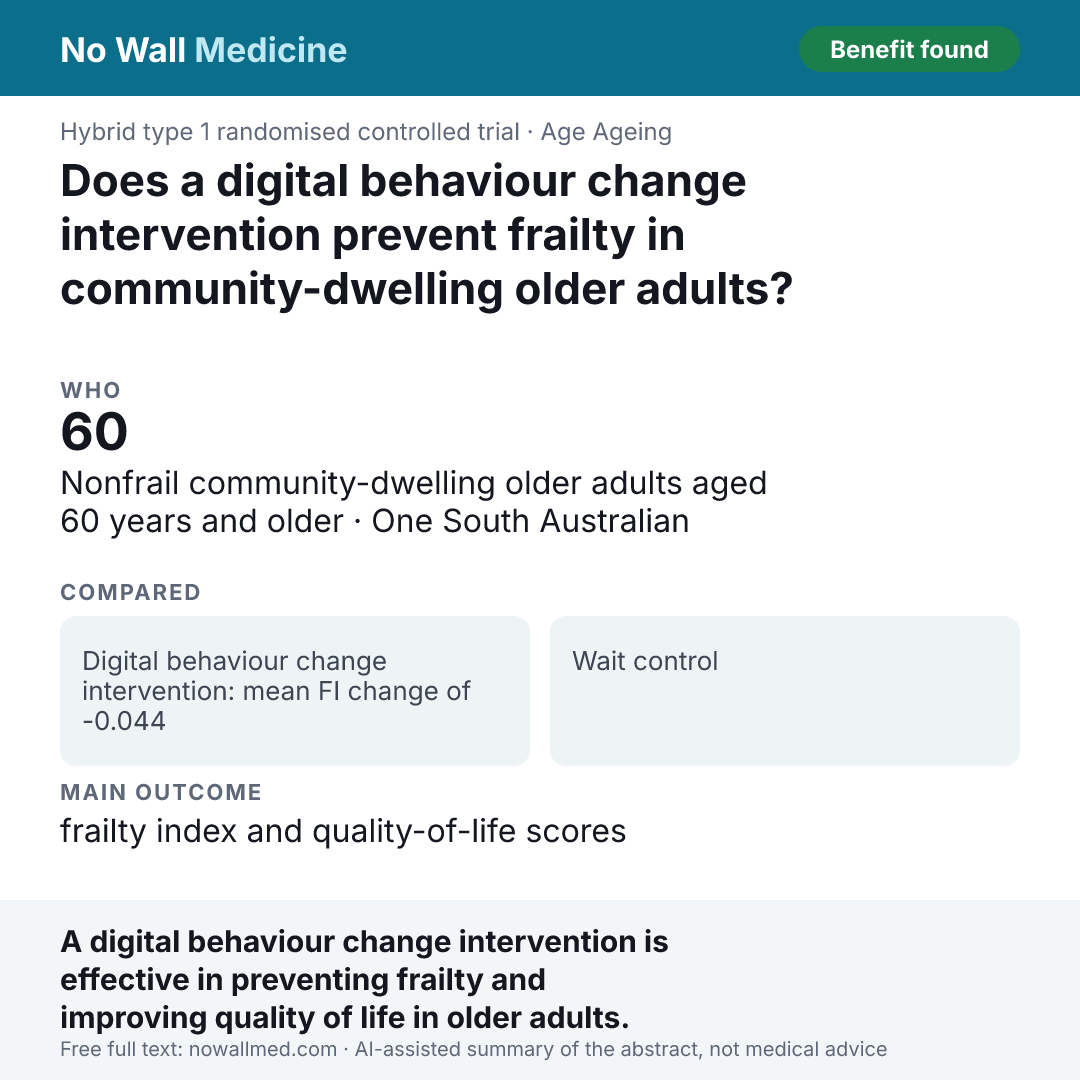
Does a digital behaviour change intervention prevent frailty in community-dwelling older adults?
Who
60
Nonfrail community-dwelling older adults aged 60 years and older · One South Australian local council
Compared
Digital behaviour change intervention: mean FI change of -0.044
Wait control
Main outcome
frailty index and quality-of-life scores
Result: mean FI change of -0.044 [95% confidence interval -0.076 to -0.012]
Bottom line: A digital behaviour change intervention is effective in preventing frailty and improving quality of life in older adults.
Limitation: Solving technical barriers and incorporating intelligent technologies could enhance impact.
Age Ageing · 2026-05-07 · Save PNG
Clinical question: Does a digital behaviour change intervention prevent frailty in community-dwelling older adults?
Key points
- Sixty community-dwelling adults aged 60 years or older were randomized to receive a digital behavior change intervention or a waitlist control for 6 months.
- The intervention group showed a mean frailty index change of -0.044 [95% confidence interval (CI) -0.076 to -0.012] and a mean quality of life change of 0.032 (95% CI 0.016 to 0.058) compared to the control group.
- Qualitative feedback from the intervention group indicated the digital tool was acceptable and supported changes in activity, vaccination, medication, interaction, diet, and nutrition.
Headline and key points written with AI from the paper’s abstract, with every number checked against it. Read the paper before relying on them.
Was this summary helpful?
Subject terms
Headline, design, result, key points, caveat and citation as plain text.
Cite this article
Dollard J, Jadczak AD, Halkett I, et al. A hybrid type 1 trial of a digital behaviour change intervention for frailty prevention in community-dwelling older adults aged 60 years and older. Age Ageing. 2026;55(5). doi:10.1093/ageing/afag120
Spotted a mistake? Suggest a correction