Low-intensity dietary intervention for gestational diabetes showed feasibility but no difference in triglyceride levels
A Low-Intensity Nutrition Intervention Targeting Triglycerides in Gestational Diabetes: A Feasibility RCT
Randomized controlled trialBenefit found
Is a low-intensity dietary intervention feasible for attenuating triglycerides in gestational diabetes?
Who
38
Women with gestational diabetes mellitus
Compared
Intervention group: 2.84 [2.22-3.46] mmol/L
Standard care group: 3.40 [2.78-4.02] mmol/L
Main outcome
Nonfasting plasma triglycerides
Bottom line: A low-intensity dietary intervention is feasible and acceptable for women with gestational diabetes.
J Clin Endocrinol Metab · 2025-05-16Download image
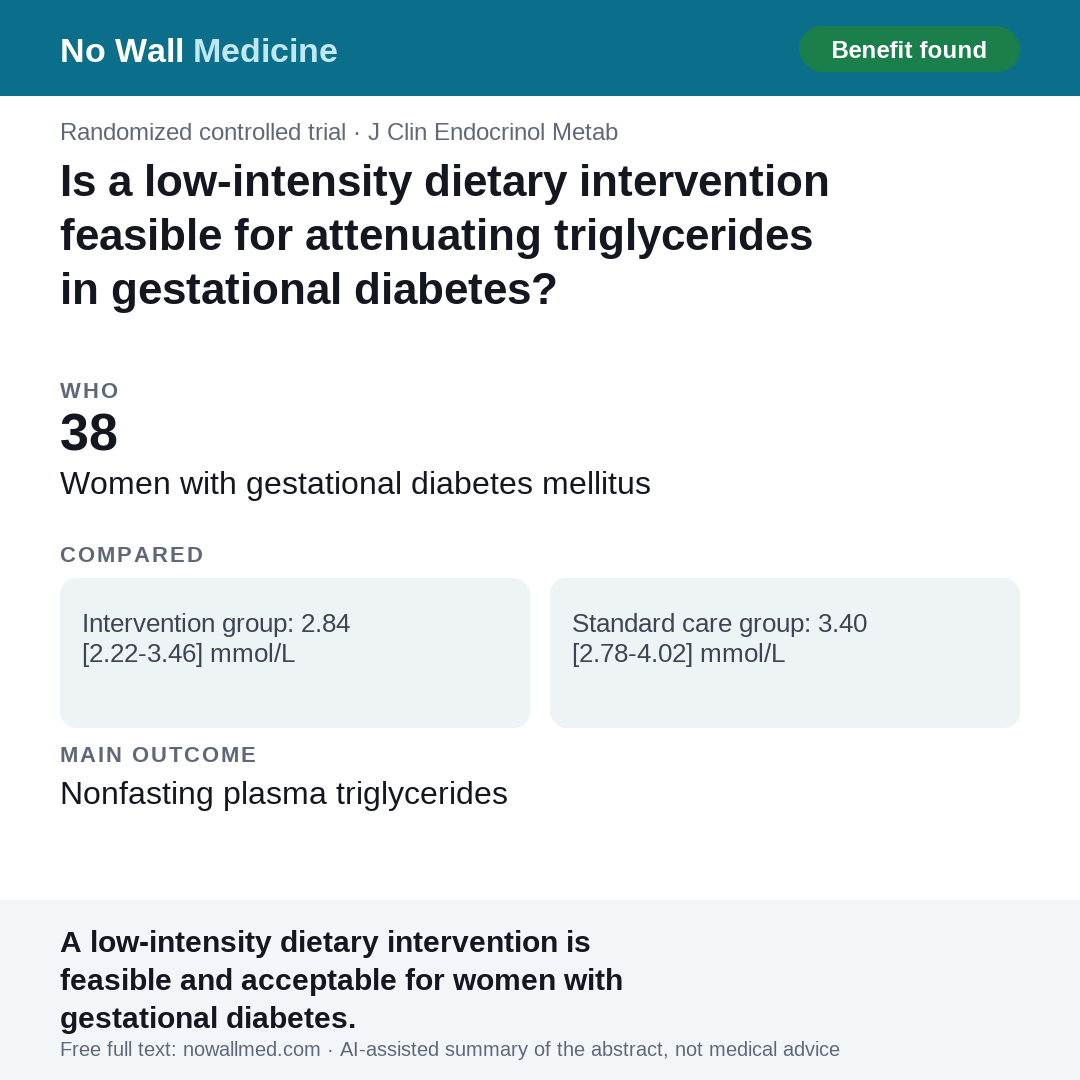
Clinical question: Is a low-intensity dietary intervention feasible for attenuating triglycerides in gestational diabetes?
Why it matters: Maternal triglyceride concentrations relate more strongly to infant adiposity than maternal glucose, but it is unclear if low-intensity dietary interventions can effectively target these levels.
Key points
- Researchers studied 38 women with gestational diabetes, comparing standard care to standard care plus counseling on reducing ultraprocessed foods and increasing healthy fats, fruits, vegetables, fish, and nuts.
- The intervention group had mean nonfasting plasma triglyceride levels of 2.84 [95% CI 2.22-3.46] mmol/L compared to 3.40 [95% CI 2.78-4.02] mmol/L in the standard care group.
- The study reported a recruitment rate of 1 per week, a retention rate of 89.5%, and a feasibility of eligibility criteria of 70.4%.
Headline and key points written with AI from the paper’s abstract, with every number checked against it. Read the paper before relying on them.
Topics
Cite this article
Liu K, Clarke GS, Grieger JA. A Low-Intensity Nutrition Intervention Targeting Triglycerides in Gestational Diabetes: A Feasibility RCT. J Clin Endocrinol Metab. 2025. doi:10.1210/clinem/dgaf291
Spotted a mistake? Suggest a correction