A meta-analysis and systematic review of single vs. multimodal neuroimaging techniques in the classification of psychosis
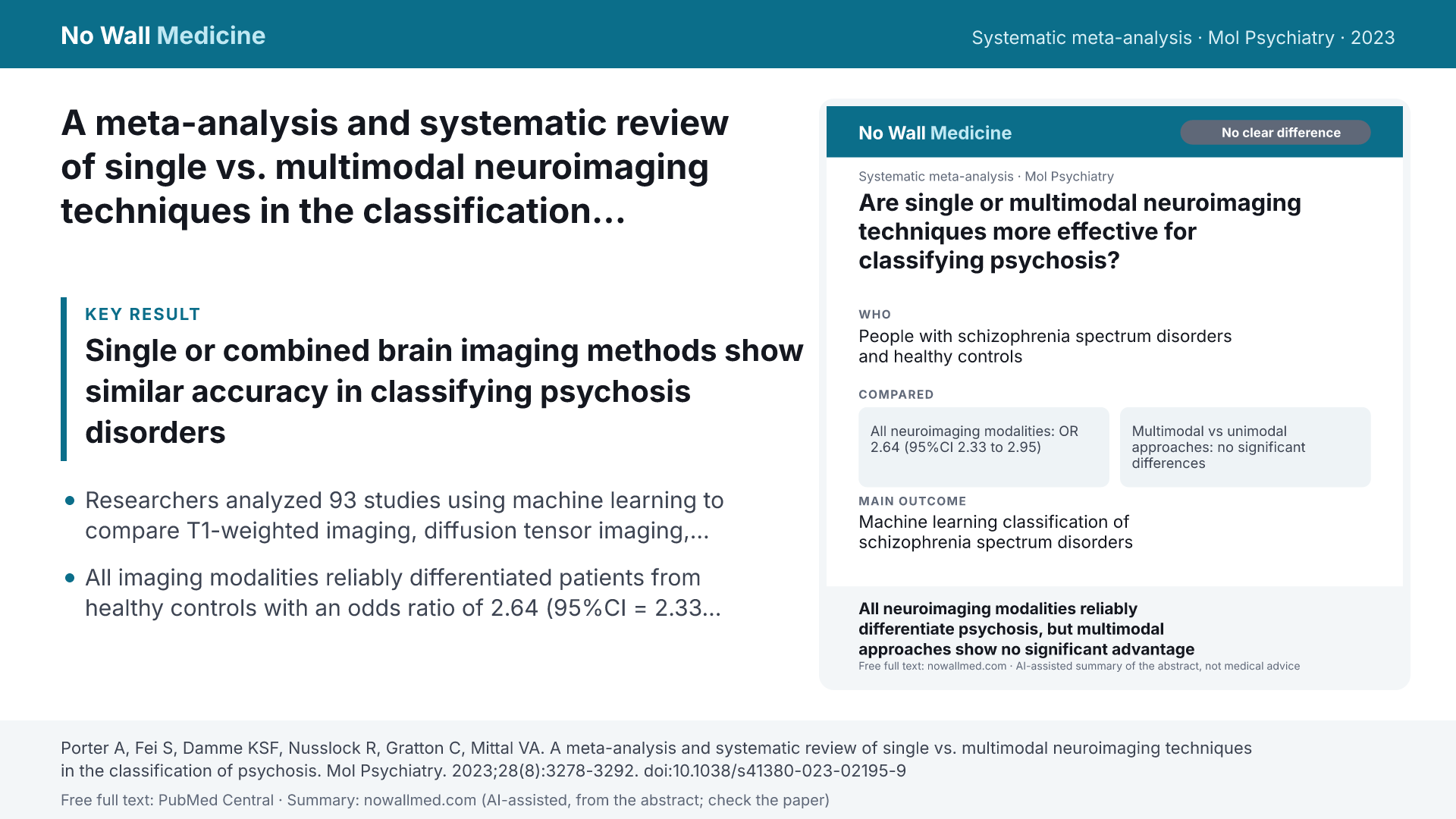
Key result: Single or combined brain imaging methods show similar accuracy in classifying psychosis disorders
Key points
- Researchers analyzed 93 studies using machine learning to compare T1-weighted imaging, diffusion tensor imaging, resting state functional connectivity, or multimodal approaches for identifying schizophrenia spectrum disorders.
- All imaging modalities reliably differentiated patients from healthy controls with an odds ratio of 2.64 (95%CI = 2.33 to 2.95).
- No significant differences were found between multimodal and unimodal approaches, though resting state functional connectivity showed a small advantage over T1-weighted imaging in external datasets.
Limitation the authors note: The meta-analysis found large amounts of heterogeneity across results and significant signs of bias in funnel plots and Egger's tests.
Discussion prompts
- Would these patients look like yours? Who was left out?
- Is the main outcome one that matters to patients?
- Is the difference large enough to change what you do?
Cite: Porter A, Fei S, Damme KSF, Nusslock R, Gratton C, Mittal VA. A meta-analysis and systematic review of single vs. multimodal neuroimaging techniques in the classification of psychosis. Mol Psychiatry. 2023;28(8):3278-3292. doi:10.1038/s41380-023-02195-9
Free full text: PubMed Central · Summary and visual abstract: nowallmed.com/a/a-meta-analysis-and-systematic-review-of-single-vs-multimodal-136sw24/ (AI-assisted from the abstract; check the paper before relying on it).