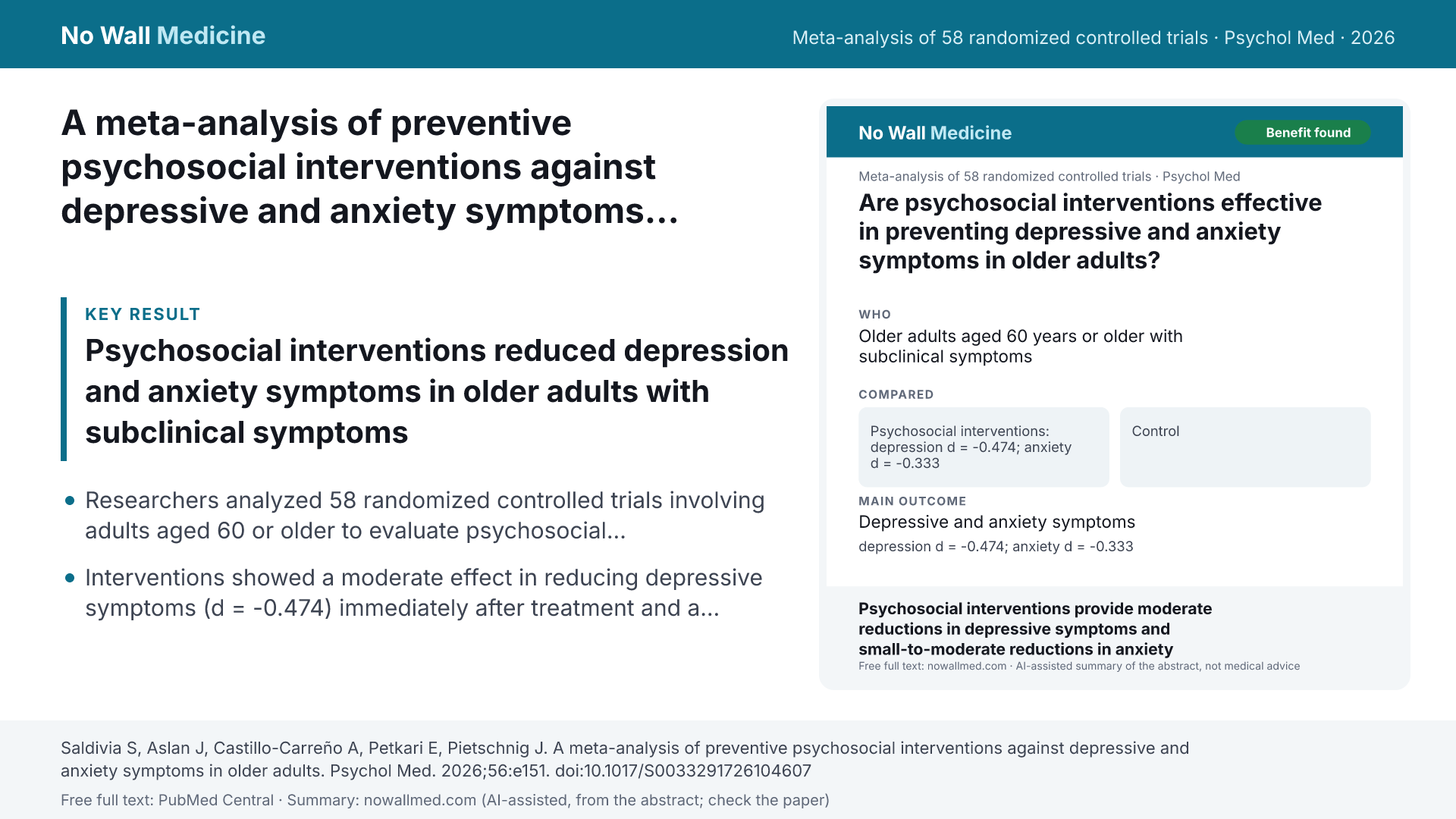
Psychosocial interventions reduced depression and anxiety symptoms in older adults with subclinical symptoms
A meta-analysis of preventive psychosocial interventions against depressive and anxiety symptoms in older adults
Meta-analysis of 58 randomized controlled trialsBenefit found
Are psychosocial interventions effective in preventing depressive and anxiety symptoms in older adults?
Who
Older adults aged 60 years or older with subclinical symptoms
Compared
Psychosocial interventions: depression d = -0.474; anxiety d = -0.333
Control
Main outcome
Depressive and anxiety symptoms
Result: depression d = -0.474; anxiety d = -0.333
Bottom line: Psychosocial interventions provide moderate reductions in depressive symptoms and small-to-moderate reductions in anxiety symptoms in older adults.
Psychol Med · 2026-05-14Download image
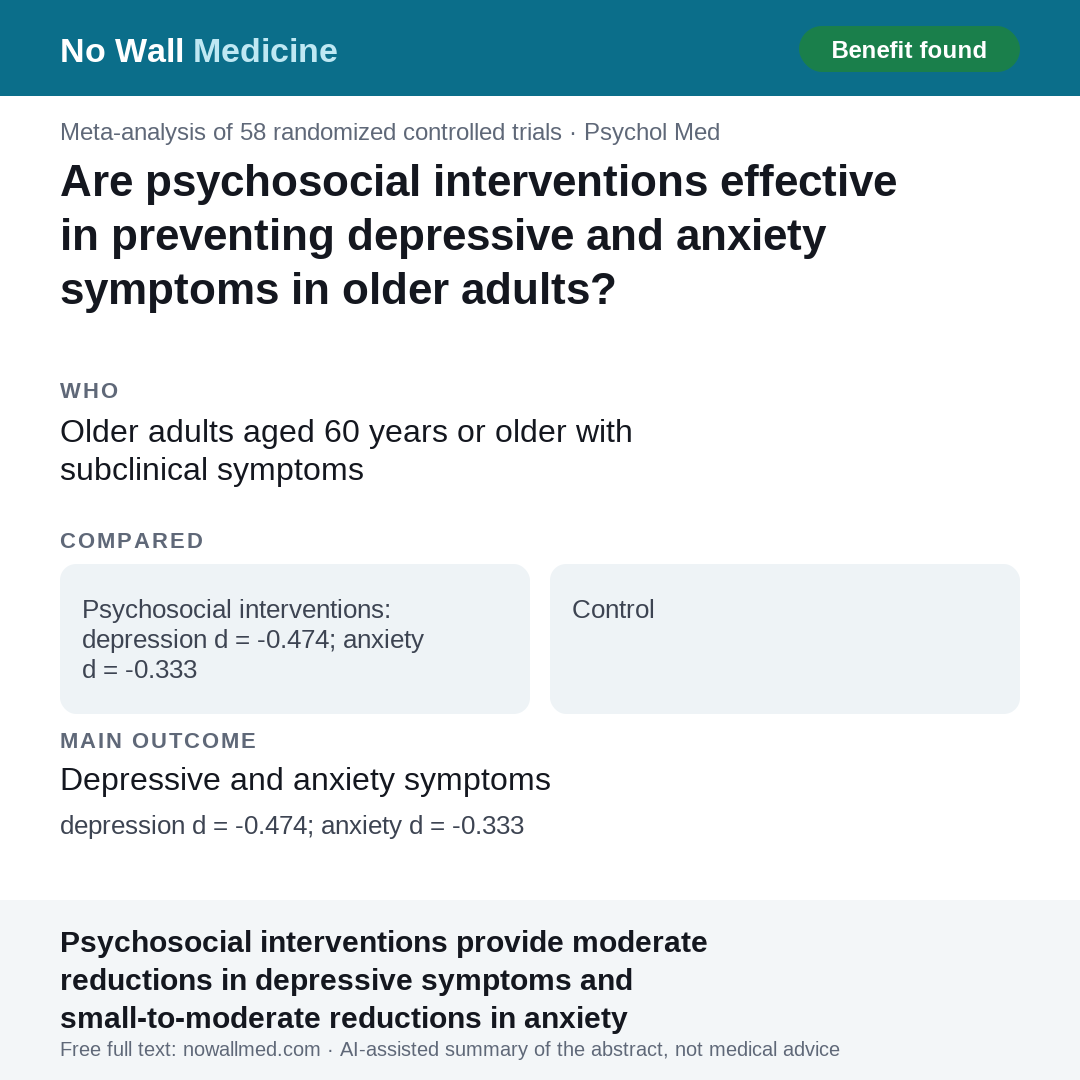
Clinical question: Are psychosocial interventions effective in preventing depressive and anxiety symptoms in older adults?
Why it matters: A comprehensive synthesis of how psychosocial interventions affect the prevention of depression and anxiety in nonclinical elderly populations was previously pending.
Key points
- Researchers analyzed 58 randomized controlled trials involving adults aged 60 or older to evaluate psychosocial interventions for preventing mental health issues.
- Interventions showed a moderate effect in reducing depressive symptoms (d = -0.474) immediately after treatment and a modest effect at follow-up (d = -0.386).
- Anxiety symptoms showed a small-to-moderate reduction immediately after intervention (d = -0.333) and a small, non-significant effect at follow-up (d = -0.205).
Headline and key points written with AI from the paper’s abstract, with every number checked against it. Read the paper before relying on them.
Was this summary helpful?
Subject terms
Cite this article
Saldivia S, Aslan J, Castillo-Carreño A, Petkari E, Pietschnig J. A meta-analysis of preventive psychosocial interventions against depressive and anxiety symptoms in older adults. Psychol Med. 2026. doi:10.1017/S0033291726104607
Spotted a mistake? Suggest a correction