Reduced fractional anisotropy in the uncinate fasciculus is associated with depression in meta-analysis
A meta-analysis on the uncinate fasciculus in depression
Meta-analysis of 44 studiesMixed results
Is there aberrant uncinate fasciculus microstructure in individuals with depression?
Who
Individuals with depression and healthy individuals
Compared
Individuals with depression: reduced fractional anisotropy
Healthy individuals
Main outcome
Uncinate fasciculus fractional anisotropy and radial diffusivity
Bottom line: Depression is associated with reduced uncinate fasciculus fractional anisotropy, but radial diffusivity remains comparable to healthy individuals.
Limitation: Comorbid anxiety explained inter-study heterogeneity in uncinate fasciculus findings.
Psychol Med · 2023-04-13Download image
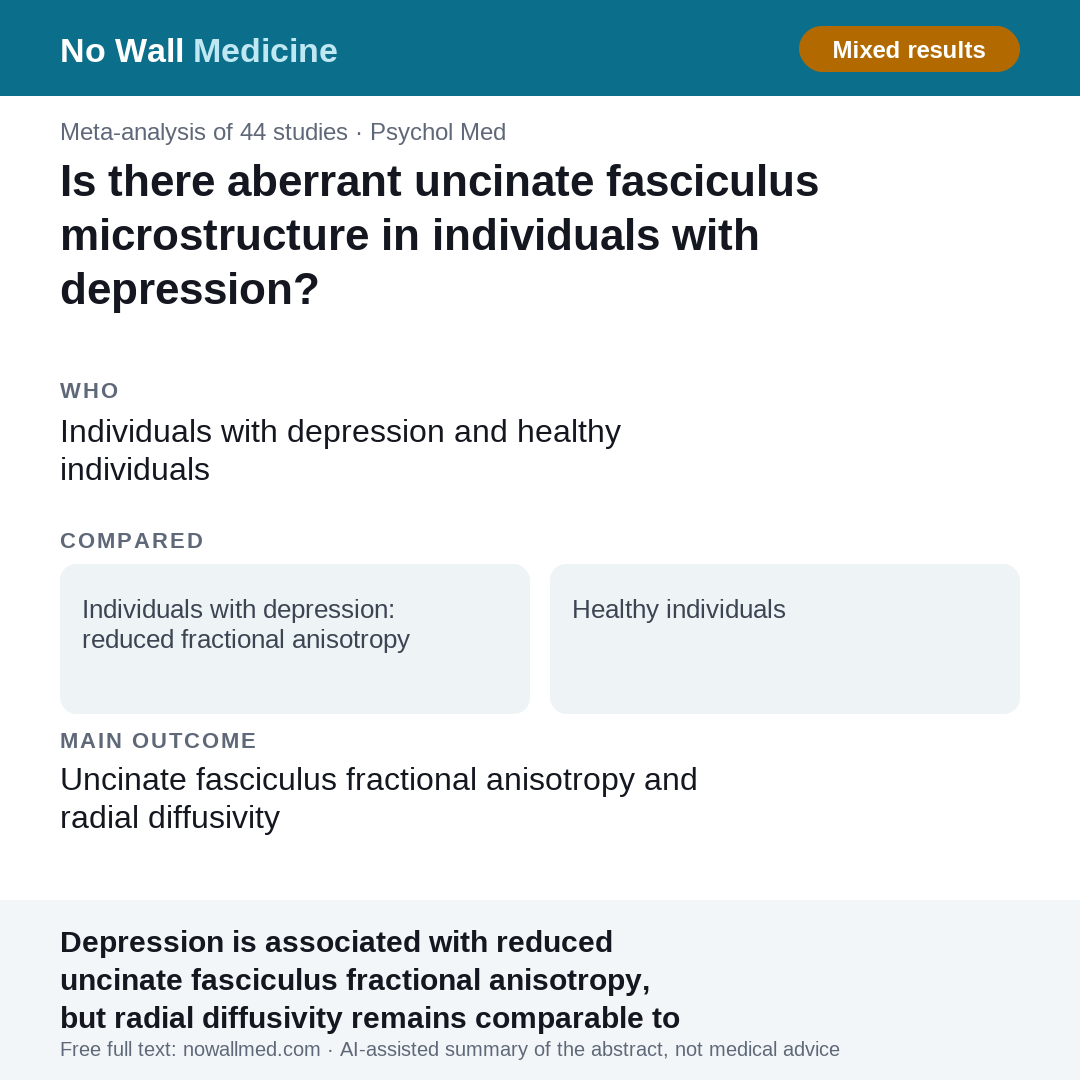
Clinical question: Is there aberrant uncinate fasciculus microstructure in individuals with depression?
Why it matters: Previous studies testing whether the uncinate fasciculus, a white matter tract involved in emotion regulation, is a neurobiological mechanism of depression have yielded inconsistent results.
Key points
- Researchers analyzed 44 studies involving 5016 individuals with depression and 18 425 healthy individuals to examine white matter microstructure.
- Fractional anisotropy, a measure of white matter integrity, was reduced in people with depression, while radial diffusivity showed no difference between groups.
- The presence of comorbid anxiety was found to explain differences in findings across the included studies.
Headline and key points written with AI from the paper’s abstract, with every number checked against it. Read the paper before relying on them.
Topics
Cite this article
Xu EP, Nguyen L, Leibenluft E, Stange JP, Linke JO. A meta-analysis on the uncinate fasciculus in depression. Psychol Med. 2023. doi:10.1017/S0033291723000107
Spotted a mistake? Suggest a correction
Top studies every Monday
The week’s key trials and guidelines in your specialties, plus any topics you follow. By email, free.
Get the weekly digest