A Multicenter, Randomized, Controlled, Clinical Trial Evaluating Dehydrated Human Amniotic Membrane in the Treatment of Venous Leg Ulcers
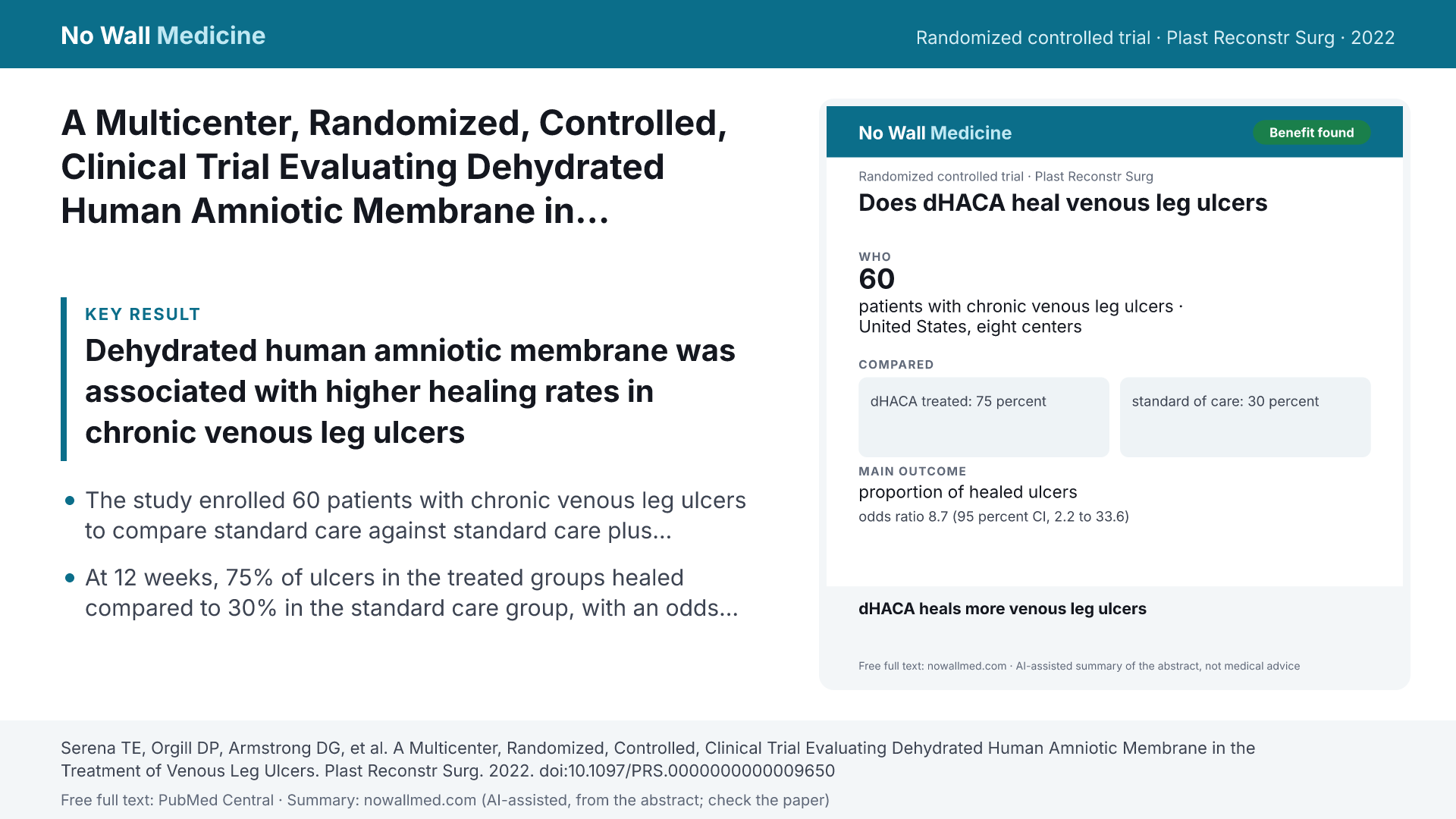
Key result: Dehydrated human amniotic membrane was associated with higher healing rates in chronic venous leg ulcers
Randomized controlled trialBenefit found
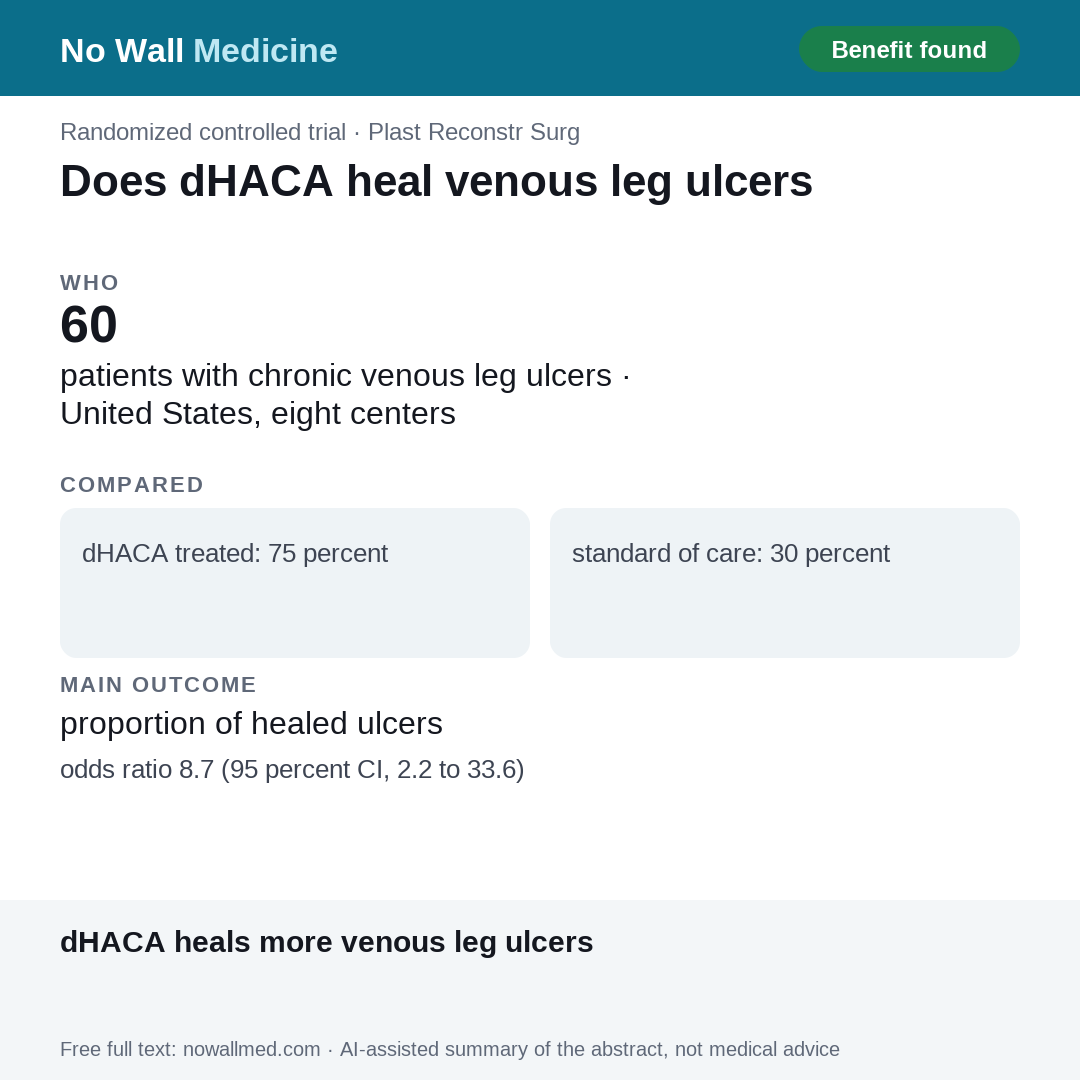
Does dHACA heal venous leg ulcers
Who
60
patients with chronic venous leg ulcers · United States, eight centers
Compared
dHACA treated: 75 percent
standard of care: 30 percent
Main outcome
proportion of healed ulcers
Result: odds ratio 8.7 (95 percent CI, 2.2 to 33.6)
Bottom line: dHACA heals more venous leg ulcers
Plast Reconstr Surg · 2022-09-02Download image
Key points
- The study enrolled 60 patients with chronic venous leg ulcers to compare standard care against standard care plus dehydrated human amnion and chorion allograft applied weekly or biweekly.
- At 12 weeks, 75% of ulcers in the treated groups healed compared to 30% in the standard care group, with an odds ratio of 8.7.
- The adverse event rate was 63.5%, but none of the 38 reported events were related to the graft or the procedure.
Discussion prompts
- Would these patients look like yours? Who was left out?
- Is the main outcome one that matters to patients?
- Is the difference large enough to change what you do?
Cite: Serena TE, Orgill DP, Armstrong DG, et al. A Multicenter, Randomized, Controlled, Clinical Trial Evaluating Dehydrated Human Amniotic Membrane in the Treatment of Venous Leg Ulcers. Plast Reconstr Surg. 2022. doi:10.1097/PRS.0000000000009650
Free full text: PubMed Central · Summary and visual abstract: nowallmed.com/a/a-multicenter-randomized-controlled-clinical-trial-evaluating-1fkfmkt/ (AI-assisted from the abstract; check the paper before relying on it).