Multidisciplinary nutritional and behavioral support improves weight loss and liver health in MASLD patients
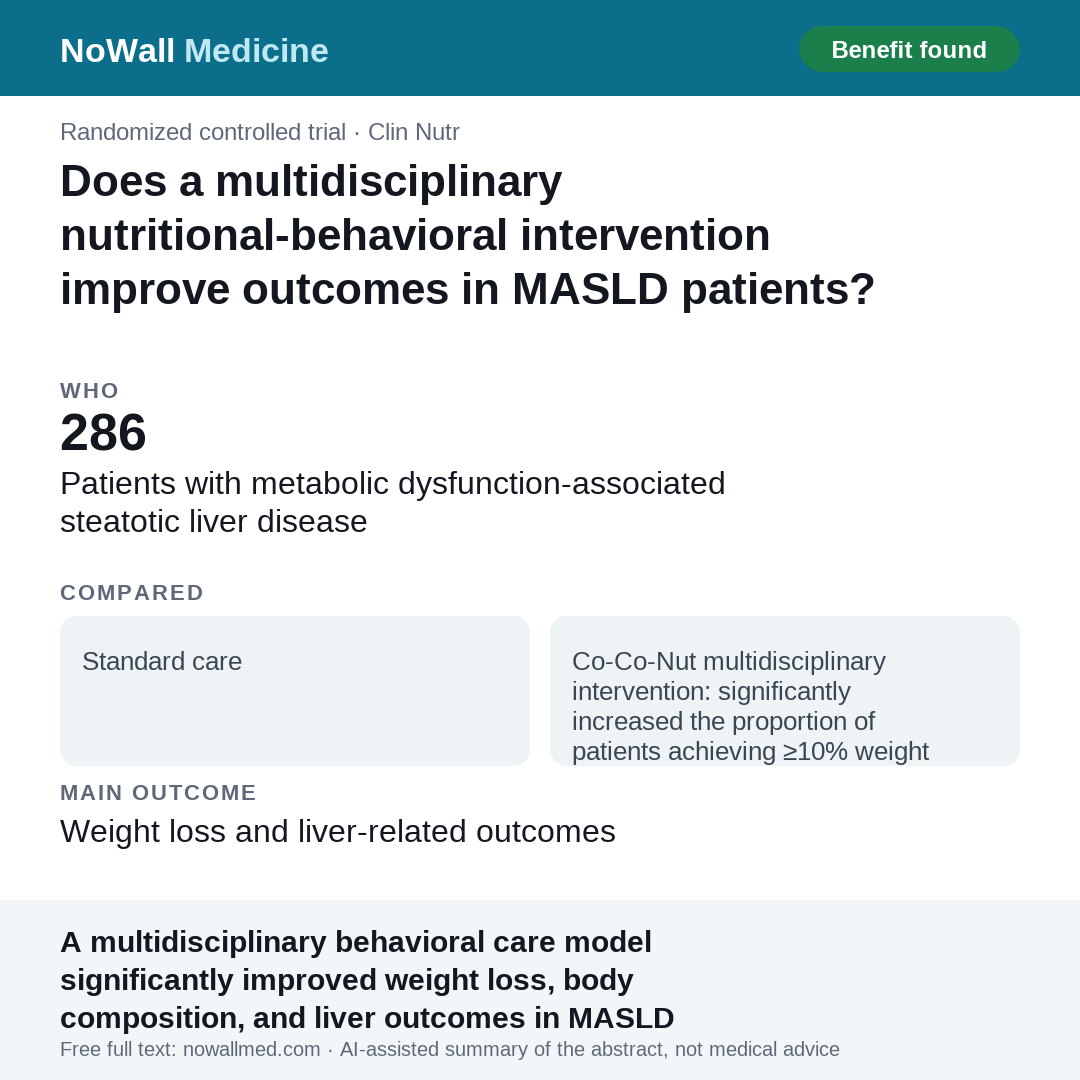
A multidisciplinary nutritional-behavioral intervention improves weight loss and liver-related outcomes in patients with metabolic dysfunction-associated steatotic liver disease: A randomized controlled trial
Dallio M, Romeo M, Di Nardo F, Napolitano C, Coppola A, Mazzarella C, et al
Clinical question: Does a multidisciplinary nutritional-behavioral intervention improve outcomes in MASLD patients?
Why it matters: Long-term adherence to dietary and behavioral recommendations remains poor for patients managing metabolic dysfunction-associated steatotic liver disease.
Key points
Researchers studied 286 patients with metabolic dysfunction-associated steatotic liver disease, comparing standard care to a multidisciplinary intervention including nutritional and cognitive behavioral therapy.
The multidisciplinary intervention significantly increased the proportion of patients achieving at least 10% weight loss and improved liver stiffness and fat measurements.
The intervention also led to sustained improvements in body composition and metabolic profiles compared to standard care.
Headline and key points written with AI from the paper’s abstract, with every number checked against it. Read the paper before relying on them.
Natural-abundance carbon isotope profiling of long-chain polyunsaturated fatty acid supplement incorporation in extremely preterm infants: a sub-study of the Mega Donna Mega randomized clinical trial
From Obesity to Cancer Cachexia: PI3K/AKT/MTOR Signaling Across the Energy Balance Spectrum - A Scoping Review of Body Size, Composition, and Cancer Outcomes
Reduced Erythropoietic Signalling may be responsible for anemia without iron deficiency among Indian Pregnant Women: findings from a cross-sectional study