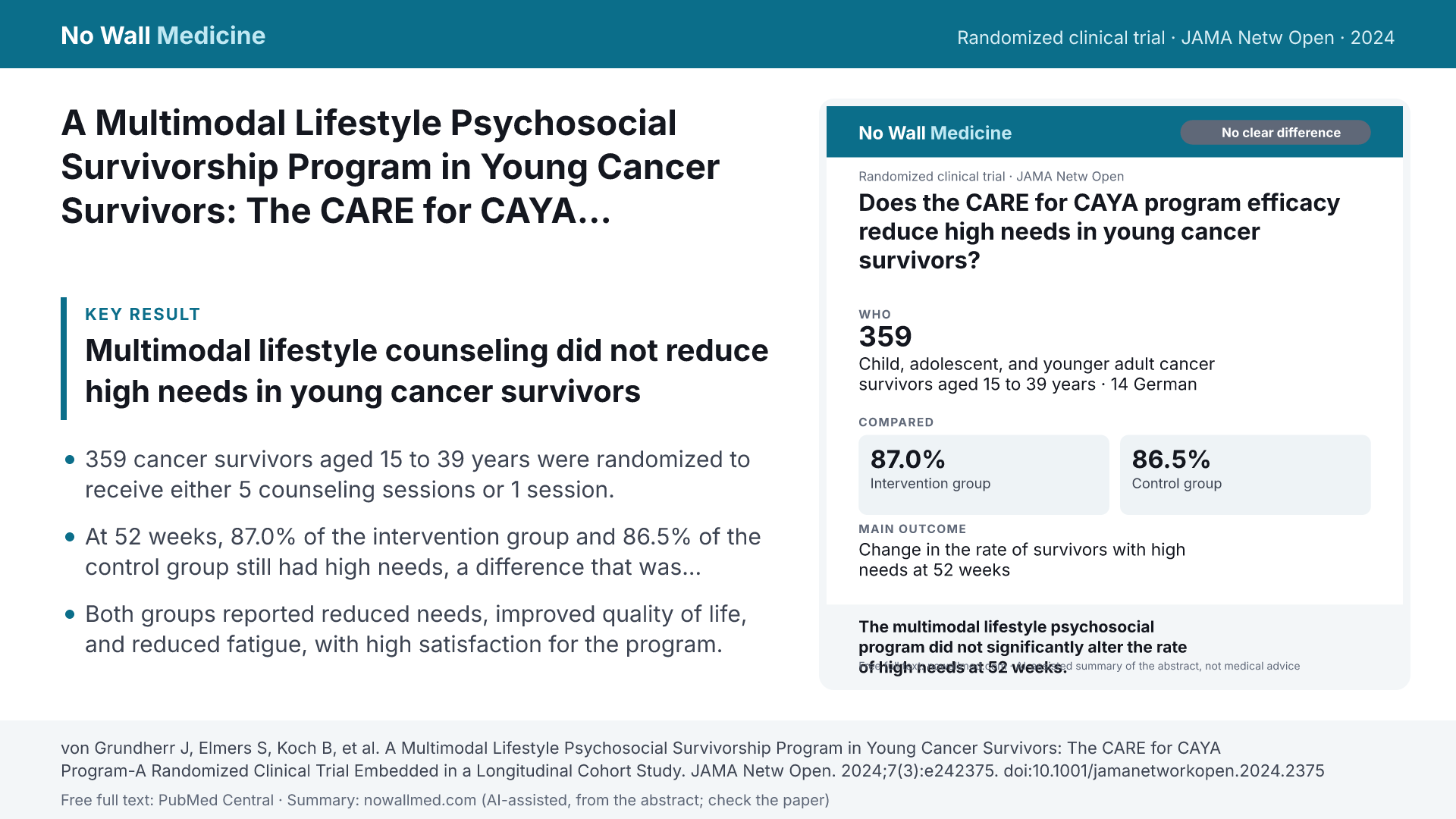
Multimodal lifestyle counseling did not reduce high needs in young cancer survivors
A Multimodal Lifestyle Psychosocial Survivorship Program in Young Cancer Survivors: The CARE for CAYA Program-A Randomized Clinical Trial Embedded in a Longitudinal Cohort Study
OncologyAdult and pediatric
Randomized clinical trialNo clear difference
Does the CARE for CAYA program efficacy reduce high needs in young cancer survivors?
Who
359
Child, adolescent, and younger adult cancer survivors aged 15 to 39 years · 14 German outpatient clinics
Compared
87.0%Intervention group
86.5%Control group
Main outcome
Change in the rate of survivors with high needs at 52 weeks
Result: odds ratio 1.04 (95% CI 0.51-2.11)
Bottom line: The multimodal lifestyle psychosocial program did not significantly alter the rate of high needs at 52 weeks.
JAMA Netw Open · 2024-03-04 · Save PNG
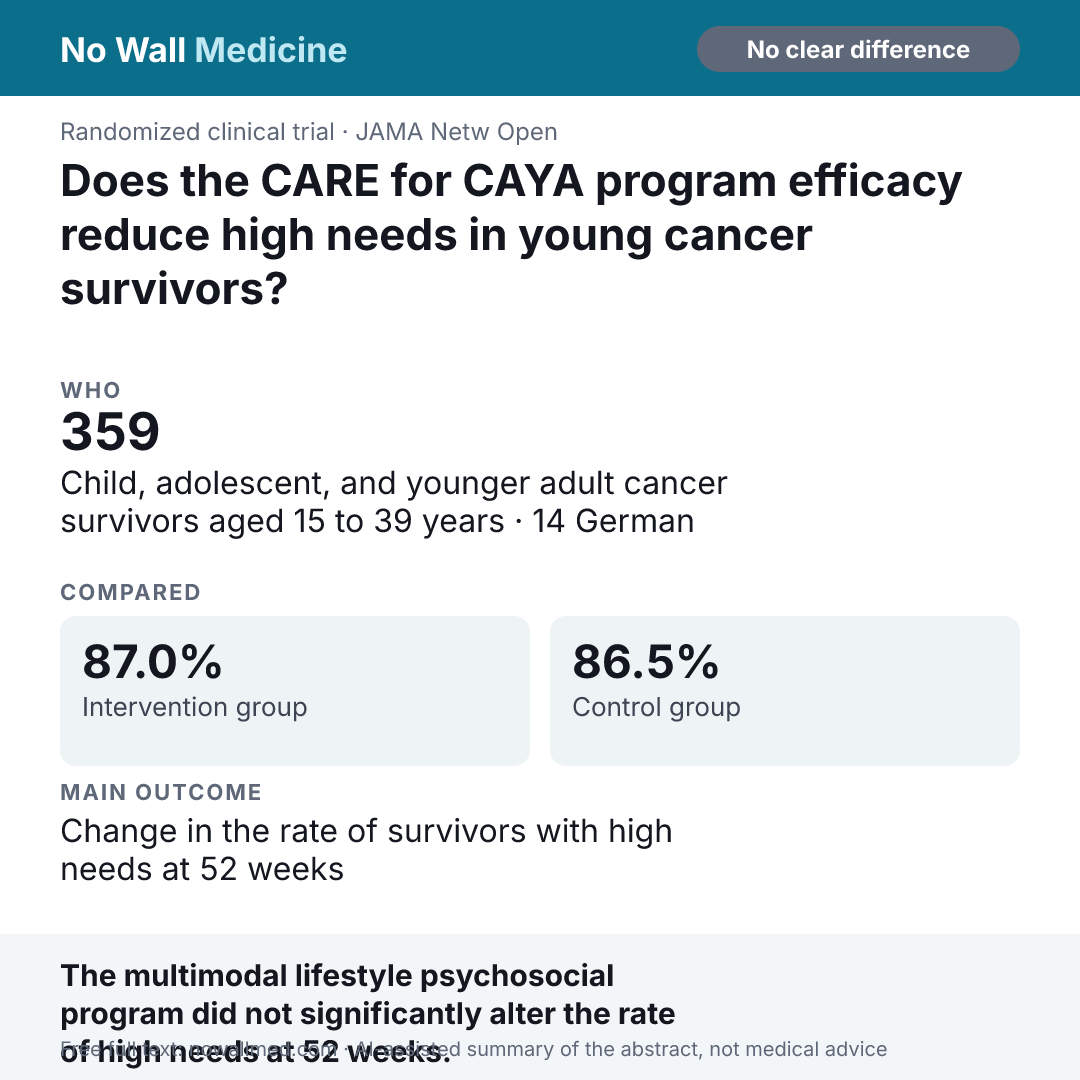
Clinical question: Does the CARE for CAYA program efficacy reduce high needs in young cancer survivors?
Key points
- 359 cancer survivors aged 15 to 39 years were randomized to receive either 5 counseling sessions or 1 session.
- At 52 weeks, 87.0% of the intervention group and 86.5% of the control group still had high needs, a difference that was not statistically significant.
- Both groups reported reduced needs, improved quality of life, and reduced fatigue, with high satisfaction for the program.
Headline and key points written with AI from the paper’s abstract, with every number checked against it. Read the paper before relying on them.
Was this summary helpful?
Subject terms
Headline, design, result, key points, caveat and citation as plain text.
Cite this article
von Grundherr J, Elmers S, Koch B, et al. A Multimodal Lifestyle Psychosocial Survivorship Program in Young Cancer Survivors: The CARE for CAYA Program-A Randomized Clinical Trial Embedded in a Longitudinal Cohort Study. JAMA Netw Open. 2024;7(3):e242375. doi:10.1001/jamanetworkopen.2024.2375
Spotted a mistake? Suggest a correction