Eleven children with UBTF variant showed regression and progressive ataxia
Childhood-onset neurodegeneration and brain atrophy: defining UBTF-related developmental regression and progressive ataxia
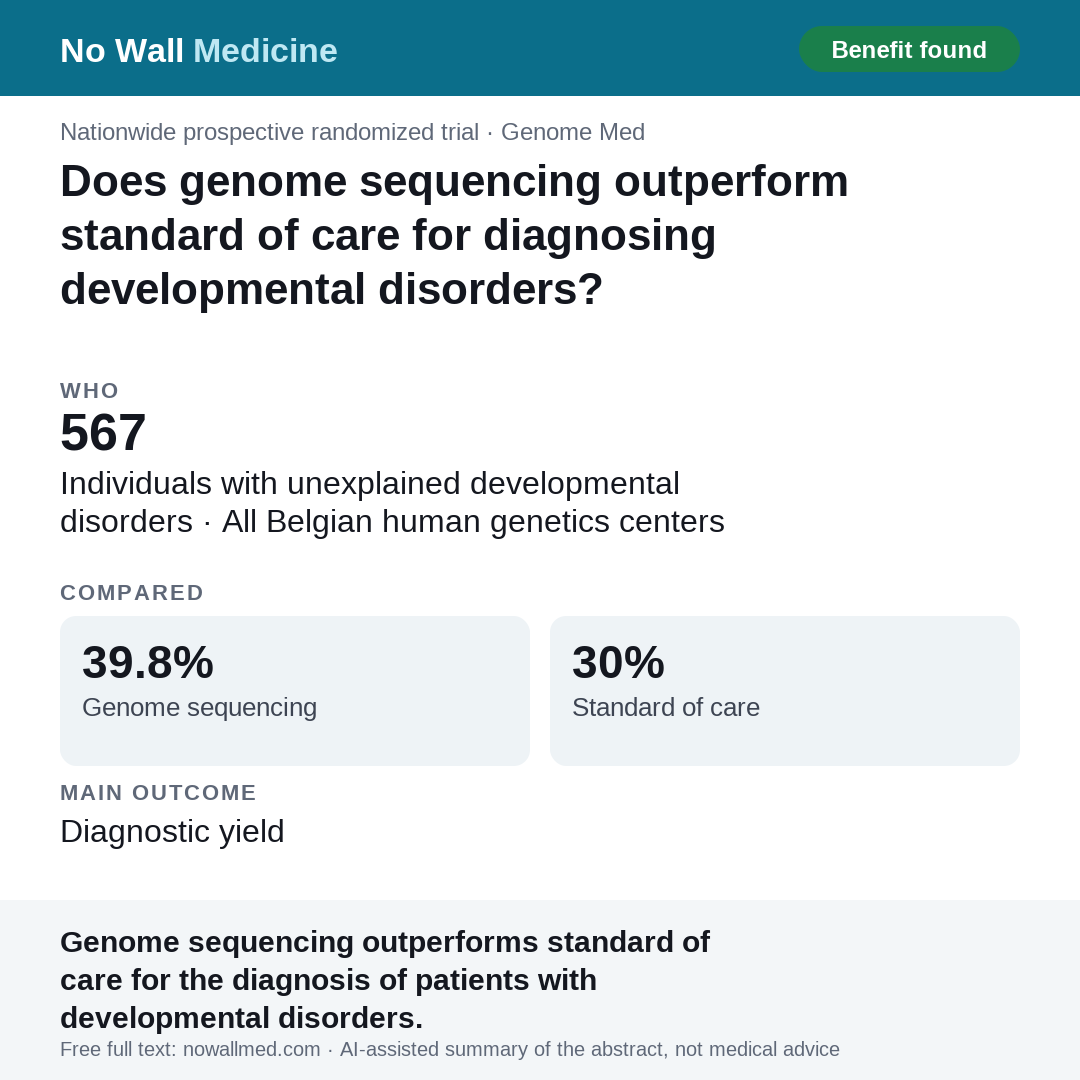
A nationwide prospective randomized trial for diagnosing developmental disorders demonstrates genome sequencing outperforms standard of care
Clinical question: Does genome sequencing outperform standard of care for diagnosing developmental disorders?
Why it matters: The clinical utility of genome sequencing for diagnosing developmental disorders continues to be debated.
Genome sequencing: 39.8% · Standard of care: 30% → a difference of 9.8 percentage points, so about 11 people would need the treatment for 1 more to benefit (number needed to treat) over the trial’s follow-up.
Worked out by us from the two group results above, not reported by the authors. Check the paper for the exact outcome and timing.
Headline and key points written with AI from the paper’s abstract, with every number checked against it. Read the paper before relying on them.
Spotted a mistake? Suggest a correction
Childhood-onset neurodegeneration and brain atrophy: defining UBTF-related developmental regression and progressive ataxia
Uncovering the genetic architecture of optic nerve integrity estimates through genome-wide association study meta-analyses
RDX-Associated Hearing Loss: Expanded Variant Spectrum, Founder Effect, and Mechanistic Insights from Functional Assays
Genome sequencing and clinical diagnosis in 186 pediatric and adult patients with genetic skeletal disorders
Evaluating long-read RNA sequencing for Mendelian disorder diagnosis