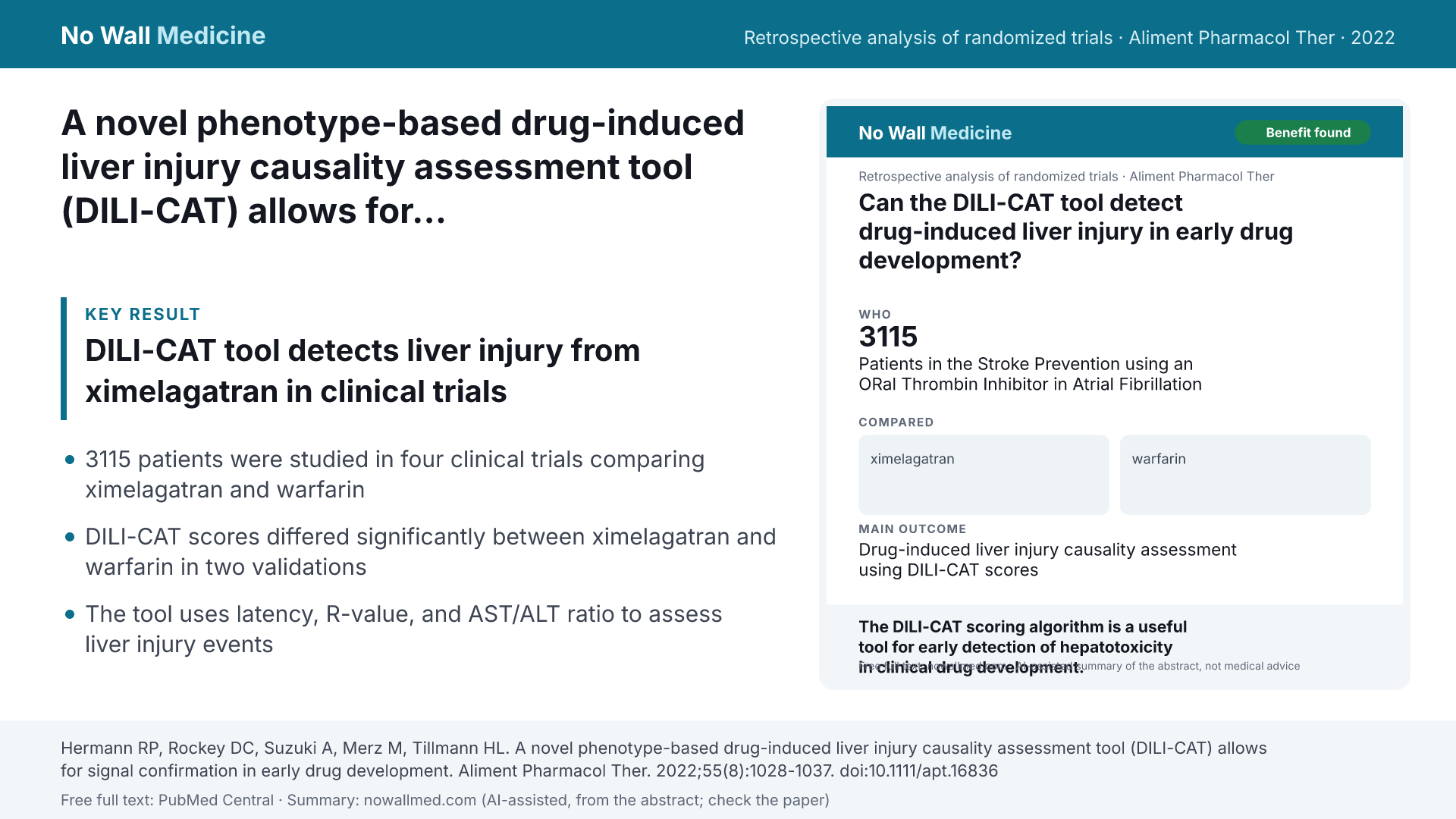
A novel phenotype-based drug-induced liver injury causality assessment tool (DILI-CAT) allows for signal confirmation in early drug development
Key result: DILI-CAT tool detects liver injury from ximelagatran in clinical trials
Retrospective analysis of randomized trialsBenefit found
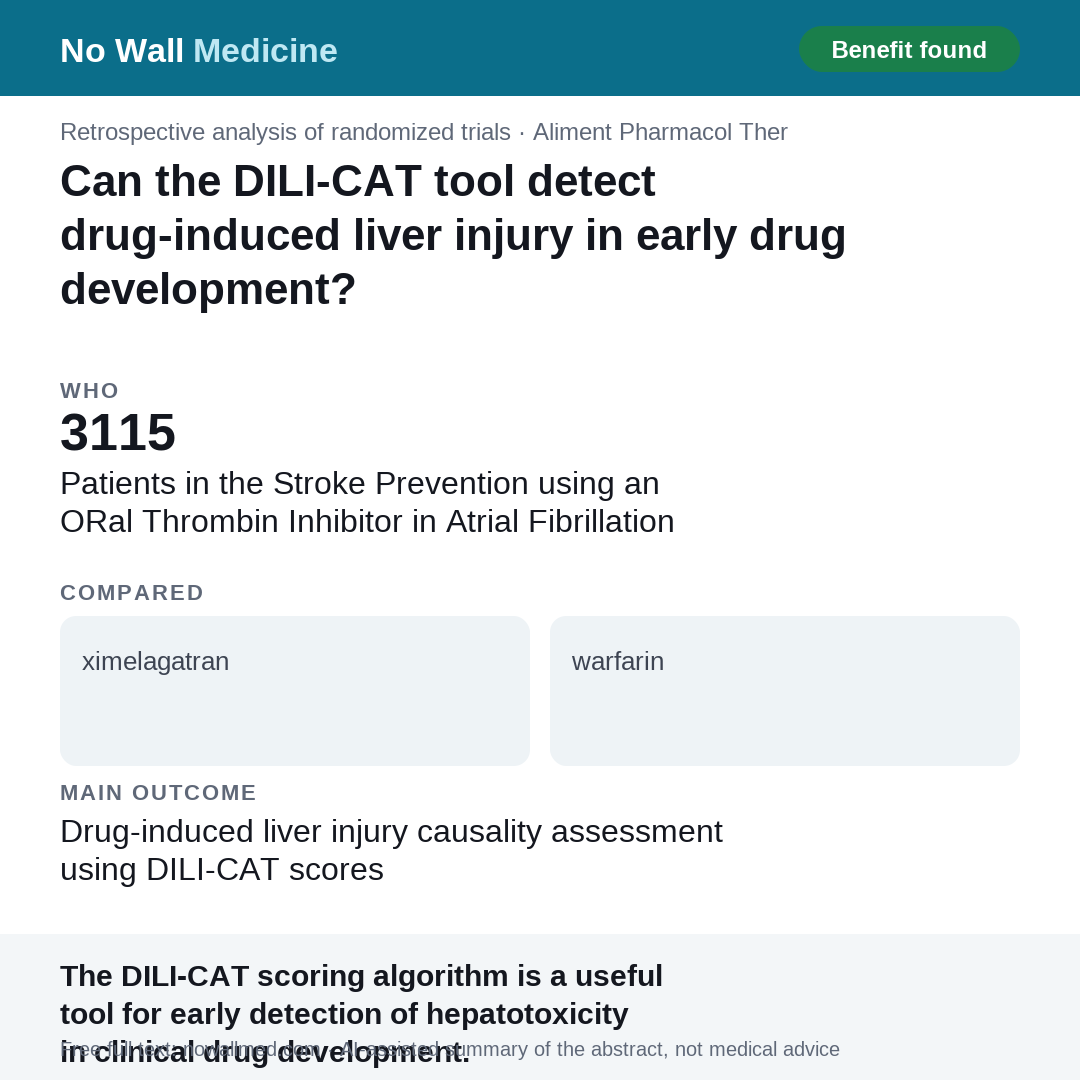
Can the DILI-CAT tool detect drug-induced liver injury in early drug development?
Who
3115
Patients in the Stroke Prevention using an ORal Thrombin Inhibitor in Atrial Fibrillation trials
Compared
ximelagatran
warfarin
Main outcome
Drug-induced liver injury causality assessment using DILI-CAT scores
Result: p < 0.001
Bottom line: The DILI-CAT scoring algorithm is a useful tool for early detection of hepatotoxicity in clinical drug development.
Aliment Pharmacol Ther · 2022-03-09Download image
Key points
- 3115 patients were studied in four clinical trials comparing ximelagatran and warfarin.
- DILI-CAT scores differed significantly between ximelagatran and warfarin in two validations.
- The tool uses latency, R-value, and AST/ALT ratio to assess liver injury events.
Why it matters: Accurate case adjudication of drug-induced liver injury is needed in early drug development
Limitation the authors note: The analysis was retrospective
Discussion prompts
- Would these patients look like yours? Who was left out?
- Is the main outcome one that matters to patients?
- Is the difference large enough to change what you do?
Cite: Hermann RP, Rockey DC, Suzuki A, Merz M, Tillmann HL. A novel phenotype-based drug-induced liver injury causality assessment tool (DILI-CAT) allows for signal confirmation in early drug development. Aliment Pharmacol Ther. 2022. doi:10.1111/apt.16836
Free full text: PubMed Central · Summary and visual abstract: nowallmed.com/a/a-novel-phenotype-based-drug-induced-liver-injury-causality-l5abd8/ (AI-assisted from the abstract; check the paper before relying on it).