Telemedicine programme reduced non-serious falls and was cost-effective in nursing homes
A person-centred ehealth intervention for fall prevention in nursing homes lacking geriatric expertise: cost-effectiveness analysis within a randomised controlled trial
Prospective, longitudinal, randomised studyBenefit found
Is a gerontological telemedicine programme cost-effective for preventing falls in nursing homes?
Who
426
Residents aged 60 years or older in nursing homes in medical deserts · Nursing homes in medical deserts
Compared
Intervention group: 107 residents experienced non-serious falls
Control group: 134 residents experienced non-serious falls
Main outcome
Proportion of patients who experienced falls during the 1-year study period
Bottom line: The gerontological telemedicine programme is a cost-effective way to reduce non-serious falls among nursing home residents.
Age Ageing · 2026-03-20Download image
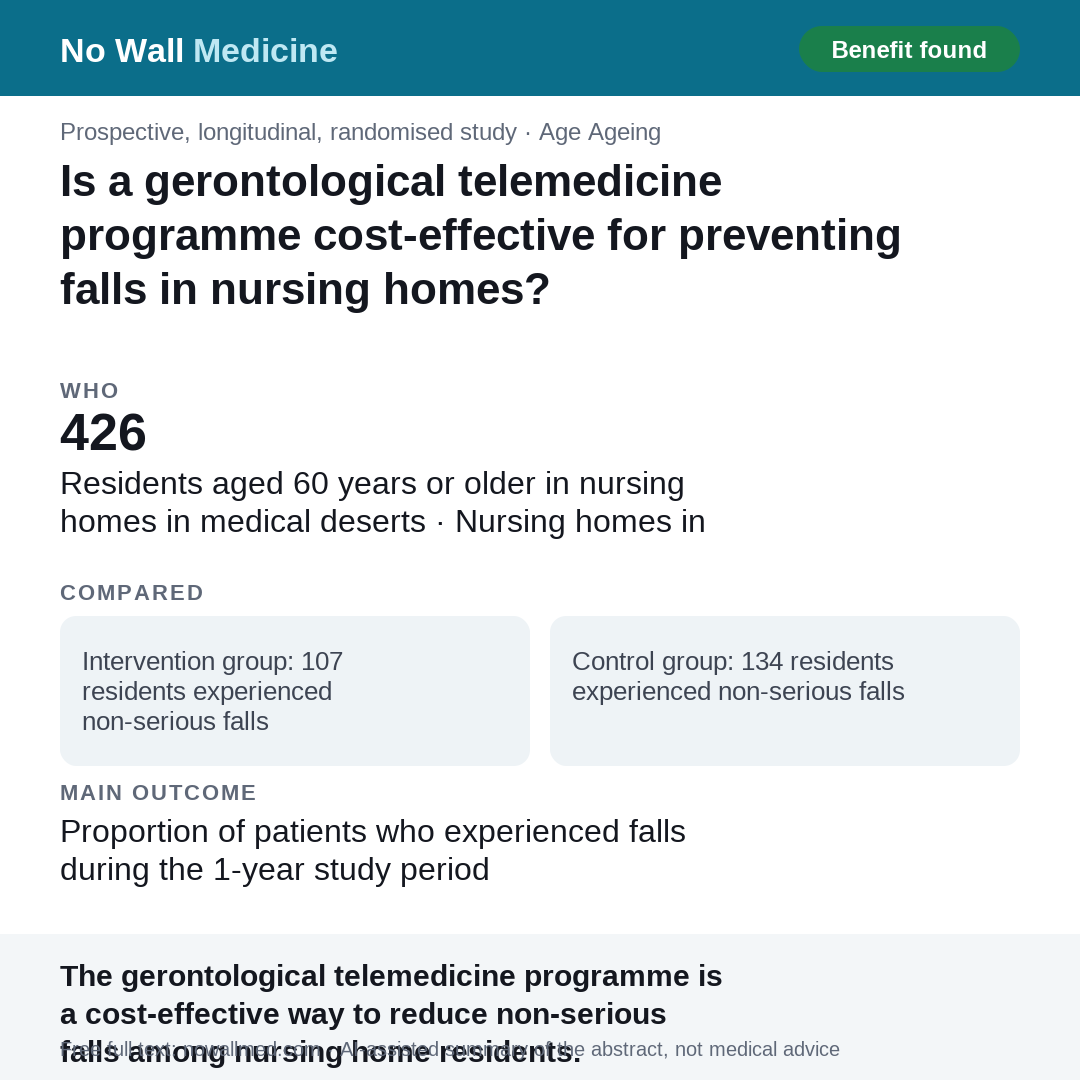
Clinical question: Is a gerontological telemedicine programme cost-effective for preventing falls in nursing homes?
Why it matters: Falls among older adults in nursing homes are frequent and represent a major public health issue with significant costs.
Key points
- Researchers studied 426 residents aged 60 years or older in nursing homes located in medical deserts, comparing a telemedicine programme to usual care.
- The telemedicine group had significantly fewer residents experiencing at least one fall and fewer non-serious falls involving 107 residents compared to 134 in the control group.
- While there was no significant difference in total falls, each fall avoided in the intervention group saved approximately US$4272.
Headline and key points written with AI from the paper’s abstract, with every number checked against it. Read the paper before relying on them.
Topics
Spotted a mistake? Suggest a correction