Neutralizing interleukin-17A reduced brain tissue damage and mortality in a mouse stroke model
A preclinical randomized controlled multi-centre trial of anti-interleukin-17A treatment for acute ischaemic stroke
Preclinical randomized controlled multi-centre trialBenefit found
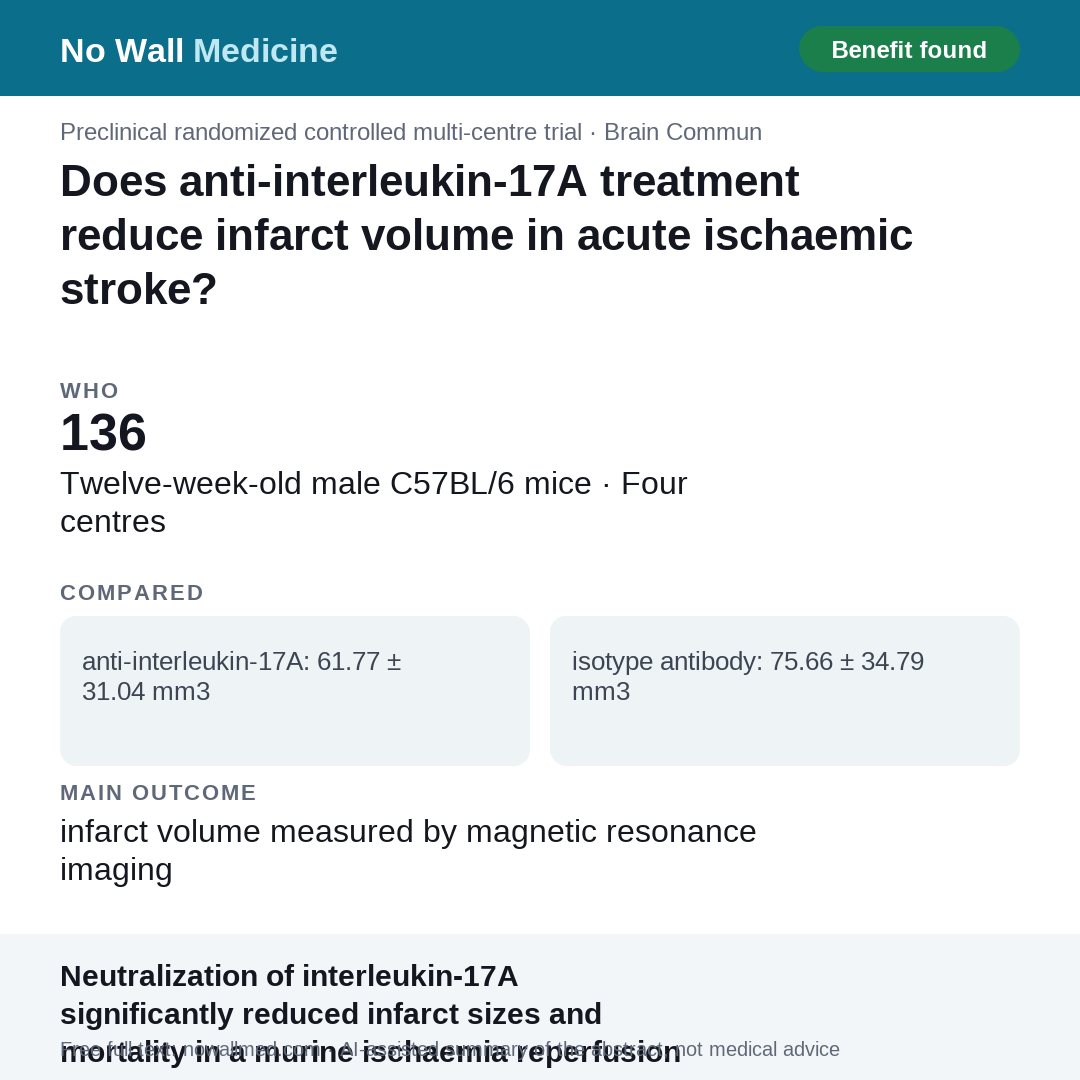
Does anti-interleukin-17A treatment reduce infarct volume in acute ischaemic stroke?
Who
136
Twelve-week-old male C57BL/6 mice · Four centres
Compared
anti-interleukin-17A: 61.77 ± 31.04 mm3
isotype antibody: 75.66 ± 34.79 mm3
Main outcome
infarct volume measured by magnetic resonance imaging
Bottom line: Neutralization of interleukin-17A significantly reduced infarct sizes and mortality in a murine ischaemia reperfusion stroke model.
Brain Commun · 2023-03-23Download image
Clinical question: Does anti-interleukin-17A treatment reduce infarct volume in acute ischaemic stroke?
Why it matters: It is unknown if neutralizing interleukin-17A, a protein involved in inflammation, can effectively reduce brain damage and death following an acute ischaemic stroke.
Key points
- Researchers studied 109 mice in a multi-centre trial to compare an interleukin-17A neutralizing antibody against an isotype control antibody after a stroke.
- The antibody treatment resulted in smaller infarct volumes of 61.77 ± 31.04 mm3 compared to 75.66 ± 34.79 mm3 in the control group (P = 0.01).
- Treatment was associated with lower mortality (hazard ratio = 3.43, 95% confidence interval = 1.157-10.18; P = 0.04) and fewer neutrophils, which are white blood cells, in the brain.
Headline and key points written with AI from the paper’s abstract, with every number checked against it. Read the paper before relying on them.
Cite this article
Gelderblom M, Koch S, Strecker JK, Jørgensen C, Garcia-Bonilla L, Ludewig P. A preclinical randomized controlled multi-centre trial of anti-interleukin-17A treatment for acute ischaemic stroke. Brain Commun. 2023. doi:10.1093/braincomms/fcad090
Spotted a mistake? Suggest a correction
Top studies every Monday
The week’s key trials and guidelines in your specialties, plus any topics you follow. By email, free.
Get the weekly digest