AZD1656 glucokinase activator showed no significant difference in clinical improvement for hospitalized diabetic COVID-19 patients
A randomised, double-blind, placebo-controlled, multicentre clinical trial of AZD1656 in diabetic patients hospitalised with COVID-19: The ARCADIA Trial - implications for therapeutic immune modulation
Phase II randomised, double-blind, placebo-controlled clinical trialMixed results
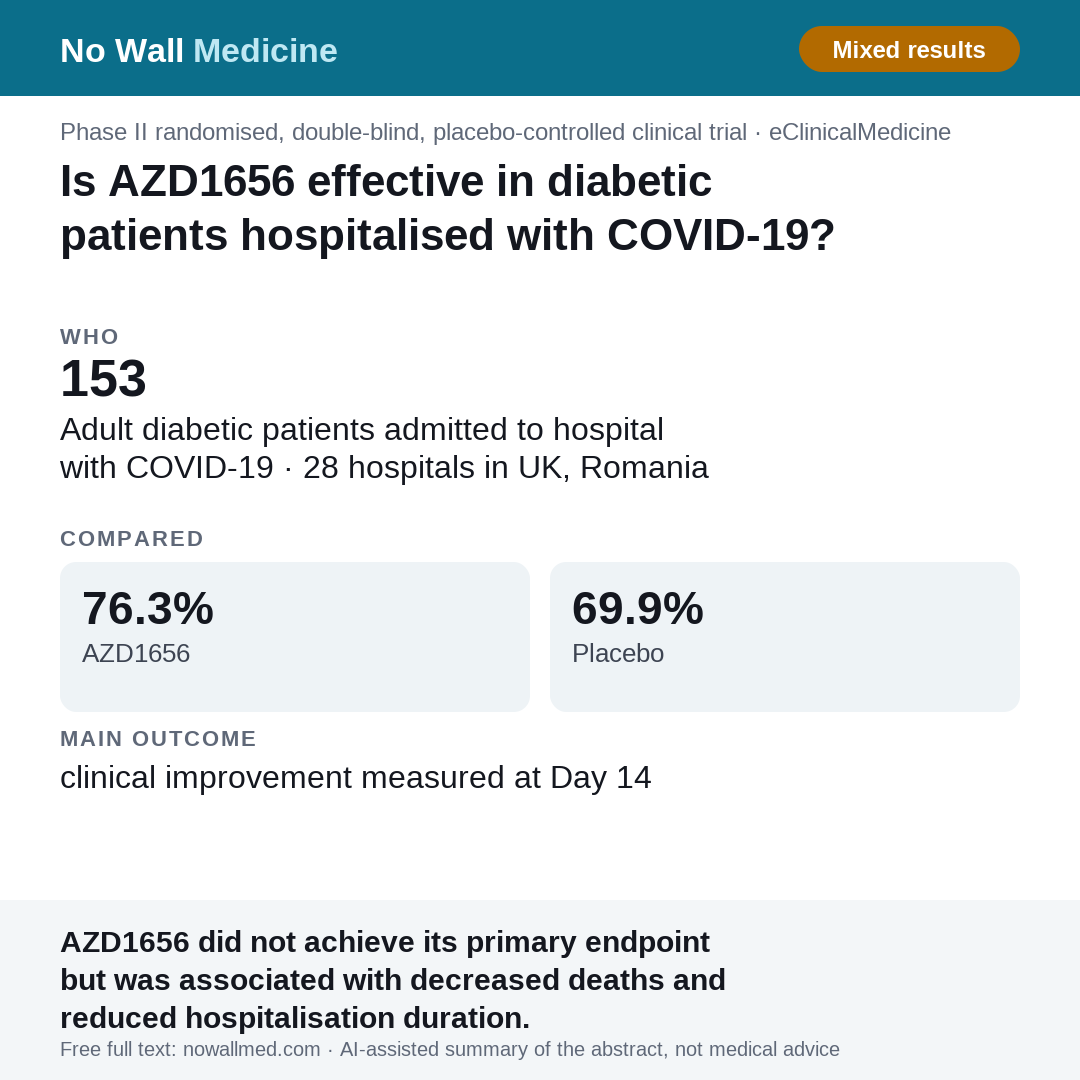
Is AZD1656 effective in diabetic patients hospitalised with COVID-19?
Who
153
Adult diabetic patients admitted to hospital with COVID-19 · 28 hospitals in UK, Romania and Czech Republic
Compared
76.3%AZD1656
69.9%Placebo
Main outcome
clinical improvement measured at Day 14
Bottom line: AZD1656 did not achieve its primary endpoint but was associated with decreased deaths and reduced hospitalisation duration.
Funded by: UK Research and Innovation and Excalibur Medicines Ltd.
eClinicalMedicine · 2022-08-18Download image
Clinical question: Is AZD1656 effective in diabetic patients hospitalised with COVID-19?
Why it matters: It was unknown if the glucokinase activator AZD1656 could provide therapeutic immune modulation for diabetic patients hospitalized with COVID-19.
Key points
- The trial studied 153 diabetic patients hospitalized with COVID-19, comparing 80 patients receiving AZD1656 to 73 patients receiving a placebo.
- Clinical improvement at Day 14 was 76.3% for the AZD1656 group and 69.9% for the placebo group, which was not a statistically significant difference.
- Mortality was 5% in the AZD1656 group compared to 12.3% in the placebo group, though this result was not statistically significant (p=0.090).
Limitation the authors note: Phase 2 trials of this size carry the risk of false positive results.
Headline and key points written with AI from the paper’s abstract, with every number checked against it. Read the paper before relying on them.
Was this summary helpful?
Cite this article
Chorlton J, Hollowood Z, Dyer C, Lockhart D, Boekman P, McCafferty K. A randomised, double-blind, placebo-controlled, multicentre clinical trial of AZD1656 in diabetic patients hospitalised with COVID-19: The ARCADIA Trial - implications for therapeutic immune modulation. eClinicalMedicine. 2022. doi:10.1016/j.eclinm.2022.101604
Spotted a mistake? Suggest a correction
Top studies every Monday
The week’s key trials and guidelines in your specialties, plus any topics you follow. By email, free.
Get the weekly digest