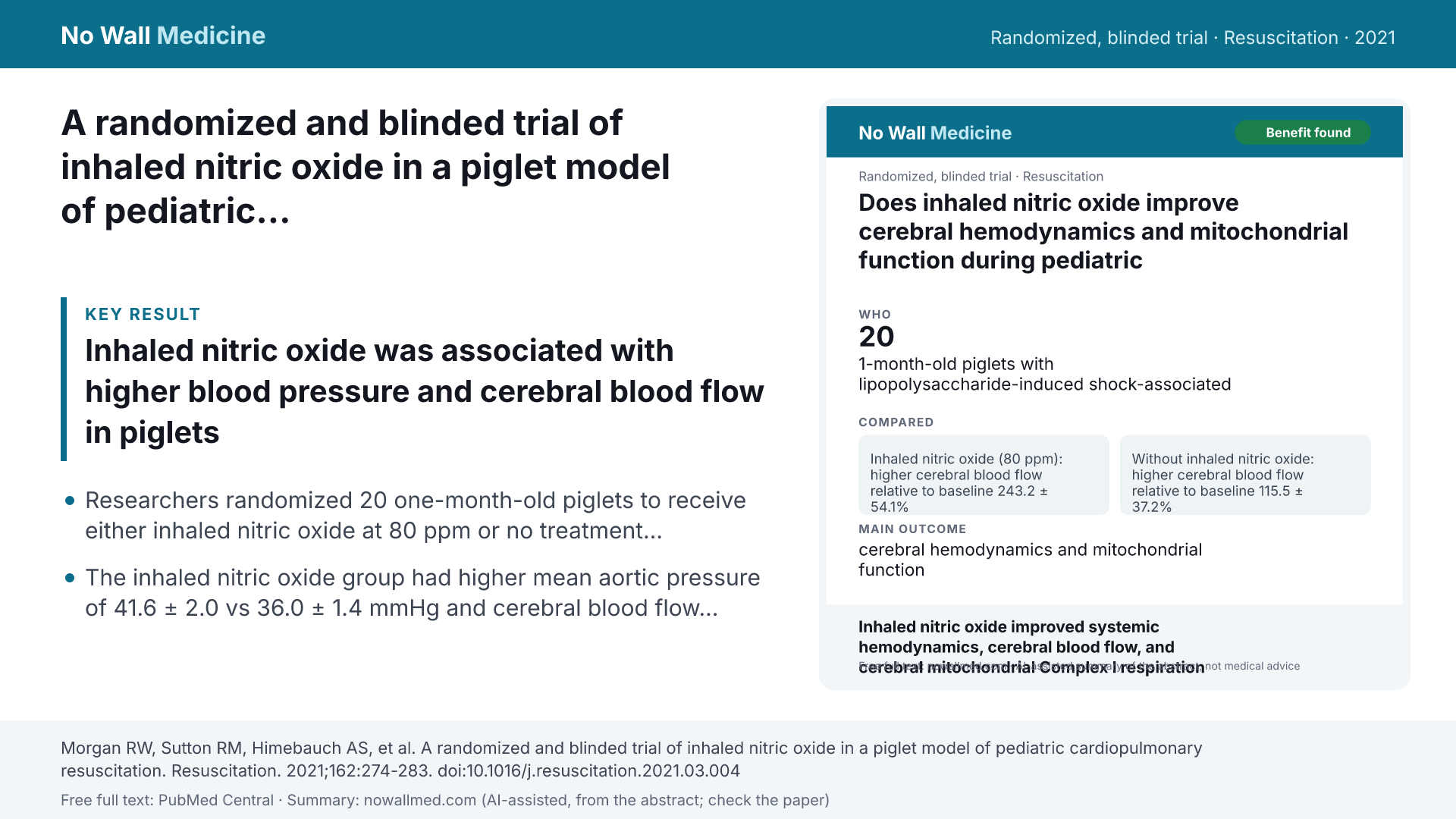
Inhaled nitric oxide was associated with higher blood pressure and cerebral blood flow in piglets
A randomized and blinded trial of inhaled nitric oxide in a piglet model of pediatric cardiopulmonary resuscitation
Randomized, blinded trialBenefit found
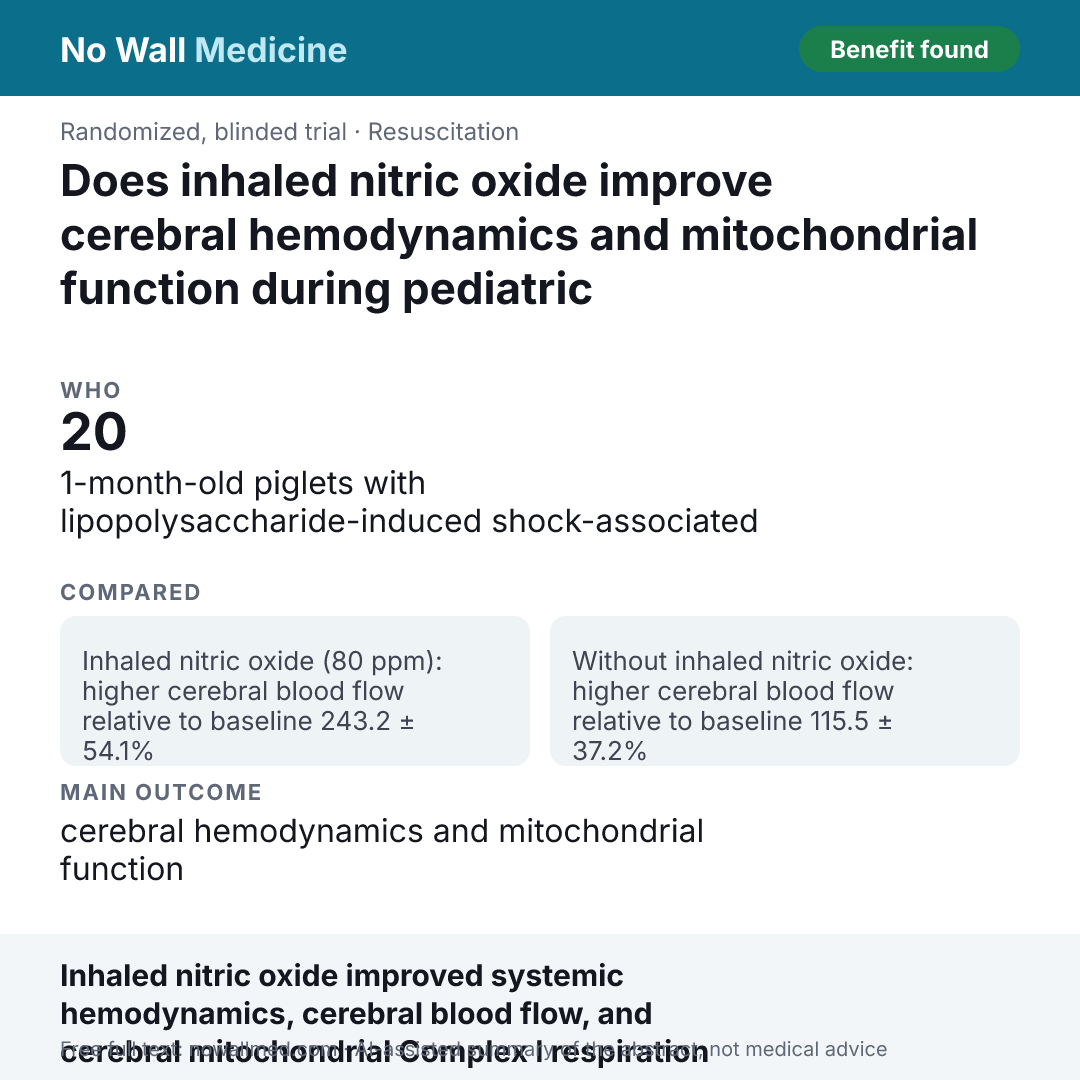
Does inhaled nitric oxide improve cerebral hemodynamics and mitochondrial function during pediatric cardiopulmonary resuscitation?
Who
20
1-month-old piglets with lipopolysaccharide-induced shock-associated in-hospital cardiac arrest
Compared
Inhaled nitric oxide (80 ppm): higher cerebral blood flow relative to baseline 243.2 ± 54.1%
Without inhaled nitric oxide: higher cerebral blood flow relative to baseline 115.5 ± 37.2%
Main outcome
cerebral hemodynamics and mitochondrial function
Bottom line: Inhaled nitric oxide improved systemic hemodynamics, cerebral blood flow, and cerebral mitochondrial Complex I respiration in a piglet model.
Resuscitation · 2021-03-22 · Save PNG
Clinical question: Does inhaled nitric oxide improve cerebral hemodynamics and mitochondrial function during pediatric cardiopulmonary resuscitation?
Key points
- Researchers randomized 20 one-month-old piglets to receive either inhaled nitric oxide at 80 ppm or no treatment during and after cardiopulmonary resuscitation.
- The inhaled nitric oxide group had higher mean aortic pressure of 41.6 ± 2.0 vs 36.0 ± 1.4 mmHg and cerebral blood flow of 243.2 ± 54.1% vs 115.5 ± 37.2%.
- In survivors, inhaled nitric oxide was associated with higher mitochondrial Complex I oxidative phosphorylation in the cerebral cortex and the hippocampus.
Headline and key points written with AI from the paper’s abstract, with every number checked against it. Read the paper before relying on them.
Was this summary helpful?
Subject terms
Headline, design, result, key points, caveat and citation as plain text.
Cite this article
Morgan RW, Sutton RM, Himebauch AS, et al. A randomized and blinded trial of inhaled nitric oxide in a piglet model of pediatric cardiopulmonary resuscitation. Resuscitation. 2021;162:274-283. doi:10.1016/j.resuscitation.2021.03.004
Spotted a mistake? Suggest a correction