Cognitive behavioral therapy reduces pain catastrophizing and changes brain connectivity in fibromyalgia patients
A Randomized Controlled Neuroimaging Trial of Cognitive Behavioral Therapy for Fibromyalgia Pain
Randomized controlled mechanistic trialBenefit found
Does cognitive behavioral therapy affect pain catastrophizing and brain connectivity in fibromyalgia?
Who
98
Participants with fibromyalgia
Compared
Cognitive behavioral therapy: larger decreases in pain catastrophizing
Fibromyalgia education control
Main outcome
Pain catastrophizing and brain functional connectivity
Bottom line: Cognitive behavioral therapy reduces pain catastrophizing and alters default mode network connectivity in fibromyalgia.
Arthritis Rheumatol · 2023-11-21Download image
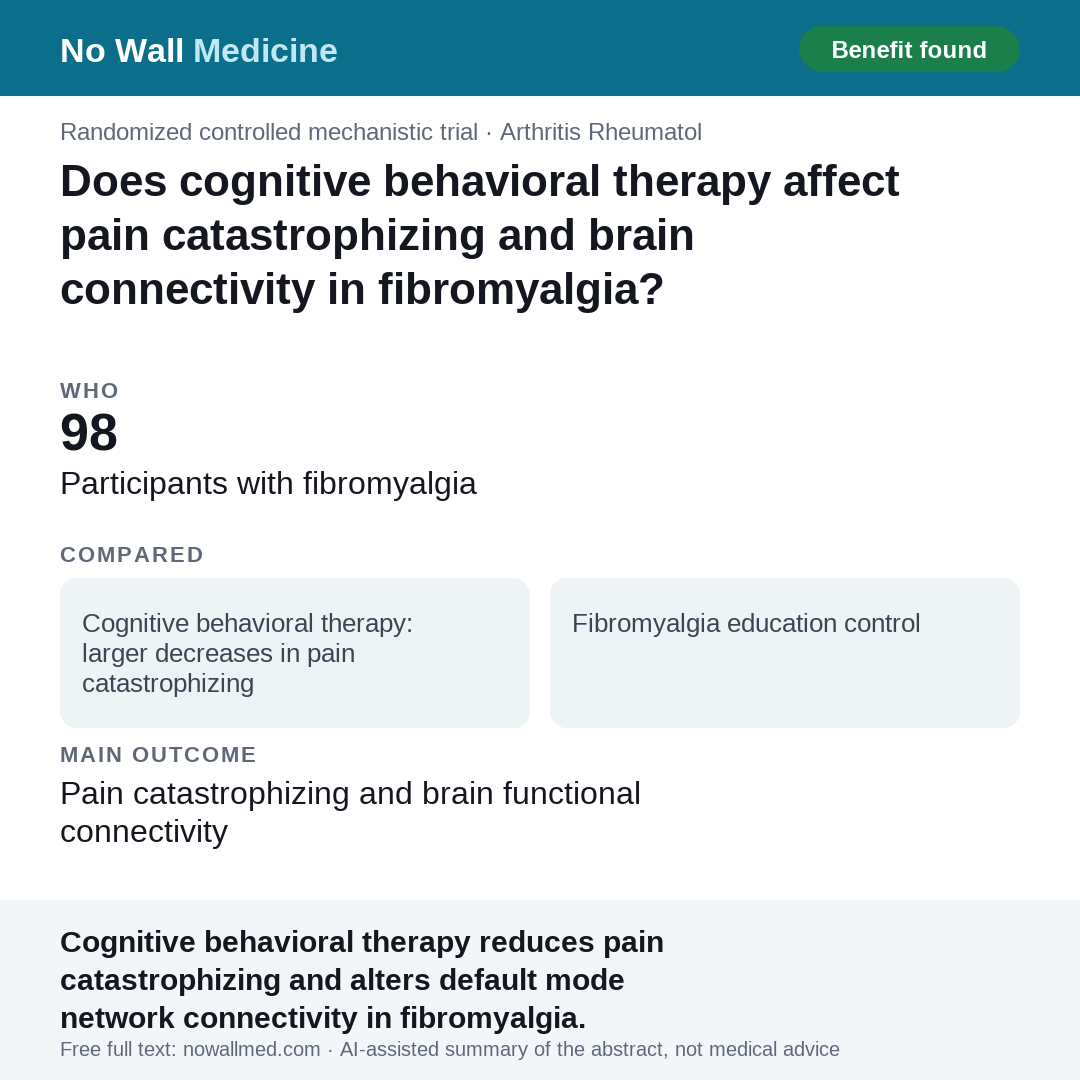
Clinical question: Does cognitive behavioral therapy affect pain catastrophizing and brain connectivity in fibromyalgia?
Why it matters: The neural mechanisms through which cognitive behavioral therapy reduces pain-related catastrophizing in people with fibromyalgia were uncertain.
Key points
- Researchers studied 98 participants with fibromyalgia who were randomized to receive 8 weeks of individual cognitive behavioral therapy or a matched education control.
- Cognitive behavioral therapy produced larger decreases in pain catastrophizing, pain interference, and symptom impact compared to the education control group.
- Treatment was associated with reduced connectivity between the ventral posterior cingulate cortex, a part of the default mode network, and somatomotor and salience network regions.
Headline and key points written with AI from the paper’s abstract, with every number checked against it. Read the paper before relying on them.
Topics
Cite this article
Lee J, Lazaridou A, Paschali M, Loggia ML, Berry MP, Ellingsen DM. A Randomized Controlled Neuroimaging Trial of Cognitive Behavioral Therapy for Fibromyalgia Pain. Arthritis Rheumatol. 2023. doi:10.1002/art.42672
Spotted a mistake? Suggest a correction
Top studies every Monday
The week’s key trials and guidelines in your specialties, plus any topics you follow. By email, free.
Get the weekly digest