Digital cognitive behavioral therapy for insomnia improved sleep outcomes in older adults over 12 months
A randomized controlled trial of a digital cognitive behavioral therapy for insomnia for older adults
3-arm randomized controlled trialBenefit found
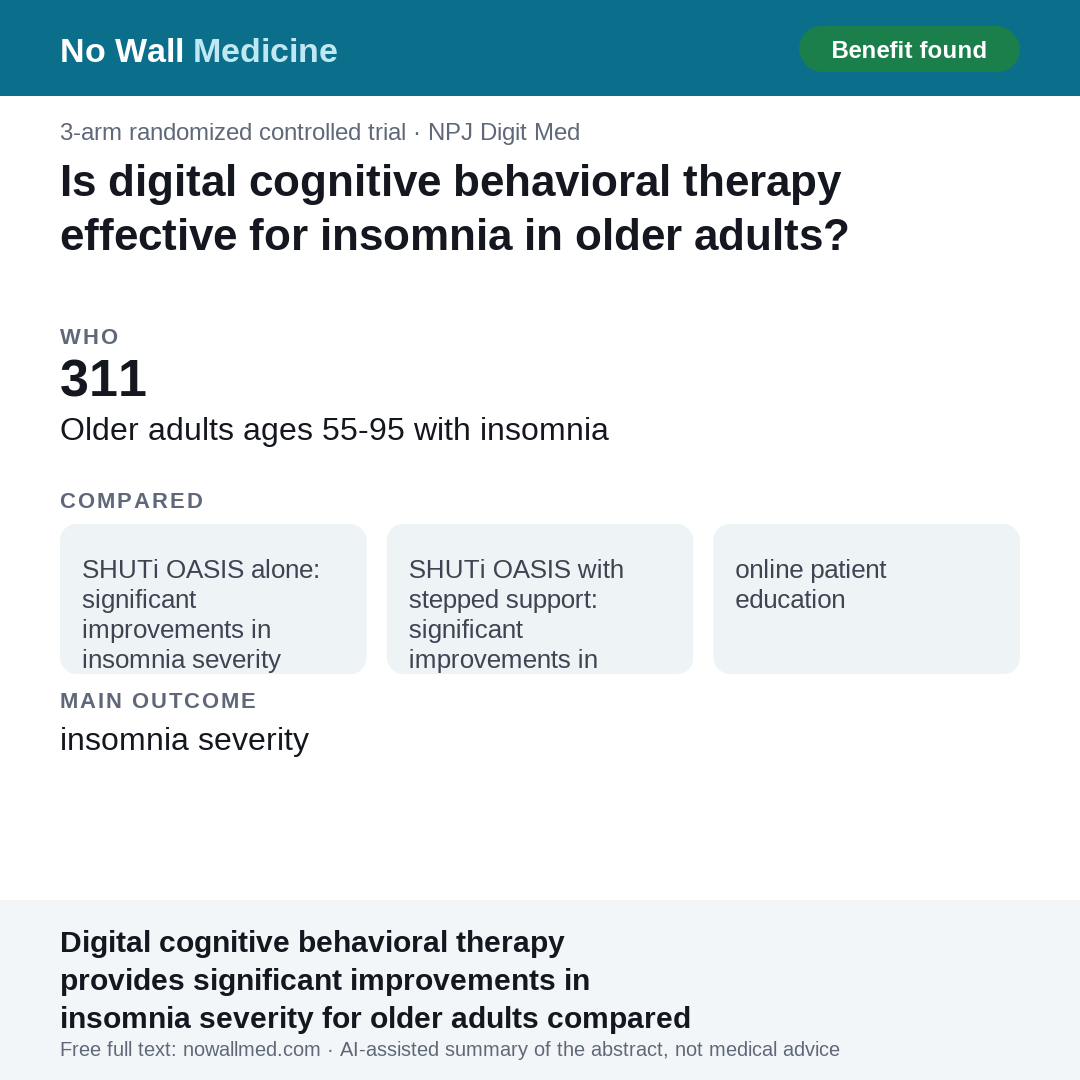
Is digital cognitive behavioral therapy effective for insomnia in older adults?
Who
311
Older adults ages 55-95 with insomnia
Compared
SHUTi OASIS alone: significant improvements in insomnia severity
SHUTi OASIS with stepped support: significant improvements in insomnia severity
online patient education
Main outcome
insomnia severity
Bottom line: Digital cognitive behavioral therapy provides significant improvements in insomnia severity for older adults compared to online patient education.
NPJ Digit Med · 2025-07-19Download image
Clinical question: Is digital cognitive behavioral therapy effective for insomnia in older adults?
Why it matters: Older adults with insomnia face challenges accessing first-line therapy like cognitive behavioral therapy for insomnia due to limited availability.
Key points
- Researchers conducted a randomized controlled trial with 311 participants aged 55-95 comparing a digital cognitive behavioral therapy for insomnia, the same therapy with stepped support, and online patient education.
- Both digital therapy groups reported significant improvements in insomnia severity at post-treatment, 6-month, and 12-month follow-ups compared to the online patient education group.
- The digital therapy groups also showed better results for sleep onset latency, wake after sleep onset, sleep efficiency, number of awakenings, sleep quality, and fatigue.
Headline and key points written with AI from the paper’s abstract, with every number checked against it. Read the paper before relying on them.
Cite this article
Ritterband LM, Shaffer KM, Thorndike FP, Chow PI, Gonder-Frederick L, Ingersoll KS. A randomized controlled trial of a digital cognitive behavioral therapy for insomnia for older adults. NPJ Digit Med. 2025. doi:10.1038/s41746-025-01847-0
Spotted a mistake? Suggest a correction
Top studies every Monday
The week’s key trials and guidelines in your specialties, plus any topics you follow. By email, free.
Get the weekly digest