Virtual reality distraction did not reduce distress or pain during intravenous insertion in children
A Randomized Controlled Trial of Commercially Available Virtual Reality for Intravenous Cannulation-Related Distress in Children
Randomized controlled trialNo clear difference
Does virtual reality distraction reduce distress during intravenous insertion in children?
Who
82
Children aged 6-17 years requiring intravenous insertion · Pediatric emergency department
Compared
1.1Virtual reality (1.5)
0.7Standard of care (1.4)
Main outcome
Total procedural distress measured by Observational Scale of Behavioral Distress-Revised
Bottom line: Virtual reality distraction did not reduce procedural distress, pain, or fear compared to standard of care.
J Pediatr · 2025-09-15Download image
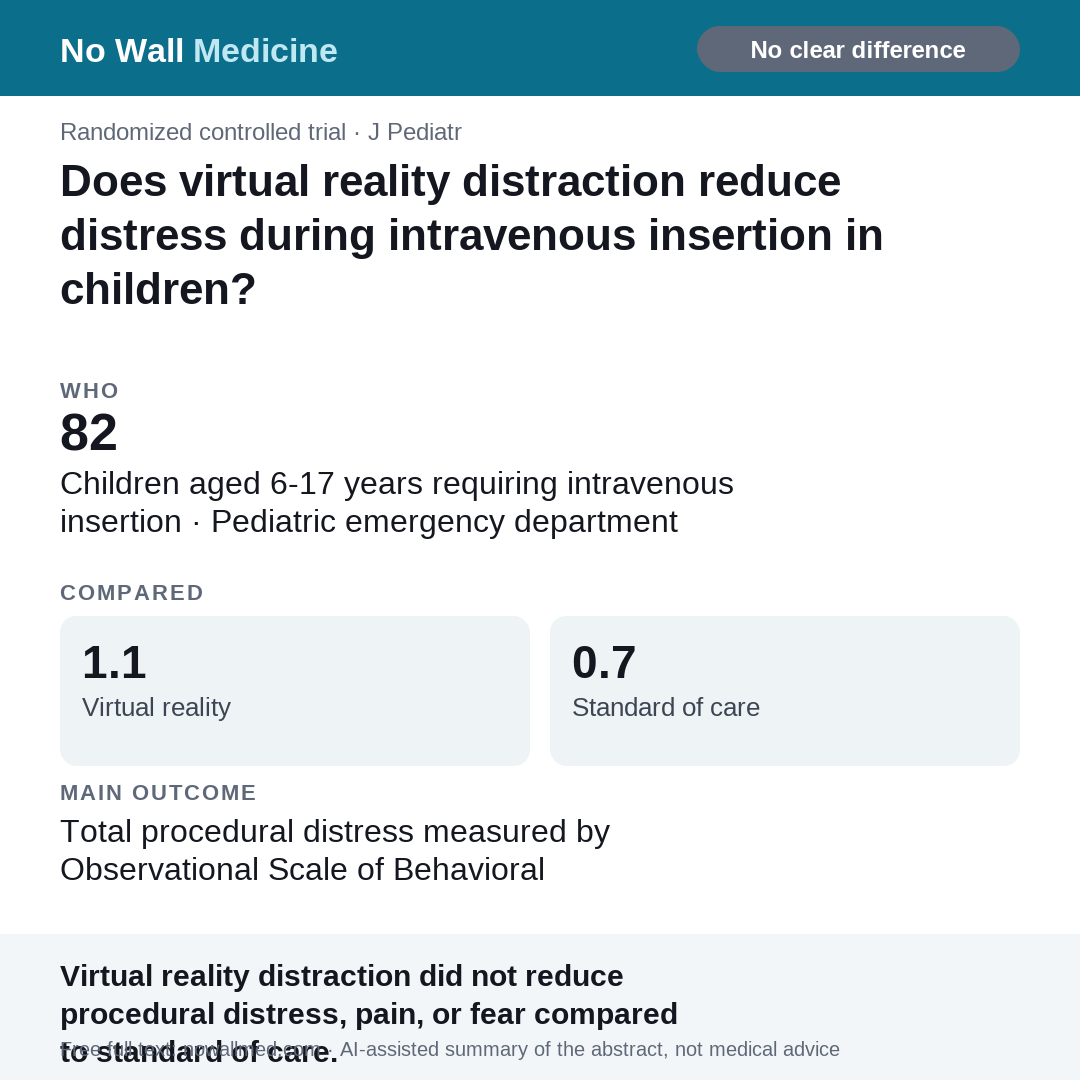
Clinical question: Does virtual reality distraction reduce distress during intravenous insertion in children?
Why it matters: It is unclear if commercially available virtual reality distraction reduces distress, pain, or fear for children undergoing intravenous insertion in pediatric emergency departments.
Key points
- Researchers conducted a randomized controlled trial with 82 children aged 6-17 years to compare virtual reality distraction to standard of care during intravenous insertion.
- Virtual reality use was not associated with lower total procedural distress, pain intensity, or fear scores compared to standard of care.
- Technical issues with the virtual reality equipment were reported in 26% (10/39) of cases.
Headline and key points written with AI from the paper’s abstract, with every number checked against it. Read the paper before relying on them.
Topics
Cite this article
Ali S, Hudson S, Rajagopal M, Stinson JN, Gourlay K, Ma K. A Randomized Controlled Trial of Commercially Available Virtual Reality for Intravenous Cannulation-Related Distress in Children. J Pediatr. 2025. doi:10.1016/j.jpeds.2025.114803
Spotted a mistake? Suggest a correction
Top studies every Monday
The week’s key trials and guidelines in your specialties, by email. Free.
Get the weekly digest