Video-assisted electronic consent improved patient comprehension for percutaneous kidney biopsy compared to usual practice
A Randomized Controlled Trial of Video-Assisted Electronic Consent versus Standard Consent for Percutaneous Kidney Biopsy
Single-center, open-label, randomized controlled trialBenefit found
Does video-assisted electronic consent improve patient comprehension compared to usual consent for kidney biopsy?
Who
120
Patients undergoing percutaneous kidney biopsy · Single-center
Compared
Video-assisted electronic consent: three more questions correctly out of nine
Usual practice of consent
Main outcome
Questionnaire-based patient comprehension
Bottom line: Video-assisted electronic consent significantly improves patient comprehension of percutaneous kidney biopsy without affecting patient experience, anxiety, or satisfaction.
CJASN · 2025-04-09Download image
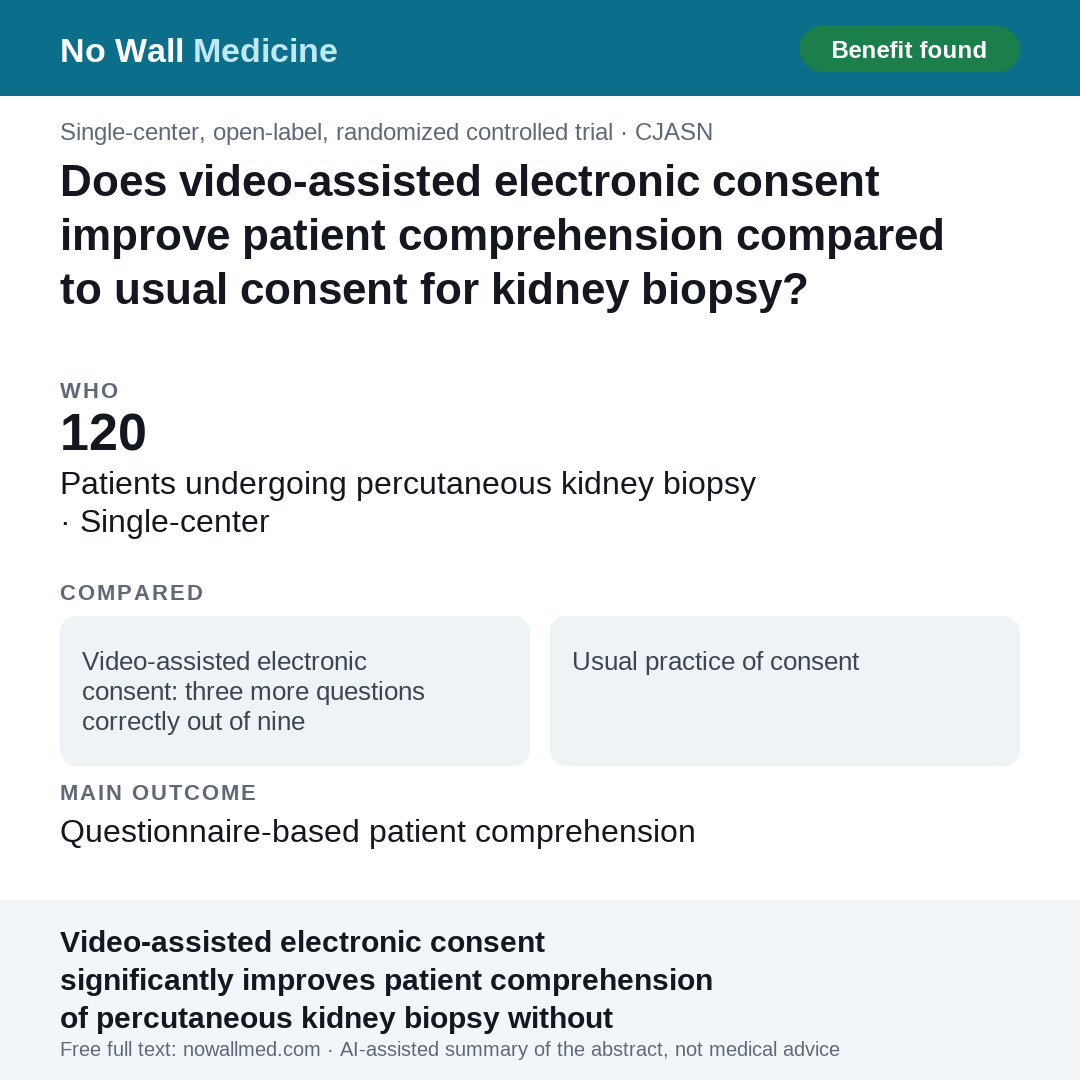
Clinical question: Does video-assisted electronic consent improve patient comprehension compared to usual consent for kidney biopsy?
Why it matters: The informed consent process is often unstandardized, which can lead to gaps in patient comprehension and affect medical decision making.
Key points
- Researchers conducted a randomized trial with 120 patients undergoing percutaneous kidney biopsy, comparing video-assisted electronic consent to standard clinician-led paper consent.
- Patients using the eight-minute animation answered an average of three more questions correctly out of nine regarding the procedure and its risks compared to the control group.
- The video-assisted group showed no significant differences in patient-reported experience, anxiety, or satisfaction with the consent process compared to the usual practice group.
Limitation the authors note: This was a single-center, open-label, randomized controlled trial.
Headline and key points written with AI from the paper’s abstract, with every number checked against it. Read the paper before relying on them.
Was this summary helpful?
Cite this article
Franca Gois PH, Miao VY, Saunderson RB, Wainstein M, Jefferis J, Hudson R. A Randomized Controlled Trial of Video-Assisted Electronic Consent versus Standard Consent for Percutaneous Kidney Biopsy. CJASN. 2025. doi:10.2215/CJN.0000000702
Spotted a mistake? Suggest a correction
Top studies every Monday
The week’s key trials and guidelines in your specialties, plus any topics you follow. By email, free.
Get the weekly digest