Rucaparib maintenance therapy extended progression-free survival in patients with DNA repair deficiency metastatic urothelial carcinoma
A Randomized, Double-Blind, Biomarker-Selected, Phase II Clinical Trial of Maintenance Poly ADP-Ribose Polymerase Inhibition With Rucaparib Following Chemotherapy for Metastatic Urothelial Carcinoma
Randomized, double-blind, phase II clinical trialBenefit found
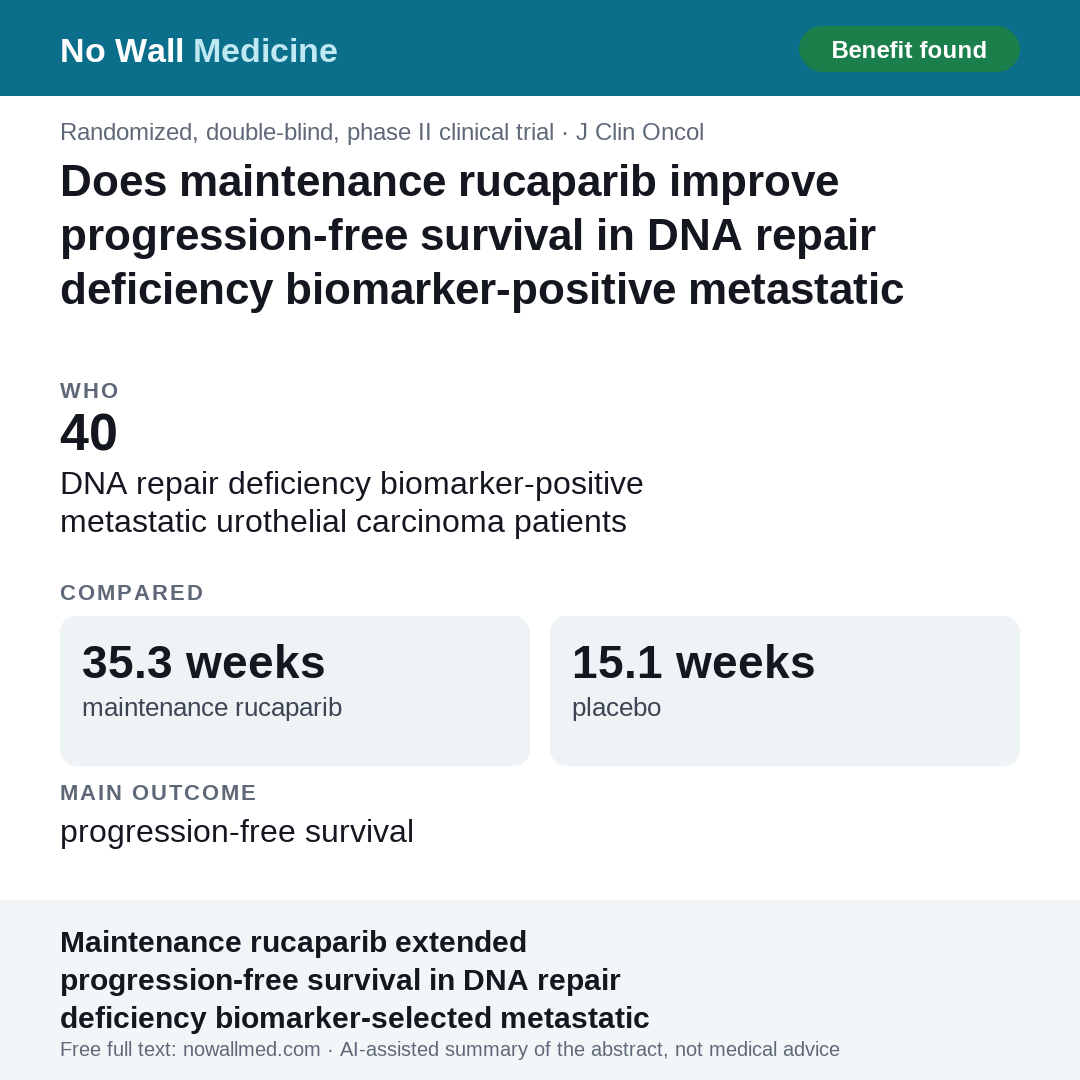
Does maintenance rucaparib improve progression-free survival in DNA repair deficiency biomarker-positive metastatic urothelial carcinoma?
Who
40
DNA repair deficiency biomarker-positive metastatic urothelial carcinoma patients
Compared
35.3 weeksmaintenance rucaparib (80% CI, 11.7 to 35.6)
15.1 weeksplacebo (80% CI, 11.9 to 22.6)
Main outcome
progression-free survival
Result: hazard ratio 0.53 (80% CI 0.30 to 0.92)
Bottom line: Maintenance rucaparib extended progression-free survival in DNA repair deficiency biomarker-selected metastatic urothelial carcinoma patients.
J Clin Oncol · 2022-08-12Download image
Clinical question: Does maintenance rucaparib improve progression-free survival in DNA repair deficiency biomarker-positive metastatic urothelial carcinoma?
Why it matters: It was unknown if maintenance therapy with a poly ADP-ribose polymerase inhibitor could benefit patients with metastatic urothelial carcinoma who have a DNA repair deficiency phenotype.
Key points
- The study randomized 40 patients with DNA repair deficiency biomarker-positive metastatic urothelial carcinoma to receive either rucaparib or a placebo following chemotherapy.
- Median progression-free survival was 35.3 weeks with rucaparib compared to 15.1 weeks with placebo, with a hazard ratio of 0.53.
- Common side effects for rucaparib included fatigue (63.2% vs 30.0%), nausea (36.8% vs 5.0%), rash (21.1% vs 0%), and raised alanine aminotransferase (57.9% vs 10%).
Headline and key points written with AI from the paper’s abstract, with every number checked against it. Read the paper before relying on them.
Was this summary helpful?
Subject terms
Cite this article
Crabb SJ, Hussain S, Soulis E, Hinsley S, Dempsey L, Trevethan A. A Randomized, Double-Blind, Biomarker-Selected, Phase II Clinical Trial of Maintenance Poly ADP-Ribose Polymerase Inhibition With Rucaparib Following Chemotherapy for Metastatic Urothelial Carcinoma. J Clin Oncol. 2022. doi:10.1200/JCO.22.00405
Spotted a mistake? Suggest a correction
Top studies every Monday
The week’s key trials and guidelines in your specialties, plus any topics you follow. By email, free.
Get the weekly digest