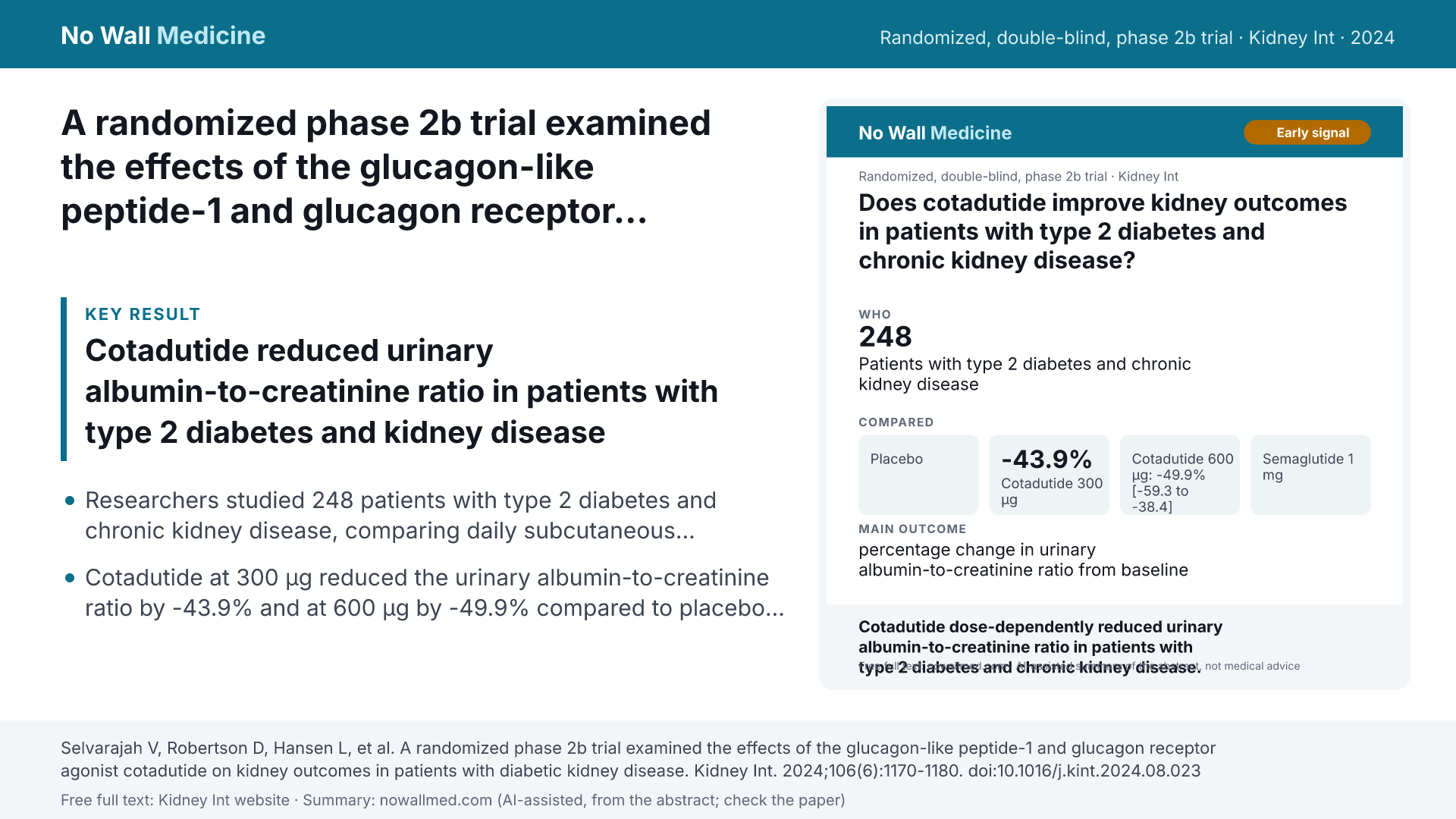
Cotadutide reduced urinary albumin-to-creatinine ratio in patients with type 2 diabetes and kidney disease
A randomized phase 2b trial examined the effects of the glucagon-like peptide-1 and glucagon receptor agonist cotadutide on kidney outcomes in patients with diabetic kidney disease
Randomized, double-blind, phase 2b trialEarly signal
Does cotadutide improve kidney outcomes in patients with type 2 diabetes and chronic kidney disease?
Who
248
Patients with type 2 diabetes and chronic kidney disease
Compared
Placebo
-43.9%Cotadutide 300 μg (95% confidence interval -54.7 to -30.6)
Cotadutide 600 μg: -49.9% [-59.3 to -38.4]
Semaglutide 1 mg
Main outcome
percentage change in urinary albumin-to-creatinine ratio from baseline
Bottom line: Cotadutide dose-dependently reduced urinary albumin-to-creatinine ratio in patients with type 2 diabetes and chronic kidney disease.
Kidney Int · 2024-08-31 · Save PNG
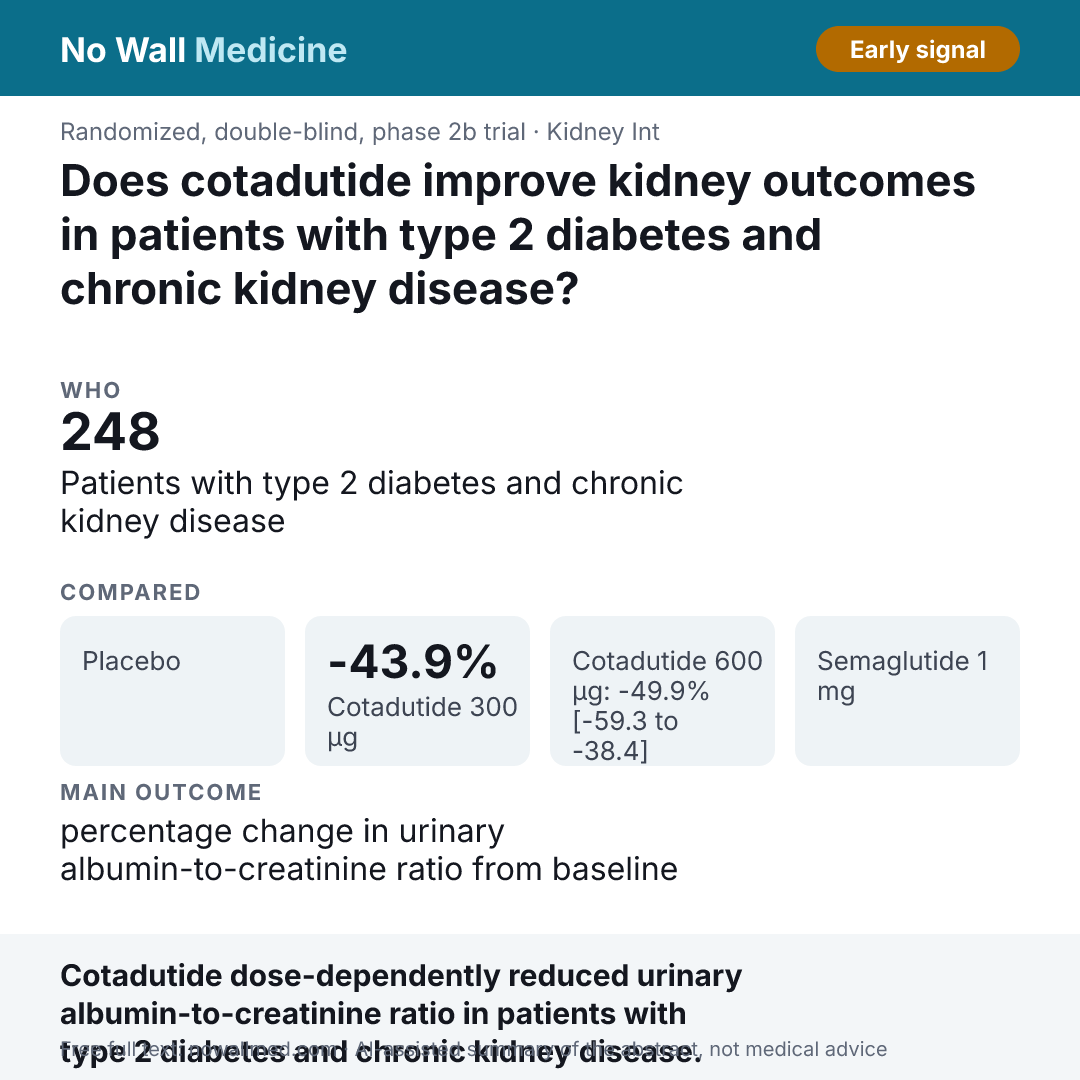
Clinical question: Does cotadutide improve kidney outcomes in patients with type 2 diabetes and chronic kidney disease?
Key points
- Researchers studied 248 patients with type 2 diabetes and chronic kidney disease, comparing daily subcutaneous cotadutide at three doses, a placebo, or weekly semaglutide.
- Cotadutide at 300 μg reduced the urinary albumin-to-creatinine ratio by -43.9% and at 600 μg by -49.9% compared to placebo at week 14.
- Serious adverse events were balanced across all treatment groups, and the safety of 600 μg of cotadutide was comparable to semaglutide.
Headline and key points written with AI from the paper’s abstract, with every number checked against it. Read the paper before relying on them.
Was this summary helpful?
Subject terms
Headline, design, result, key points, caveat and citation as plain text.
Cite this article
Selvarajah V, Robertson D, Hansen L, et al. A randomized phase 2b trial examined the effects of the glucagon-like peptide-1 and glucagon receptor agonist cotadutide on kidney outcomes in patients with diabetic kidney disease. Kidney Int. 2024;106(6):1170-1180. doi:10.1016/j.kint.2024.08.023
Spotted a mistake? Suggest a correction