A Randomized Pilot Study to Compare the Effectiveness of a Low FODMAP Diet vs Psyllium in Patients With Fecal Incontinence and Loose Stools
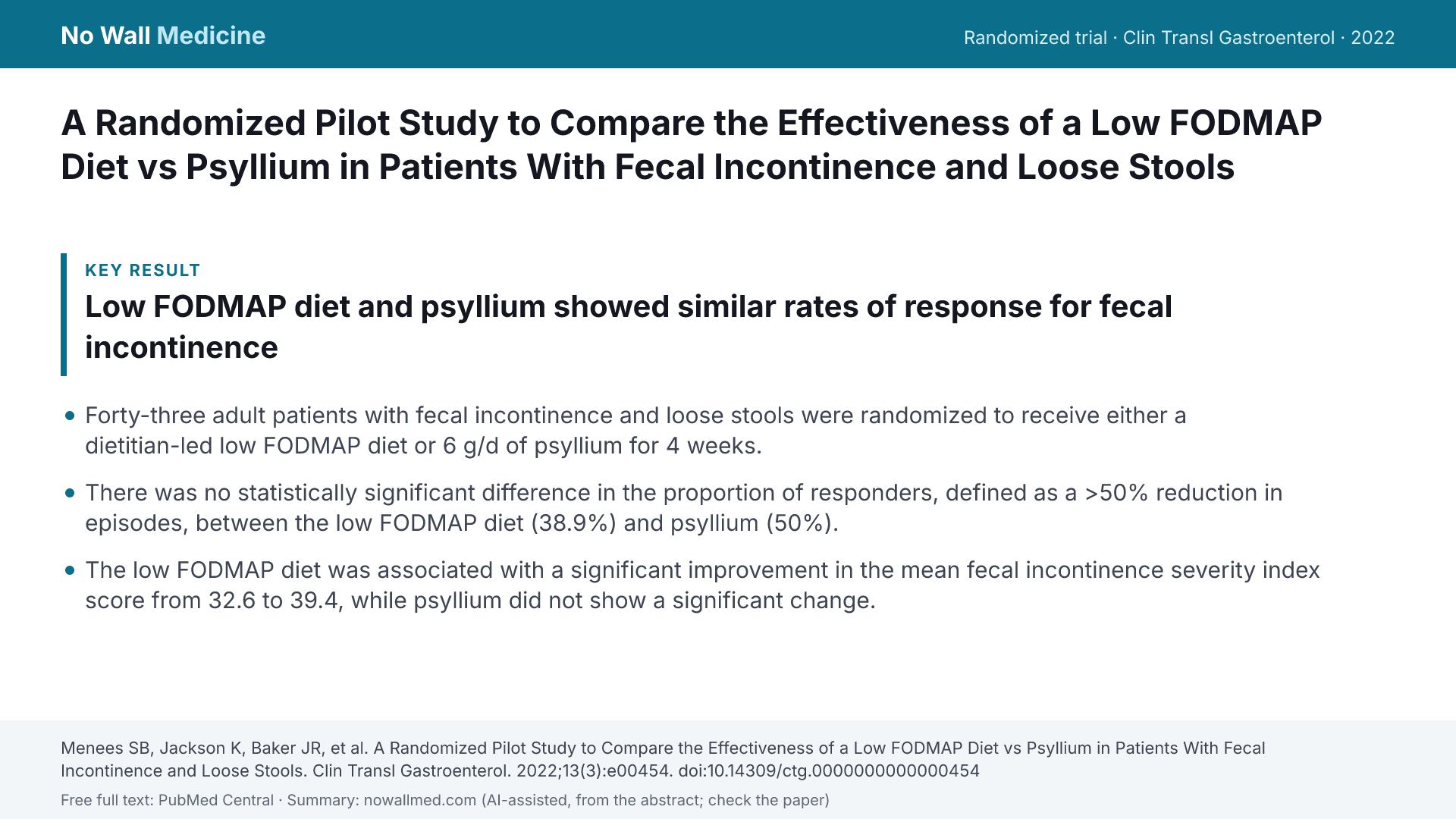
Key result: Low FODMAP diet and psyllium showed similar rates of response for fecal incontinence
Key points
- Forty-three adult patients with fecal incontinence and loose stools were randomized to receive either a dietitian-led low FODMAP diet or 6 g/d of psyllium for 4 weeks.
- There was no statistically significant difference in the proportion of responders, defined as a >50% reduction in episodes, between the low FODMAP diet (38.9%) and psyllium (50%).
- The low FODMAP diet was associated with a significant improvement in the mean fecal incontinence severity index score from 32.6 to 39.4, while psyllium did not show a significant change.
Why it matters: It is unknown whether a low FODMAP diet, which limits certain fermentable carbohydrates, is more effective than psyllium fiber for managing fecal incontinence and loose stools.
Limitation the authors note: This was a single-center, randomized pilot study.
Discussion prompts
- Would these patients look like yours? Who was left out?
- Is the main outcome one that matters to patients?
- Is the difference large enough to change what you do?
Cite: Menees SB, Jackson K, Baker JR, et al. A Randomized Pilot Study to Compare the Effectiveness of a Low FODMAP Diet vs Psyllium in Patients With Fecal Incontinence and Loose Stools. Clin Transl Gastroenterol. 2022. doi:10.14309/ctg.0000000000000454
Free full text: PubMed Central · Summary and visual abstract: nowallmed.com/a/a-randomized-pilot-study-to-compare-the-effectiveness-of-a-low-fodmap-17wngvn/ (AI-assisted from the abstract; check the paper before relying on it).