Digital neuromodulation and mindfulness did not significantly improve knee osteoarthritis pain more than neuromodulation alone
A randomized trial of a digitally delivered, home-based neuromodulation and mindfulness intervention for pain management in older adults with knee osteoarthritis
Randomized, double-blind trialMixed results
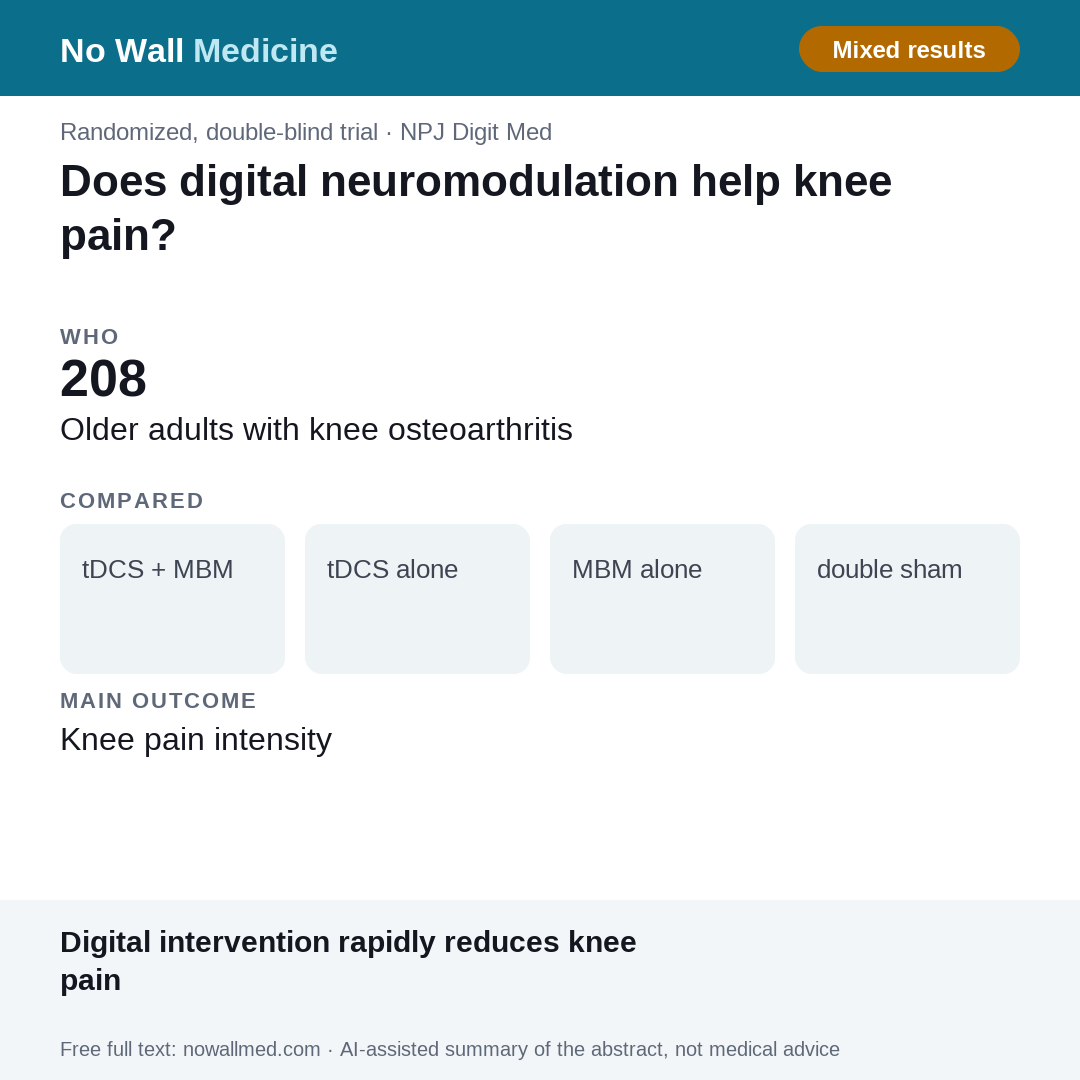
Does digital neuromodulation help knee pain?
Who
208
Older adults with knee osteoarthritis
Compared
tDCS + MBM
tDCS alone
MBM alone
double sham
Main outcome
Knee pain intensity
Bottom line: Digital intervention rapidly reduces knee pain
Limitation: Benefits not sustained at 3 months
NPJ Digit Med · 2026-03-31Download image
Clinical question: Does digital neuromodulation help knee pain?
Why it matters: Scalable home-based interventions for knee osteoarthritis are limited due to a lack of clinically effective digital solutions.
Key points
- Researchers studied 208 participants with knee osteoarthritis who received ten 20-minute sessions of either combined neuromodulation and mindfulness, neuromodulation alone, mindfulness alone, or a sham treatment.
- While both groups receiving neuromodulation showed improvement, the difference between the combined intervention and neuromodulation alone was not statistically significant.
- The observed benefits for knee pain intensity were not sustained at the 3 month follow-up.
Headline and key points written with AI from the paper’s abstract, with every number checked against it. Read the paper before relying on them.
Spotted a mistake? Suggest a correction