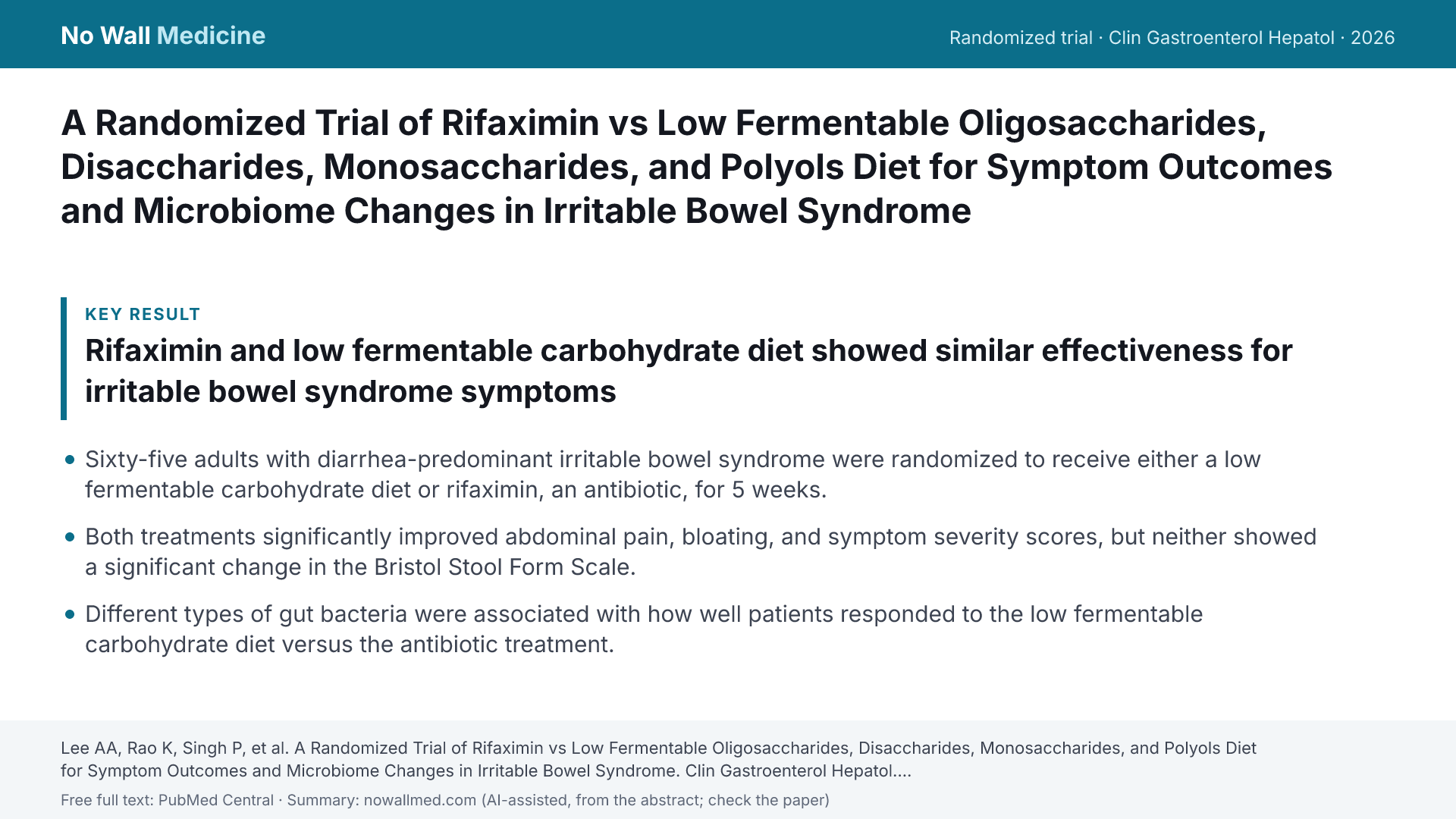
A Randomized Trial of Rifaximin vs Low Fermentable Oligosaccharides, Disaccharides, Monosaccharides, and Polyols Diet for Symptom Outcomes and Microbiome Changes in Irritable Bowel Syndrome
Key result: Rifaximin and low fermentable carbohydrate diet showed similar effectiveness for irritable bowel syndrome symptoms
Key points
- Sixty-five adults with diarrhea-predominant irritable bowel syndrome were randomized to receive either a low fermentable carbohydrate diet or rifaximin, an antibiotic, for 5 weeks.
- Both treatments significantly improved abdominal pain, bloating, and symptom severity scores, but neither showed a significant change in the Bristol Stool Form Scale.
- Different types of gut bacteria were associated with how well patients responded to the low fermentable carbohydrate diet versus the antibiotic treatment.
Why it matters: Doctors need to identify predictors of treatment response because both the low fermentable carbohydrate diet and rifaximin are effective in fewer than 50% of individuals.
Limitation the authors note: The authors state that these findings require validation before they can be used to inform personalized treatment approaches.
Discussion prompts
- Would these patients look like yours? Who was left out?
- Is the main outcome one that matters to patients?
- Is the difference large enough to change what you do?
Cite: Lee AA, Rao K, Singh P, et al. A Randomized Trial of Rifaximin vs Low Fermentable Oligosaccharides, Disaccharides, Monosaccharides, and Polyols Diet for Symptom Outcomes and Microbiome Changes in Irritable Bowel Syndrome. Clin Gastroenterol Hepatol. 2026;24(12):3403-3412. doi:10.1016/j.cgh.2026.04.014
Free full text: PubMed Central · Summary and visual abstract: nowallmed.com/a/a-randomized-trial-of-rifaximin-vs-low-fermentable-oligosaccharides-1omwqlw/ (AI-assisted from the abstract; check the paper before relying on it).