Remote behavioral intervention did not significantly reduce primary complications in adolescent liver transplant recipients
A remote intervention to improve medication nonadherence guided by a marker of risk derived from the electronic health records of adolescent transplant recipients
Prospective, block-randomized, single-blind, controlled multisite studyNo clear difference
Does a remote behavioral telemetric intervention improve medication adherence in adolescent liver transplant recipients?
Who
148
Adolescent liver transplant recipients · 13 pediatric transplant centers
Compared
6Telemetric intervention (8.3%)
12Standard of care (15.8%)
Main outcome
Composite incidence of rejection, death, retransplantation, or consent withdrawal
Result: relative risk 0.57 (95% confidence interval 0.24-1.35)
Bottom line: The remote behavioral telemetric intervention did not significantly reduce the composite incidence of primary events compared to standard care.
Am J Transplant · 2026-05-27Download image
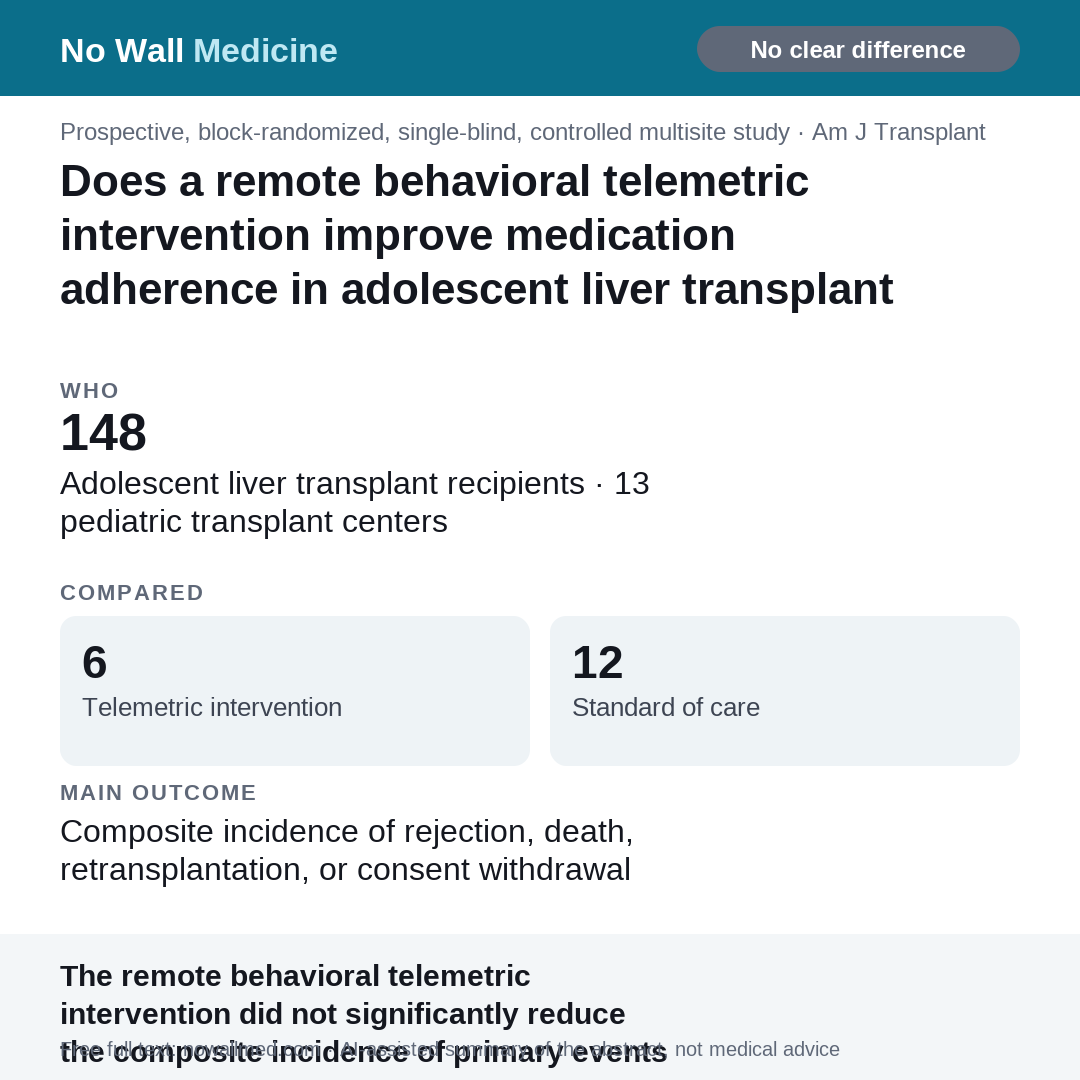
Clinical question: Does a remote behavioral telemetric intervention improve medication adherence in adolescent liver transplant recipients?
Why it matters: Doctors need ways to improve medication adherence in adolescents who have received liver transplants to prevent complications.
Key points
- Researchers studied 148 adolescent liver transplant recipients, comparing a 2-year remote behavioral telemetric intervention to standard of care.
- The intervention group had 6 primary events (8.3%) compared to 12 events (15.8%) in the standard care group, but the result was not statistically significant.
- All secondary outcomes showed improvement in the remote intervention group compared to the standard of care group.
Headline and key points written with AI from the paper’s abstract, with every number checked against it. Read the paper before relying on them.
Topics
Spotted a mistake? Suggest a correction