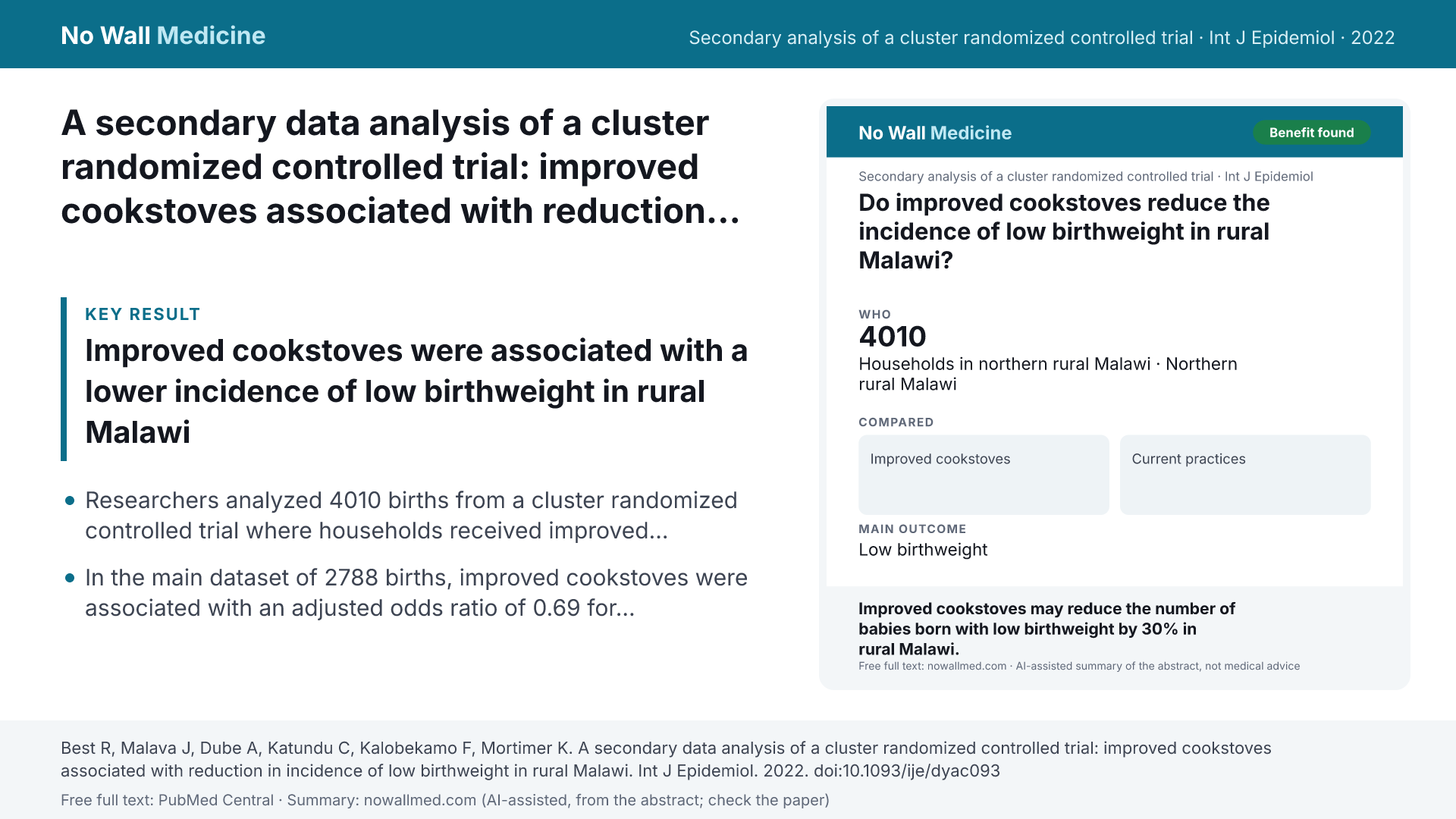
A secondary data analysis of a cluster randomized controlled trial: improved cookstoves associated with reduction in incidence of low birthweight in rural Malawi
Key result: Improved cookstoves were associated with a lower incidence of low birthweight in rural Malawi
Key points
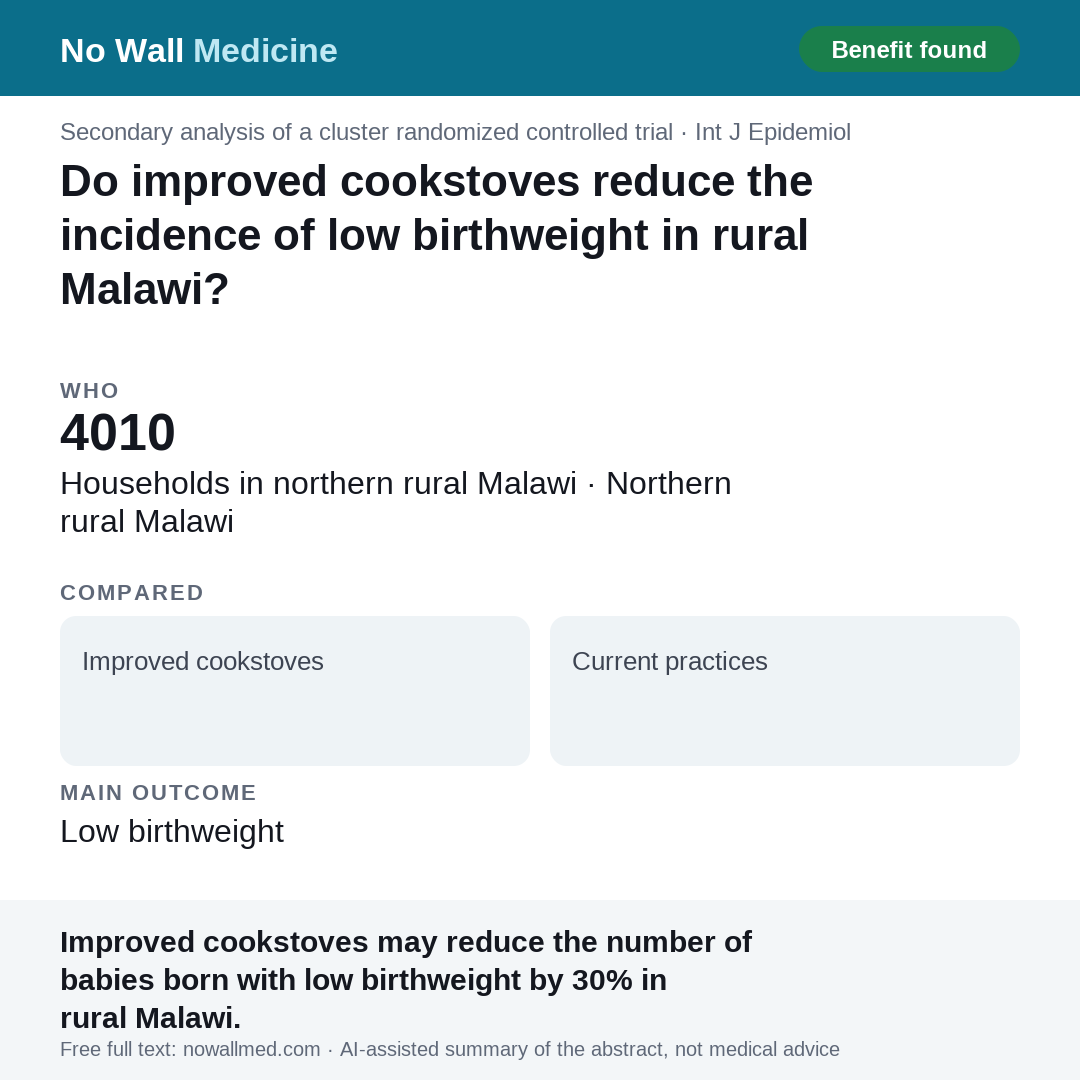
- Researchers analyzed 4010 births from a cluster randomized controlled trial where households received improved cookstoves or continued current cooking practices.
- In the main dataset of 2788 births, improved cookstoves were associated with an adjusted odds ratio of 0.69 for low birthweight.
- A subset analysis of 932 births with stricter exposure definitions showed an adjusted odds ratio of 0.62, but lacked the statistical power to show a clear association.
Why it matters: Evidence is mixed regarding whether implementing cleaner burning cookstoves reduces the number of babies born with low birthweight.
Discussion prompts
- Would these patients look like yours? Who was left out?
- Is the main outcome one that matters to patients?
- Is the difference large enough to change what you do?
Cite: Best R, Malava J, Dube A, Katundu C, Kalobekamo F, Mortimer K. A secondary data analysis of a cluster randomized controlled trial: improved cookstoves associated with reduction in incidence of low birthweight in rural Malawi. Int J Epidemiol. 2022. doi:10.1093/ije/dyac093
Free full text: PubMed Central · Summary and visual abstract: nowallmed.com/a/a-secondary-data-analysis-of-a-cluster-randomized-controlled-trial-1n04y0k/ (AI-assisted from the abstract; check the paper before relying on it).