A Selective Androgen Receptor Modulator (OPK-88004) in Prostate Cancer Survivors: A Randomized Trial
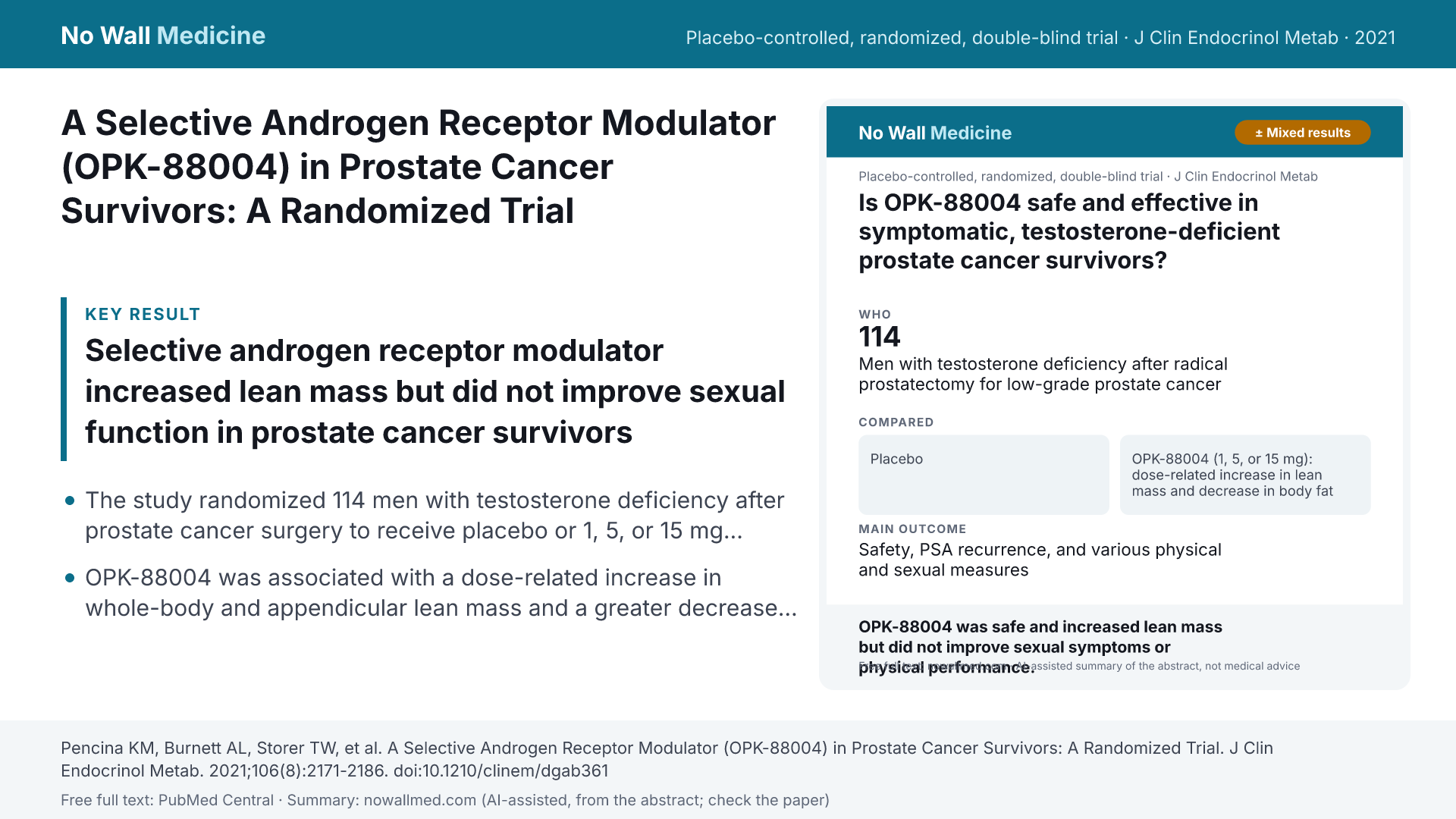
Key result: Selective androgen receptor modulator increased lean mass but did not improve sexual function in prostate cancer survivors
Placebo-controlled, randomized, double-blind trialMixed results
Is OPK-88004 safe and effective in symptomatic, testosterone-deficient prostate cancer survivors?
Who
114
Men with testosterone deficiency after radical prostatectomy for low-grade prostate cancer
Compared
Placebo
OPK-88004 (1, 5, or 15 mg): dose-related increase in lean mass and decrease in body fat
Main outcome
Safety, PSA recurrence, and various physical and sexual measures
Bottom line: OPK-88004 was safe and increased lean mass but did not improve sexual symptoms or physical performance.
J Clin Endocrinol Metab · 2021-05-22
Key points
- The study randomized 114 men with testosterone deficiency after prostate cancer surgery to receive placebo or 1, 5, or 15 mg of OPK-88004 daily for 12 weeks.
- OPK-88004 was associated with a dose-related increase in whole-body and appendicular lean mass and a greater decrease in percent body fat compared to placebo.
- No participant experienced prostate-specific antigen recurrence or erythrocytosis, and changes in sexual desire, erectile function, or physical performance did not differ among groups.
Why it matters: Guidelines often consider a history of prostate cancer a reason to avoid testosterone replacement therapy for androgen deficiency.
Discussion prompts
- Would these patients look like yours? Who was left out?
- Is the main outcome one that matters to patients?
- Is the difference large enough to change what you do?
Cite: Pencina KM, Burnett AL, Storer TW, et al. A Selective Androgen Receptor Modulator (OPK-88004) in Prostate Cancer Survivors: A Randomized Trial. J Clin Endocrinol Metab. 2021;106(8):2171-2186. doi:10.1210/clinem/dgab361
Free full text: PubMed Central · Summary and visual abstract: nowallmed.com/a/a-selective-androgen-receptor-modulator-opk-88004-in-prostate-cancer-9ia1q2/ (AI-assisted from the abstract; check the paper before relying on it).