Planned environmental changes for entire communities will be tested in a randomized stepped-wedge trial
A systematic environmental intervention, nidotherapy, given to whole communities: protocol for a randomised stepped-wedge trial
Cluster-randomised stepped-wedge trial protocolUnclear result
Does systematic environmental intervention, nidotherapy, benefit whole communities?
Who
400
Adult population in six village communities · Six villages in Nottinghamshire, England
Compared
Nidotherapy
Control
Main outcome
Change in social function
Bottom line: This protocol describes a planned trial to evaluate nidotherapy's impact on community social function.
BJPsych Open · 2025-04-11Download image
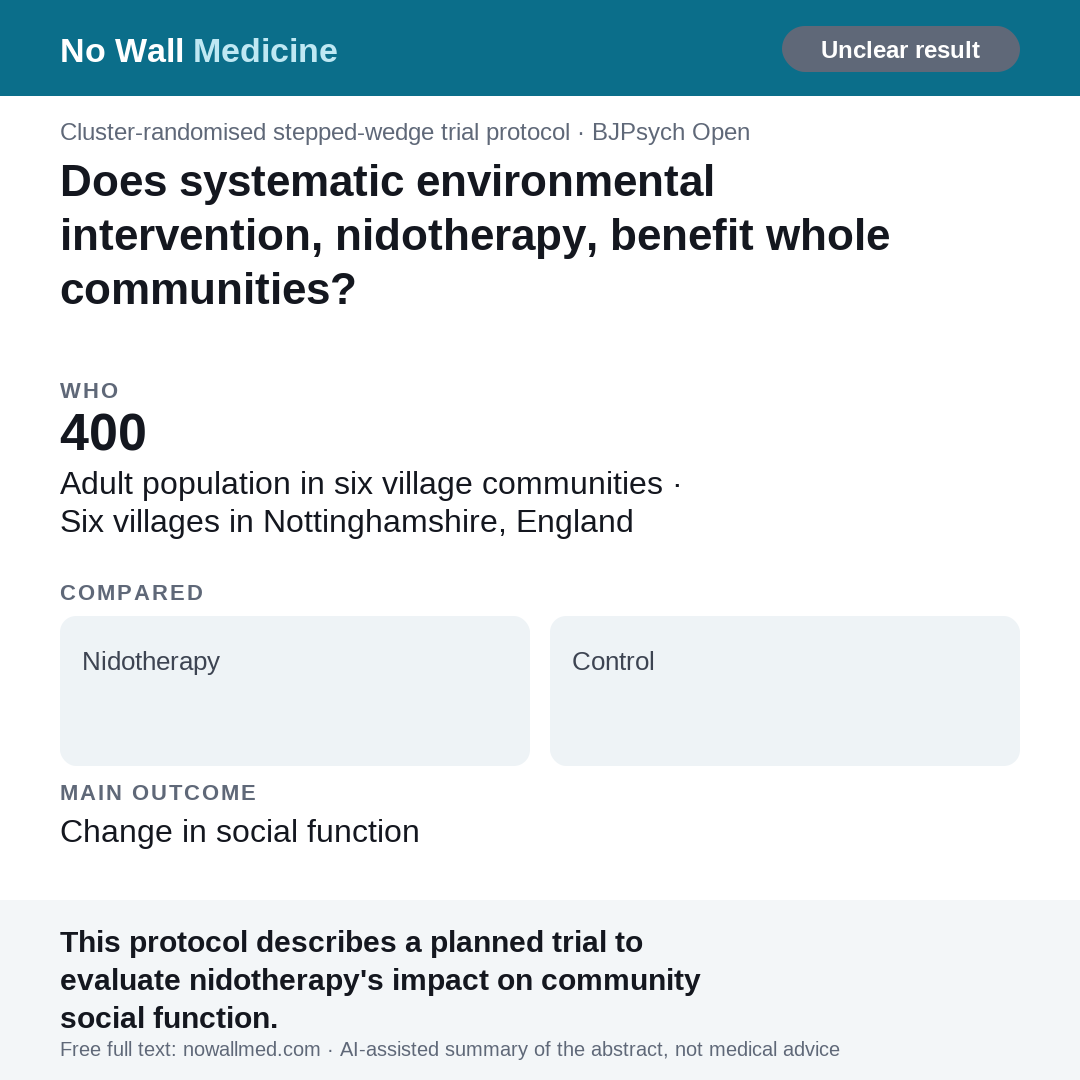
Clinical question: Does systematic environmental intervention, nidotherapy, benefit whole communities?
Why it matters: It is unknown if systematic, planned environmental changes applied to entire communities can assist in the early detection and treatment of mental illness.
Key points
- Researchers plan to study 400 adults across six villages in Nottinghamshire, England, using a systematic environmental intervention called nidotherapy.
- The trial will measure changes in social function, quality of life, anxiety, depressive symptoms, and personality status over one year.
- Six villages with populations between 51 and 100 residents will receive the intervention at different three-month intervals.
Headline and key points written with AI from the paper’s abstract, with every number checked against it. Read the paper before relying on them.
Was this summary helpful?
Cite this article
Tyrer P, Crawford M, Ahmad A, Barrett B, Caan W, Duggan C. A systematic environmental intervention, nidotherapy, given to whole communities: protocol for a randomised stepped-wedge trial. BJPsych Open. 2025. doi:10.1192/bjo.2024.861
Spotted a mistake? Suggest a correction
Top studies every Monday
The week’s key trials and guidelines in your specialties, plus any topics you follow. By email, free.
Get the weekly digest