Dexmedetomidine may reduce delirium occurrence and length of stay in intensive care units
A systematic meta-review of interventions to prevent and manage delirium in the Intensive Care Unit: Part 1 - Pharmacological interventions
Systematic meta-review of randomized controlled trialsBenefit found
What are the effects of pharmacological interventions to prevent or manage intensive care unit delirium?
Who
Critically ill adults with or at risk of intensive care unit delirium · Intensive Care Unit
Compared
alpha 2-adrenoceptor agonist drug class: probably favourable over placebo for preventing or reducing delirium occurrence
placebo
Main outcome
Delirium occurrence, duration, severity, mortality, and length of stay
Bottom line: Alpha 2-adrenoceptor agonists like dexmedetomidine are most likely effective for managing intensive care unit delirium.
Limitation: Underlying conditions and the impact of loss to follow-up remain unclear.
Crit Care · 2025-12-30Download image
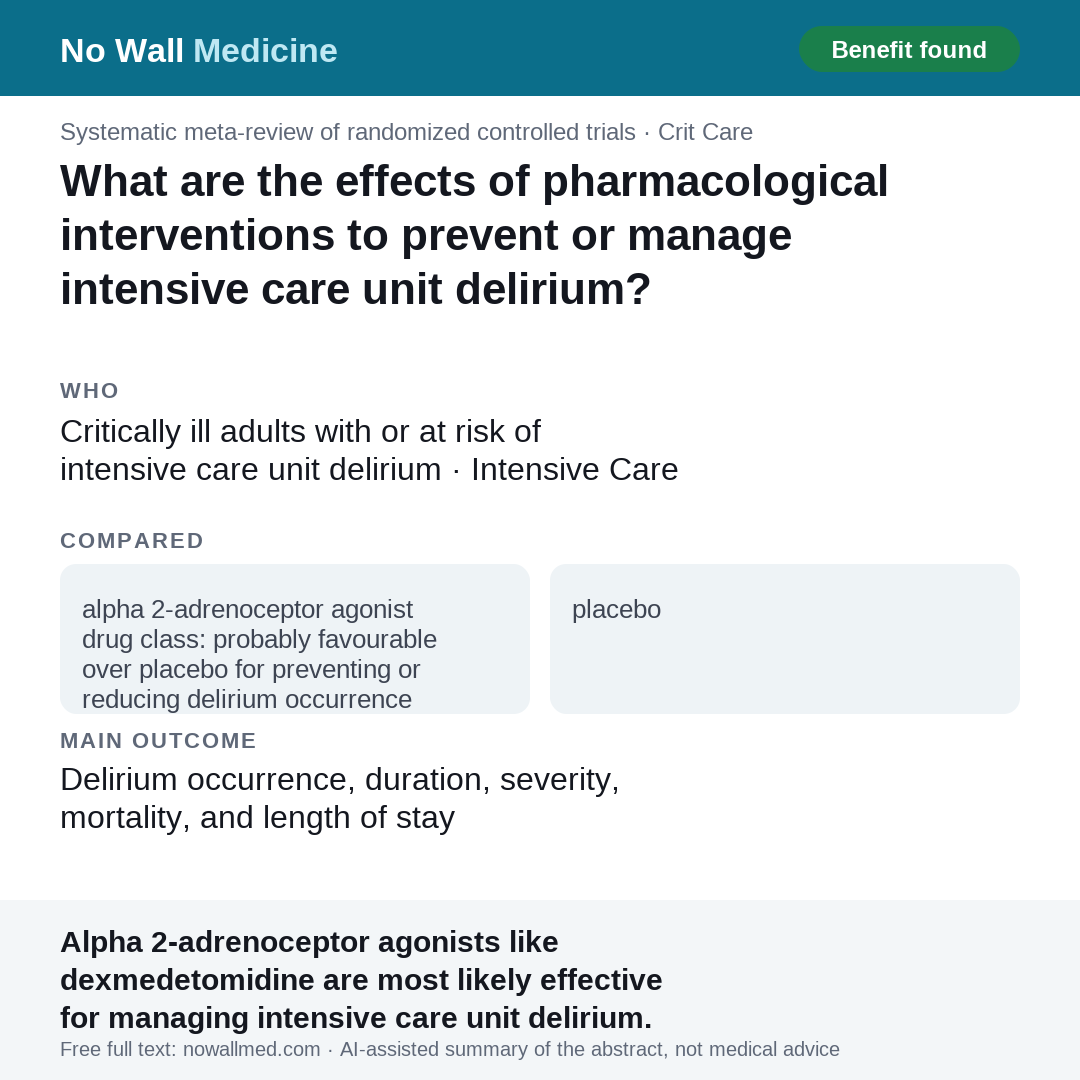
Clinical question: What are the effects of pharmacological interventions to prevent or manage intensive care unit delirium?
Why it matters: Doctors need to know which drugs are effective for preventing or managing delirium in the intensive care unit.
Key points
- Researchers reviewed 56 systematic reviews of randomized controlled trials involving pharmacological interventions for delirium in critically ill adults.
- The α2-adrenoceptor agonist drug class, primarily dexmedetomidine, was probably favorable over placebo for reducing delirium occurrence and length of stay.
- There may have been little or no difference in intensive care unit mortality between dexmedetomidine and other comparators.
Headline and key points written with AI from the paper’s abstract, with every number checked against it. Read the paper before relying on them.
Topics
Cite this article
L Jones K, Kundakci B, Booth A, Falzon L, Gibbison B, Pufulete M. A systematic meta-review of interventions to prevent and manage delirium in the Intensive Care Unit: Part 1 - Pharmacological interventions. Crit Care. 2025. doi:10.1186/s13054-025-05615-0
Spotted a mistake? Suggest a correction