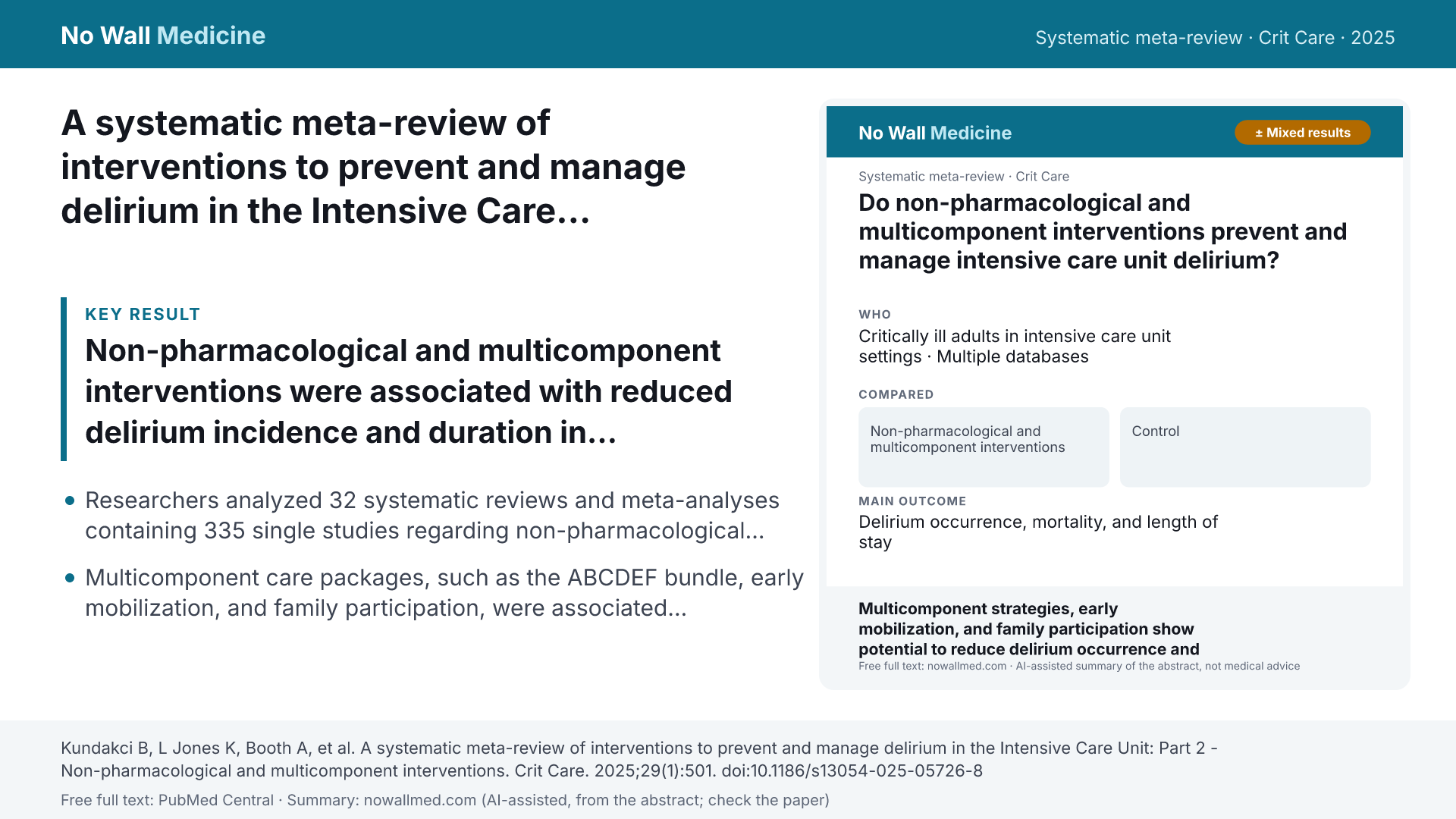
A systematic meta-review of interventions to prevent and manage delirium in the Intensive Care Unit: Part 2 - Non-pharmacological and multicomponent interventions
Key result: Non-pharmacological and multicomponent interventions were associated with reduced delirium incidence and duration in intensive care
Systematic meta-reviewMixed results
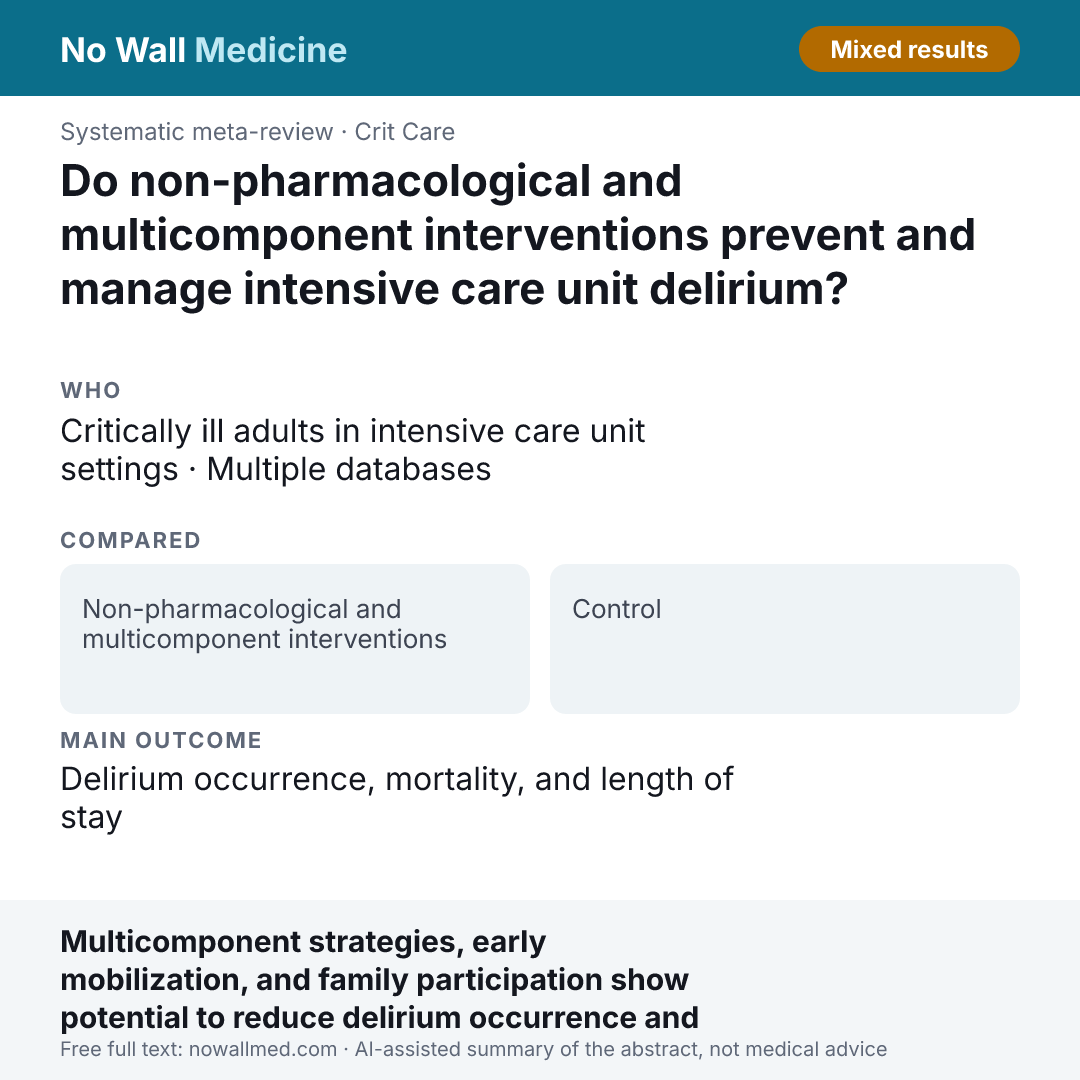
Do non-pharmacological and multicomponent interventions prevent and manage intensive care unit delirium?
Who
Critically ill adults in intensive care unit settings · Multiple databases
Compared
Non-pharmacological and multicomponent interventions
Control
Main outcome
Delirium occurrence, mortality, and length of stay
Bottom line: Multicomponent strategies, early mobilization, and family participation show potential to reduce delirium occurrence and duration.
Crit Care · 2025-11-21 · Save PNG
Key points
- Researchers analyzed 32 systematic reviews and meta-analyses containing 335 single studies regarding non-pharmacological and multicomponent interventions for critically ill adults in intensive care units.
- Multicomponent care packages, such as the ABCDEF bundle, early mobilization, and family participation, were associated with reduced delirium incidence and duration.
- Multicomponent non-pharmacological interventions were also associated with reported mortality benefits.
Discussion prompts
- Would these patients look like yours? Who was left out?
- Is the main outcome one that matters to patients?
- Is the difference large enough to change what you do?
Cite: Kundakci B, L Jones K, Booth A, et al. A systematic meta-review of interventions to prevent and manage delirium in the Intensive Care Unit: Part 2 - Non-pharmacological and multicomponent interventions. Crit Care. 2025;29(1):501. doi:10.1186/s13054-025-05726-8
Free full text: PubMed Central · Summary and visual abstract: nowallmed.com/a/a-systematic-meta-review-of-interventions-to-prevent-and-manage-tsutv1/ (AI-assisted from the abstract; check the paper before relying on it).