Thermal and non-thermal vein ablation methods showed similar success rates for treating superficial venous incompetence
A Systematic Review and Meta-Analysis of Randomised Controlled Trials Comparing Thermal Versus Non-Thermal Endovenous Ablation in Superficial Venous Incompetence
Systematic review and meta-analysis of randomized controlled trialsNo clear difference
Are thermal or non-thermal endovenous ablation methods better for superficial venous incompetence?
Who
1956
Patients with superficial venous incompetence
Compared
Endovenous thermal ablation
Endovenous non-thermal ablation
Main outcome
Vein occlusion rate
Result: relative risk 0.99 (95% CI 0.96 - 1.02) at four weeks
Bottom line: Vein occlusion rates are similar, but non-thermal ablation has less pain and nerve injury risk.
Eur J Vasc Endovasc Surg · 2023-06-07Download image
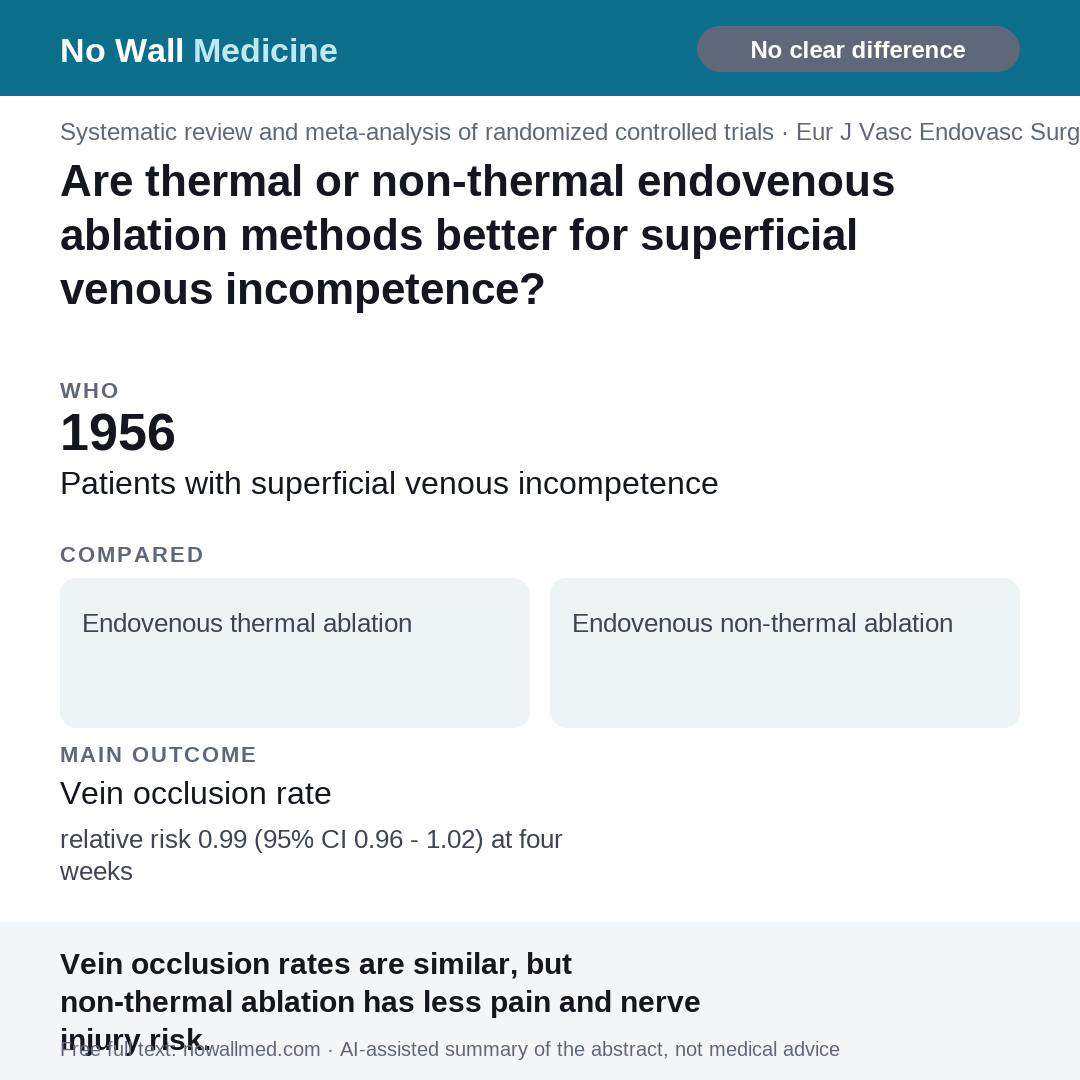
Clinical question: Are thermal or non-thermal endovenous ablation methods better for superficial venous incompetence?
Why it matters: It was unclear whether thermal or non-thermal ablation methods were more effective or safer for treating superficial venous incompetence.
Key points
- Researchers analyzed eight randomized controlled trials involving 1,956 patients, comparing thermal ablation to non-thermal ablation for treating vein issues.
- There was no statistically significant difference in vein occlusion rates at four weeks (relative risk 0.99) or one to two years (relative risk 0.95).
- Non-thermal ablation was associated with better tolerance, less peri-procedural pain, and a lower risk of nerve injury.
Headline and key points written with AI from the paper’s abstract, with every number checked against it. Read the paper before relying on them.
Was this summary helpful?
Subject terms
Cite this article
Shahzad N, Elsherif M, Obaidat I, Brar R. A Systematic Review and Meta-Analysis of Randomised Controlled Trials Comparing Thermal Versus Non-Thermal Endovenous Ablation in Superficial Venous Incompetence. Eur J Vasc Endovasc Surg. 2023. doi:10.1016/j.ejvs.2023.06.002
Spotted a mistake? Suggest a correction
Top studies every Monday
The week’s key trials and guidelines in your specialties, plus any topics you follow. By email, free.
Get the weekly digest