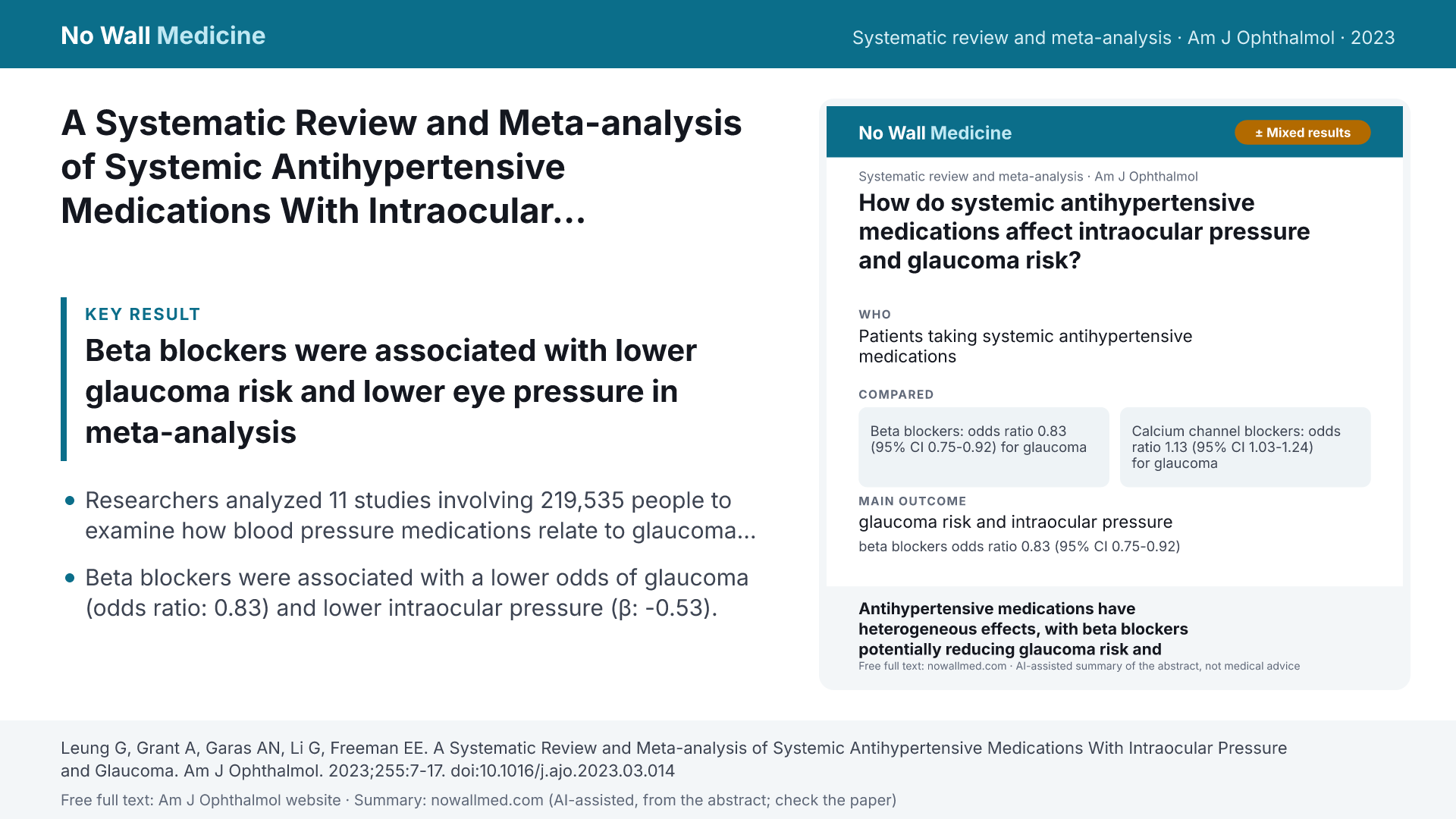
Beta blockers were associated with lower glaucoma risk and lower eye pressure in meta-analysis
A Systematic Review and Meta-analysis of Systemic Antihypertensive Medications With Intraocular Pressure and Glaucoma
Systematic review and meta-analysisMixed results
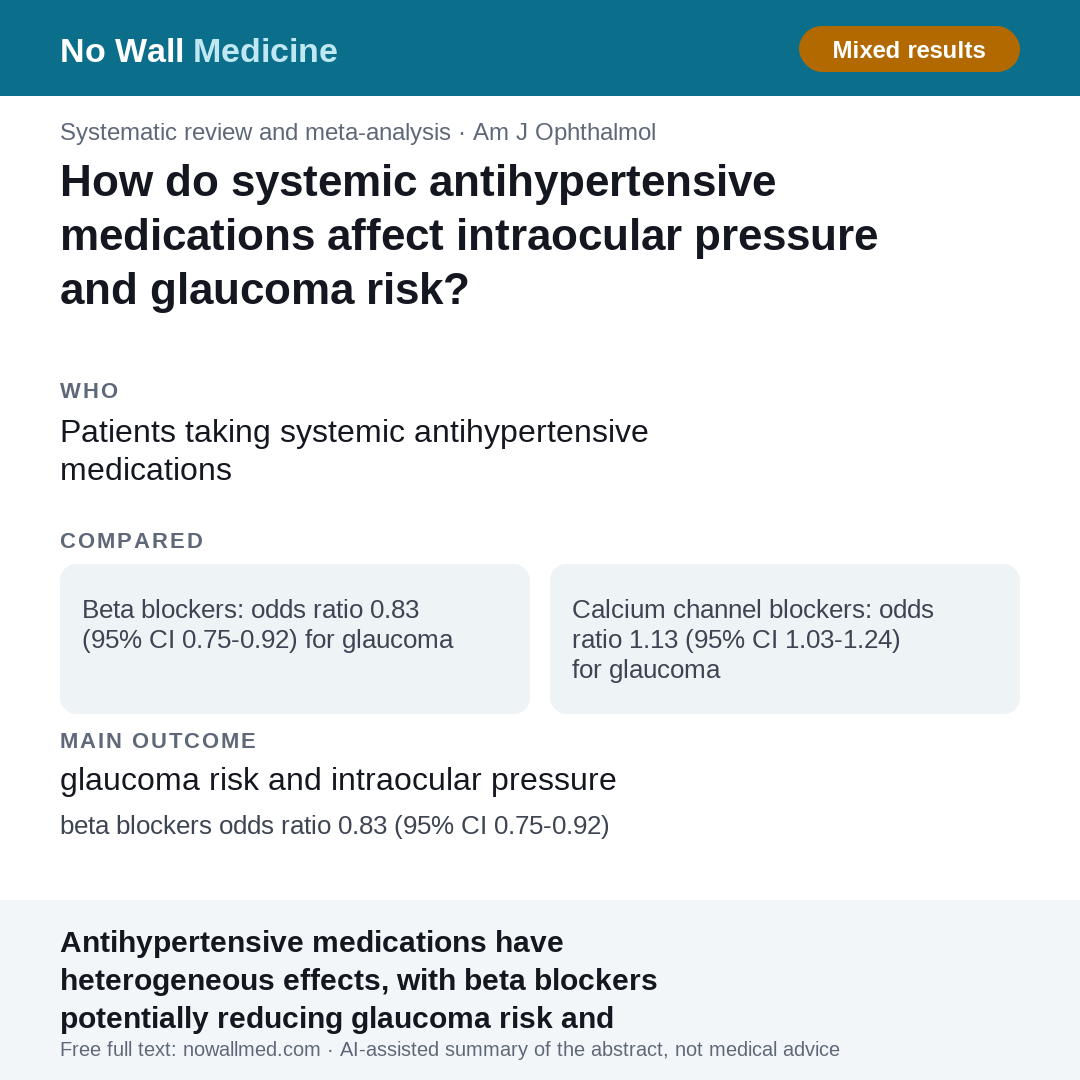
How do systemic antihypertensive medications affect intraocular pressure and glaucoma risk?
Who
Patients taking systemic antihypertensive medications
Compared
Beta blockers: odds ratio 0.83 (95% CI 0.75-0.92) for glaucoma
Calcium channel blockers: odds ratio 1.13 (95% CI 1.03-1.24) for glaucoma
Main outcome
glaucoma risk and intraocular pressure
Result: beta blockers odds ratio 0.83 (95% CI 0.75-0.92)
Bottom line: Antihypertensive medications have heterogeneous effects, with beta blockers potentially reducing glaucoma risk and calcium channel blockers increasing it.
Am J Ophthalmol · 2023-03-24Download image
Clinical question: How do systemic antihypertensive medications affect intraocular pressure and glaucoma risk?
Key points
- Researchers analyzed 11 studies involving 219,535 people to examine how blood pressure medications relate to glaucoma and intraocular pressure, which is the fluid pressure inside the eye.
- Beta blockers were associated with a lower odds of glaucoma (odds ratio: 0.83) and lower intraocular pressure (β: -0.53).
- Calcium channel blockers were associated with a higher odds of glaucoma (odds ratio: 1.13) but were not associated with intraocular pressure.
Headline and key points written with AI from the paper’s abstract, with every number checked against it. Read the paper before relying on them.
Was this summary helpful?
Subject terms
Headline, design, result, key points, caveat and citation as plain text.
Cite this article
Leung G, Grant A, Garas AN, Li G, Freeman EE. A Systematic Review and Meta-analysis of Systemic Antihypertensive Medications With Intraocular Pressure and Glaucoma. Am J Ophthalmol. 2023. doi:10.1016/j.ajo.2023.03.014
Spotted a mistake? Suggest a correction