A Systematic Review and Meta-Analysis on Effects of Bicarbonate Therapy on Kidney Outcomes
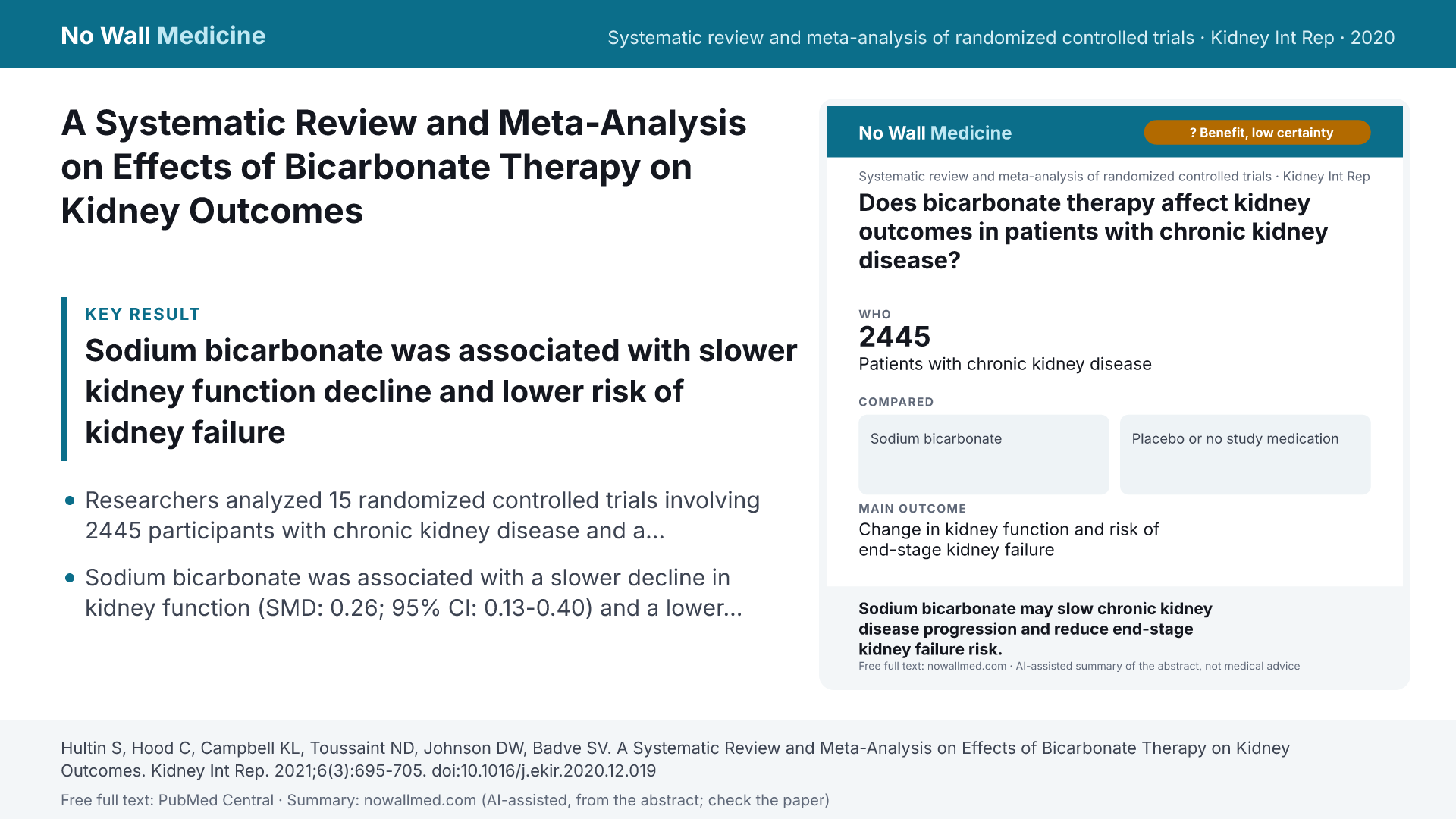
Key result: Sodium bicarbonate was associated with slower kidney function decline and lower risk of kidney failure
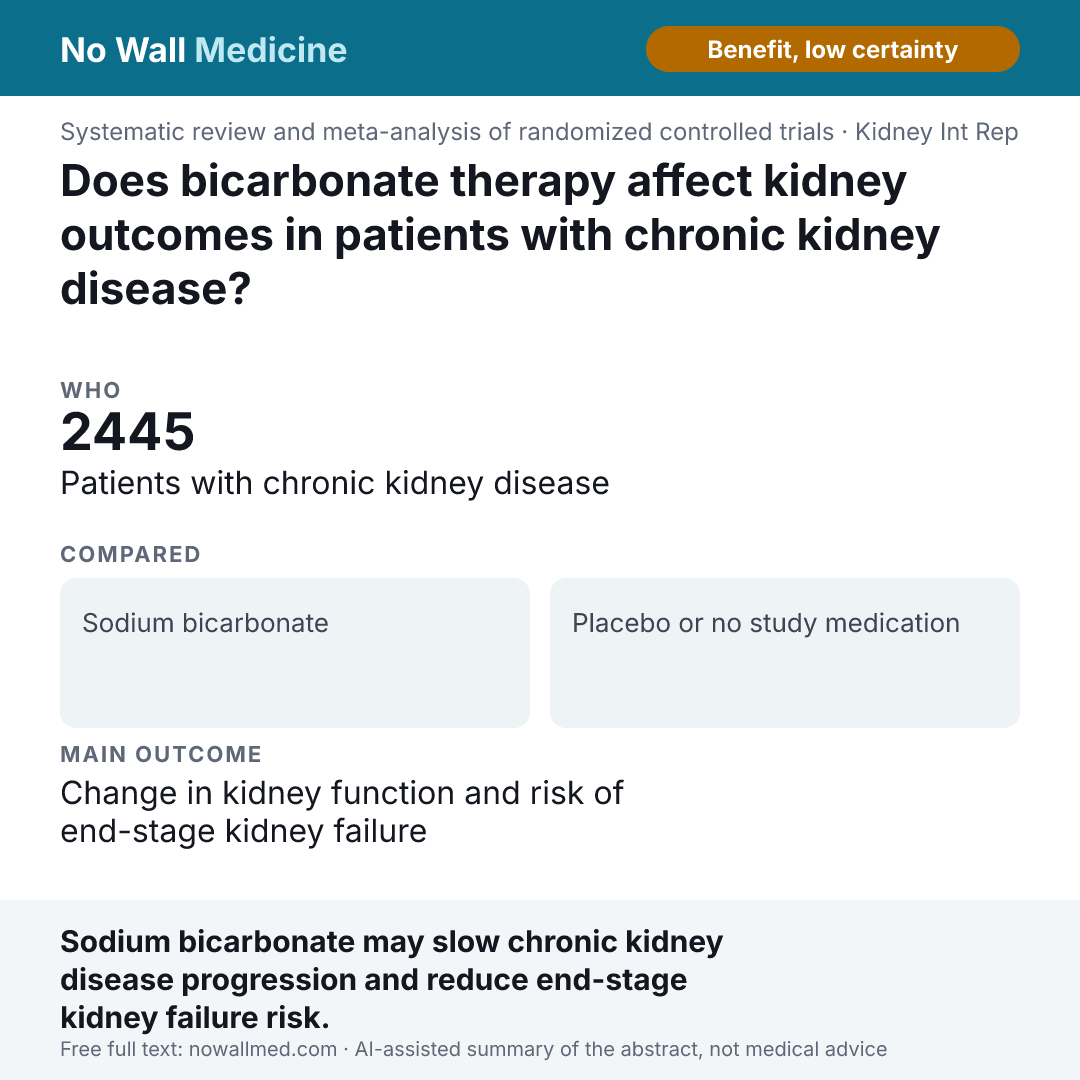
Systematic review and meta-analysis of randomized controlled trialsBenefit, low certainty
Does bicarbonate therapy affect kidney outcomes in patients with chronic kidney disease?
Who
2445
Patients with chronic kidney disease
Compared
Sodium bicarbonate
Placebo or no study medication
Main outcome
Change in kidney function and risk of end-stage kidney failure
Result: risk ratio 0.53 (95% CI 0.32-0.89)
Bottom line: Sodium bicarbonate may slow chronic kidney disease progression and reduce end-stage kidney failure risk.
Kidney Int Rep · 2020-12-31 · Save PNG
Key points
- Researchers analyzed 15 randomized controlled trials involving 2445 participants with chronic kidney disease and a median follow-up of 12 months.
- Sodium bicarbonate was associated with a slower decline in kidney function (SMD: 0.26; 95% CI: 0.13-0.40) and a lower risk of end-stage kidney failure (RR: 0.53; 95% CI: 0.32-0.89).
- The effects of the treatment on proteinuria, systolic blood pressure, all-cause death, and edema were uncertain.
Discussion prompts
- Would these patients look like yours? Who was left out?
- Is the main outcome one that matters to patients?
- Is the difference large enough to change what you do?
Cite: Hultin S, Hood C, Campbell KL, Toussaint ND, Johnson DW, Badve SV. A Systematic Review and Meta-Analysis on Effects of Bicarbonate Therapy on Kidney Outcomes. Kidney Int Rep. 2021;6(3):695-705. doi:10.1016/j.ekir.2020.12.019
Free full text: PubMed Central · Summary and visual abstract: nowallmed.com/a/a-systematic-review-and-meta-analysis-on-effects-of-bicarbonate-1gq9sll/ (AI-assisted from the abstract; check the paper before relying on it).