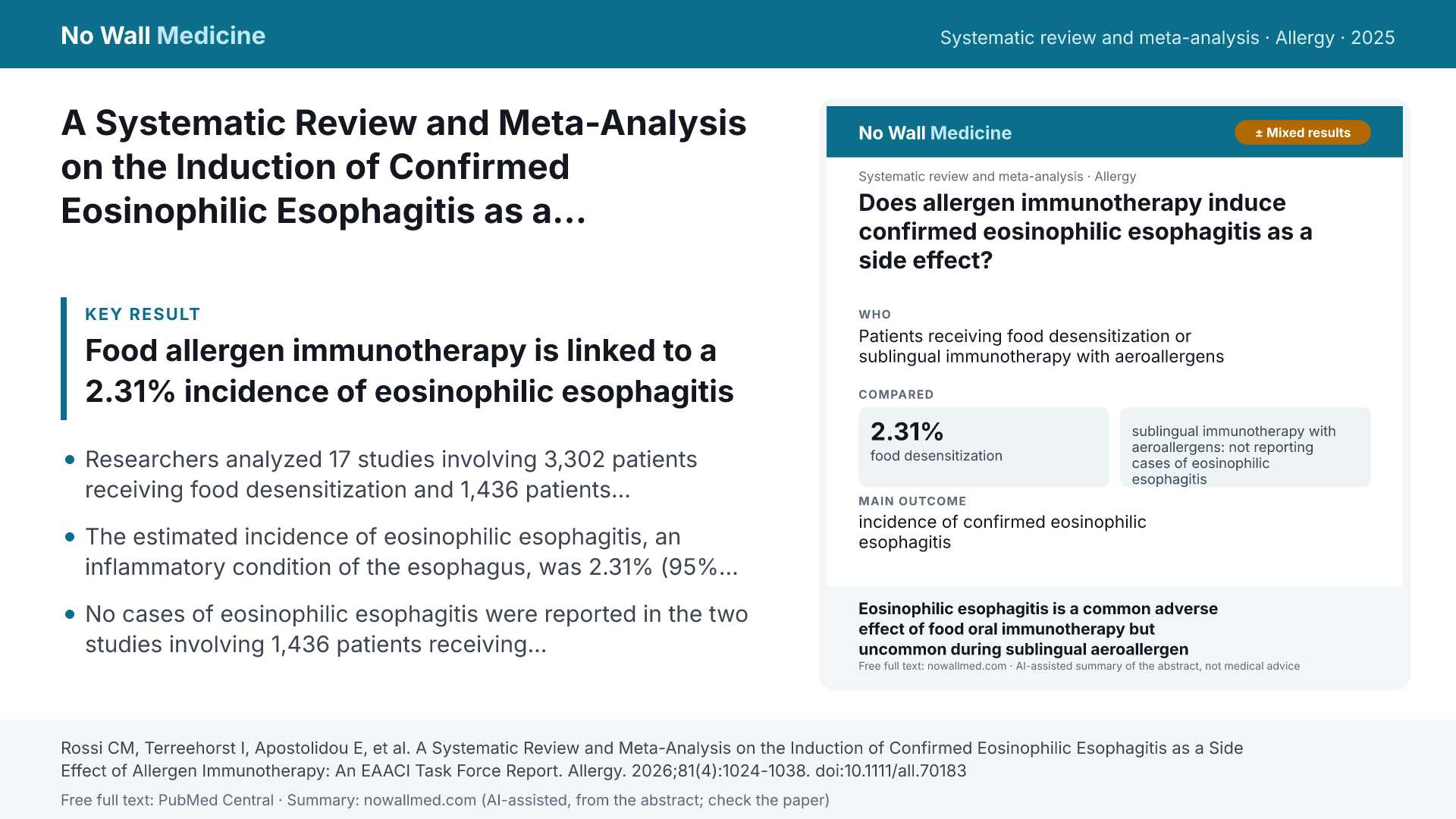
Food allergen immunotherapy is linked to a 2.31% incidence of eosinophilic esophagitis
A Systematic Review and Meta-Analysis on the Induction of Confirmed Eosinophilic Esophagitis as a Side Effect of Allergen Immunotherapy: An EAACI Task Force Report
Systematic review and meta-analysisMixed results
Does allergen immunotherapy induce confirmed eosinophilic esophagitis as a side effect?
Who
Patients receiving food desensitization or sublingual immunotherapy with aeroallergens
Compared
2.31%food desensitization (95% CI 1.45, 3.36)
sublingual immunotherapy with aeroallergens: not reporting cases of eosinophilic esophagitis
Main outcome
incidence of confirmed eosinophilic esophagitis
Result: 2.31% (95% CI 1.45, 3.36)
Bottom line: Eosinophilic esophagitis is a common adverse effect of food oral immunotherapy but uncommon during sublingual aeroallergen immunotherapy.
Allergy · 2025-12-16 · Save PNG
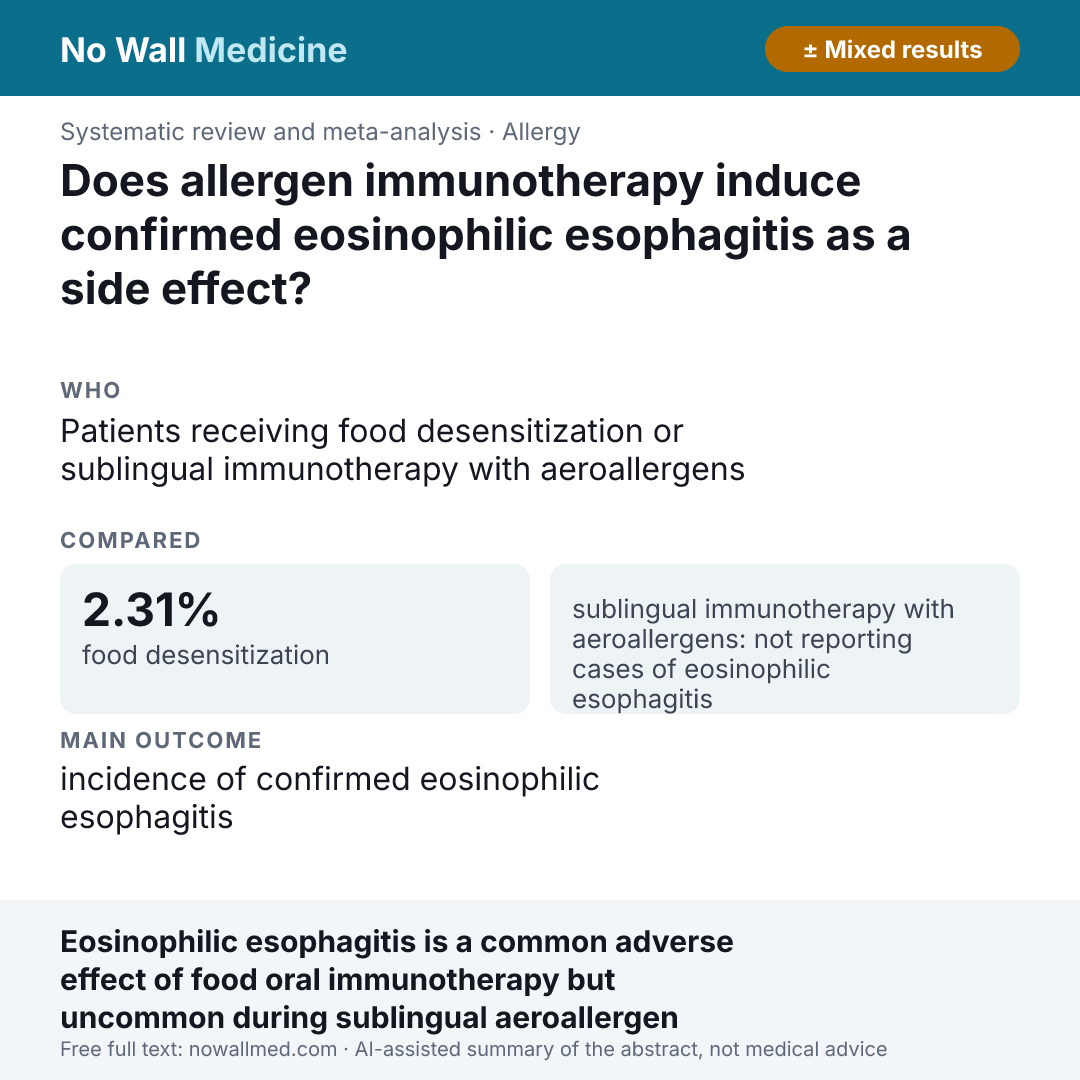
Clinical question: Does allergen immunotherapy induce confirmed eosinophilic esophagitis as a side effect?
Why it matters: The relationship between allergen immunotherapy and the development of eosinophilic esophagitis needed to be assessed using existing data.
Key points
- Researchers analyzed 17 studies involving 3,302 patients receiving food desensitization and 1,436 patients receiving sublingual immunotherapy for airborne allergens.
- The estimated incidence of eosinophilic esophagitis, an inflammatory condition of the esophagus, was 2.31% (95% CI 1.45, 3.36) in patients undergoing food desensitization.
- No cases of eosinophilic esophagitis were reported in the two studies involving 1,436 patients receiving sublingual immunotherapy for airborne allergens.
Headline and key points written with AI from the paper’s abstract, with every number checked against it. Read the paper before relying on them.
Was this summary helpful?
Subject terms
Headline, design, result, key points, caveat and citation as plain text.
Cite this article
Rossi CM, Terreehorst I, Apostolidou E, et al. A Systematic Review and Meta-Analysis on the Induction of Confirmed Eosinophilic Esophagitis as a Side Effect of Allergen Immunotherapy: An EAACI Task Force Report. Allergy. 2026;81(4):1024-1038. doi:10.1111/all.70183
Spotted a mistake? Suggest a correction