A systematic review of deep brain stimulation for substance use disorders
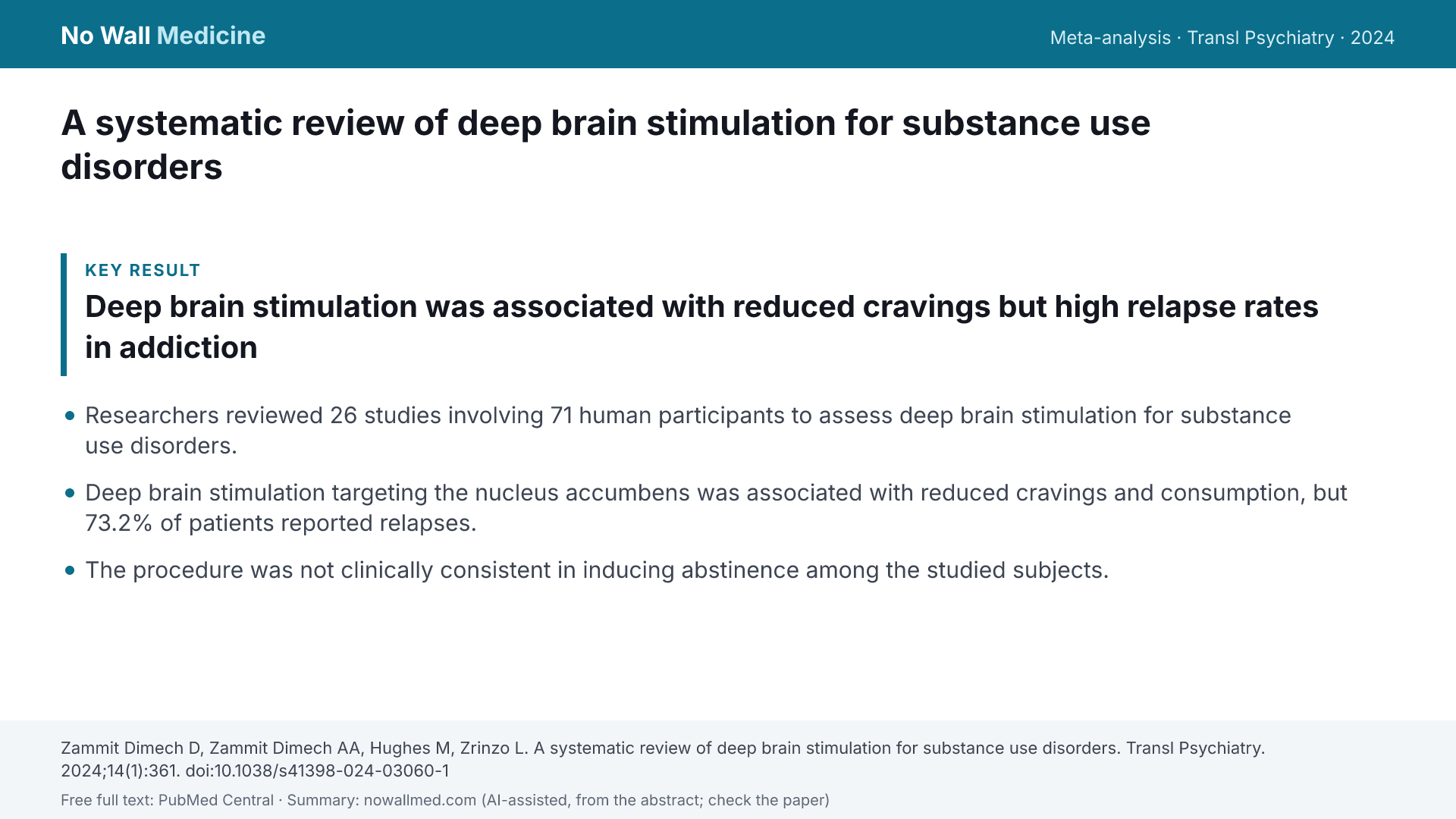
Key result: Deep brain stimulation was associated with reduced cravings but high relapse rates in addiction
Key points
- Researchers reviewed 26 studies involving 71 human participants to assess deep brain stimulation for substance use disorders.
- Deep brain stimulation targeting the nucleus accumbens was associated with reduced cravings and consumption, but 73.2% of patients reported relapses.
- The procedure was not clinically consistent in inducing abstinence among the studied subjects.
Limitation the authors note: The authors suggest a need for increased methodological rigor, standardized outcome measures, and pre-established surgical protocols.
Discussion prompts
- Would these patients look like yours? Who was left out?
- Is the main outcome one that matters to patients?
- Is the difference large enough to change what you do?
Cite: Zammit Dimech D, Zammit Dimech AA, Hughes M, Zrinzo L. A systematic review of deep brain stimulation for substance use disorders. Transl Psychiatry. 2024;14(1):361. doi:10.1038/s41398-024-03060-1
Free full text: PubMed Central · Summary and visual abstract: nowallmed.com/a/a-systematic-review-of-deep-brain-stimulation-for-substance-use-1tqqzle/ (AI-assisted from the abstract; check the paper before relying on it).