A systematic review of gut microbiota composition in observational studies of major depressive disorder, bipolar disorder and schizophrenia
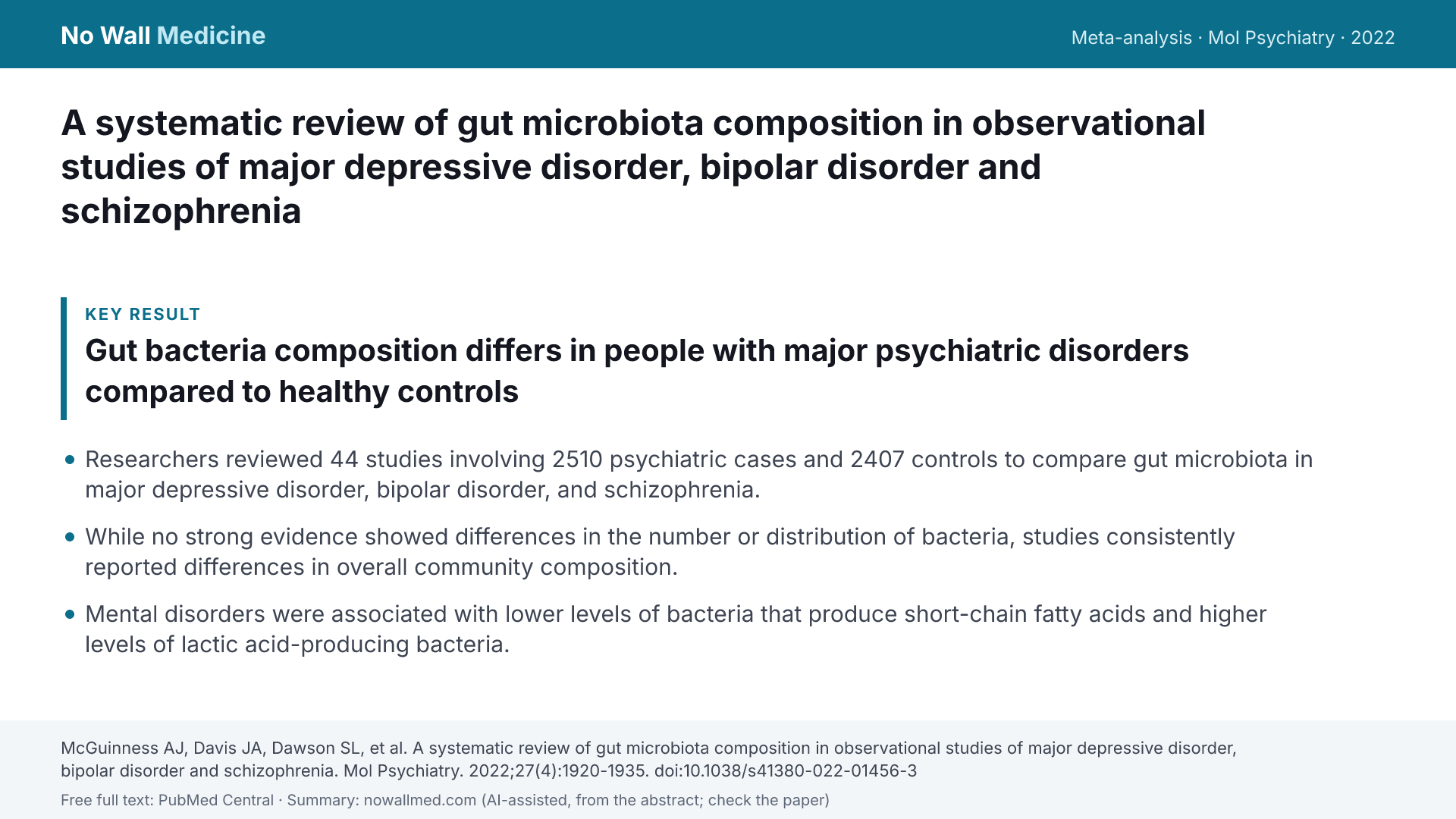
Key result: Gut bacteria composition differs in people with major psychiatric disorders compared to healthy controls
Key points
- Researchers reviewed 44 studies involving 2510 psychiatric cases and 2407 controls to compare gut microbiota in major depressive disorder, bipolar disorder, and schizophrenia.
- While no strong evidence showed differences in the number or distribution of bacteria, studies consistently reported differences in overall community composition.
- Mental disorders were associated with lower levels of bacteria that produce short-chain fatty acids and higher levels of lactic acid-producing bacteria.
Limitation the authors note: The authors observed substantial heterogeneity across studies regarding methodologies and reporting.
Discussion prompts
- Would these patients look like yours? Who was left out?
- Is the main outcome one that matters to patients?
- Is the difference large enough to change what you do?
Cite: McGuinness AJ, Davis JA, Dawson SL, et al. A systematic review of gut microbiota composition in observational studies of major depressive disorder, bipolar disorder and schizophrenia. Mol Psychiatry. 2022;27(4):1920-1935. doi:10.1038/s41380-022-01456-3
Free full text: PubMed Central · Summary and visual abstract: nowallmed.com/a/a-systematic-review-of-gut-microbiota-composition-in-observational-x6hml0/ (AI-assisted from the abstract; check the paper before relying on it).