Machine learning techniques show promise for predicting outcomes and enhancing speech for cochlear implant users
A systematic review of machine learning approaches in cochlear implant outcomes
Systematic reviewBenefit found
How can machine learning techniques predict cochlear implant outcomes?
Who
20
Individuals with cochlear implants
Compared
Imaging-based studies: high predictive accuracy
Neural function measures: feasible way to assess functional status
Speech enhancement algorithms: showed promise
Main outcome
prediction of cochlear implant outcomes
Bottom line: Machine learning shows promise in predicting outcomes and enhancing speech recognition for cochlear implant users.
NPJ Digit Med · 2025-07-05Download image
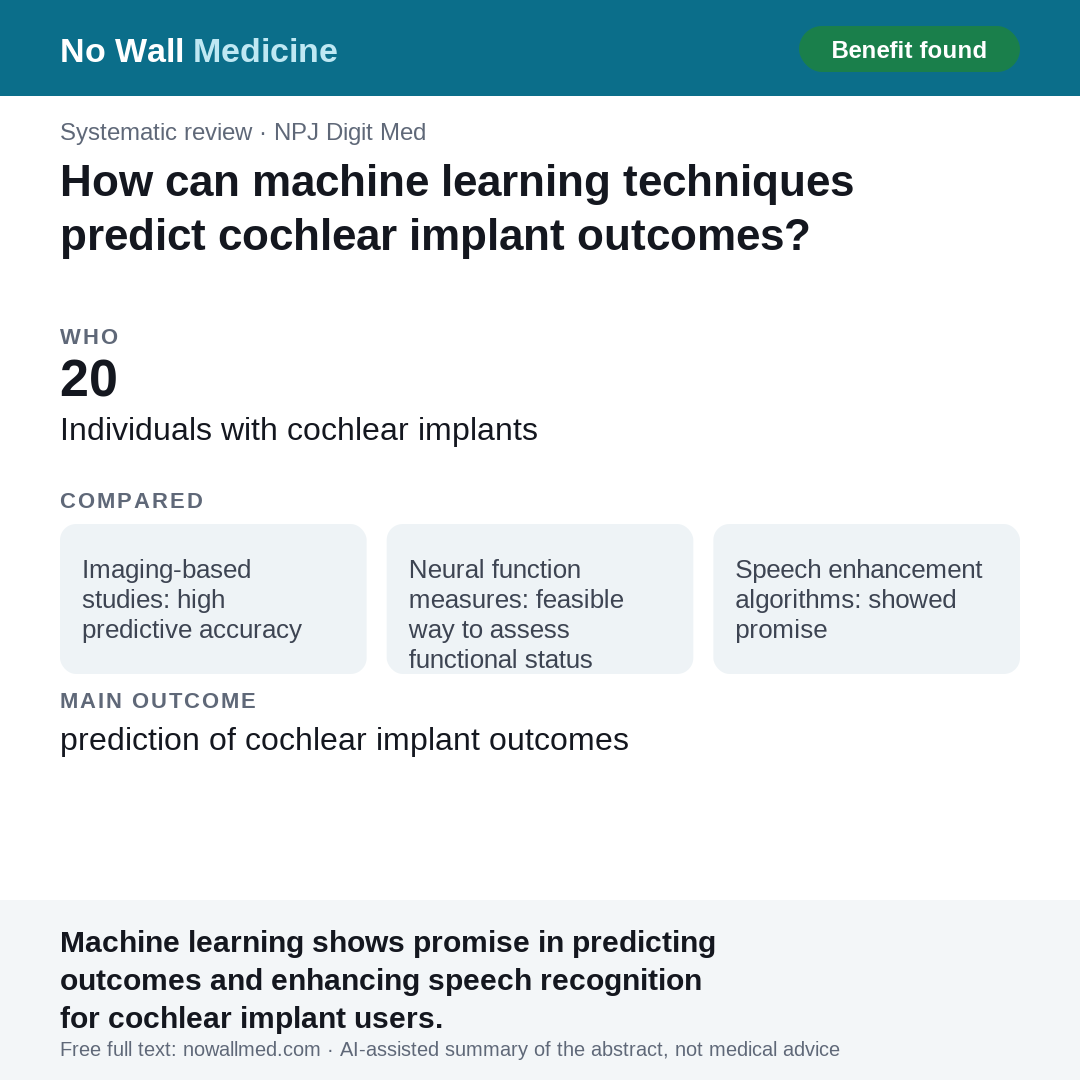
Clinical question: How can machine learning techniques predict cochlear implant outcomes?
Why it matters: A gap exists in developing machine learning models that can be directly integrated into cochlear implant programming and signal processing for personalized care.
Key points
- Researchers conducted a systematic review of 20 studies examining how machine learning can predict outcomes for people using cochlear implants.
- Imaging-based studies showed high predictive accuracy for speech perception and language outcomes, while machine learning algorithms showed promise for improving speech recognition in noisy environments.
- Neural function measures were found to be a feasible way to assess the functional status of the auditory nerve.
Headline and key points written with AI from the paper’s abstract, with every number checked against it. Read the paper before relying on them.
Cite this article
Nair APS, Mishra SK, Alba Diaz PA. A systematic review of machine learning approaches in cochlear implant outcomes. NPJ Digit Med. 2025. doi:10.1038/s41746-025-01733-9
Spotted a mistake? Suggest a correction
Top studies every Monday
The week’s key trials and guidelines in your specialties, by email. Free.
Get the weekly digest