A Systematic Review of Monogenic Inflammatory Bowel Disease
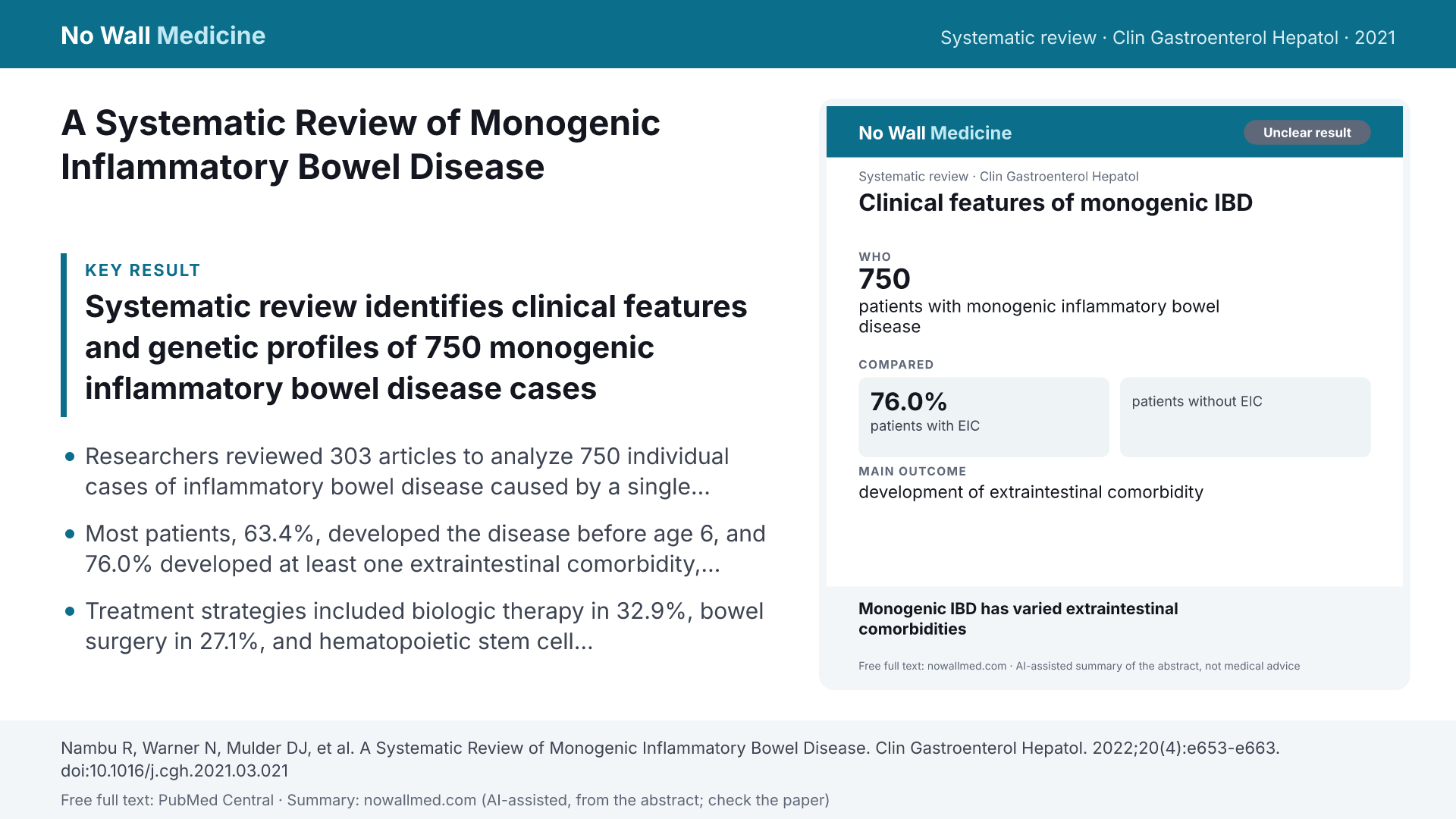
Key result: Systematic review identifies clinical features and genetic profiles of 750 monogenic inflammatory bowel disease cases
Systematic reviewUnclear result
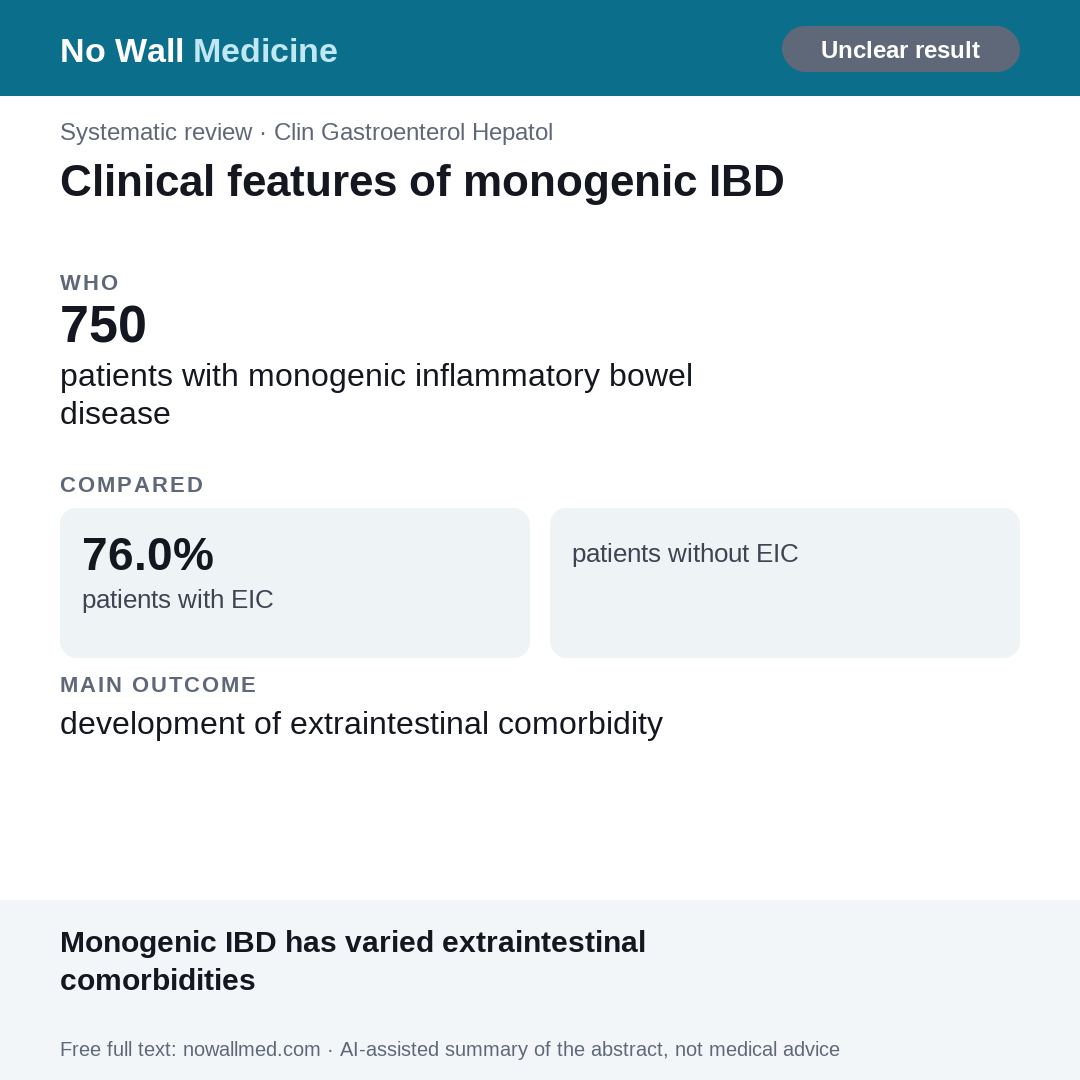
Clinical features of monogenic IBD
Who
750
patients with monogenic inflammatory bowel disease
Compared
76.0%patients with EIC
patients without EIC
Main outcome
development of extraintestinal comorbidity
Bottom line: Monogenic IBD has varied extraintestinal comorbidities
Clin Gastroenterol Hepatol · 2021-03-18Download image
Key points
- Researchers reviewed 303 articles to analyze 750 individual cases of inflammatory bowel disease caused by a single gene mutation.
- Most patients, 63.4%, developed the disease before age 6, and 76.0% developed at least one extraintestinal comorbidity, such as atypical infection or skin issues.
- Treatment strategies included biologic therapy in 32.9%, bowel surgery in 27.1%, and hematopoietic stem cell transplantation, which is a bone marrow transplant, in 23.1% of patients.
Why it matters: The clinical features, genetic profiles, and treatment strategies for patients with inflammatory bowel disease caused by single gene mutations were not fully synthesized.
Discussion prompts
- Would these patients look like yours? Who was left out?
- Is the main outcome one that matters to patients?
- Is the difference large enough to change what you do?
Cite: Nambu R, Warner N, Mulder DJ, et al. A Systematic Review of Monogenic Inflammatory Bowel Disease. Clin Gastroenterol Hepatol. 2022;20(4):e653-e663. doi:10.1016/j.cgh.2021.03.021
Free full text: PubMed Central · Summary and visual abstract: nowallmed.com/a/a-systematic-review-of-monogenic-inflammatory-bowel-1ev860y/ (AI-assisted from the abstract; check the paper before relying on it).