Peer mentoring and peer learning were associated with positive results for student anxiety and stress
A systematic review of peer support interventions for student mental health and well-being in higher education
Systematic reviewUnclear result
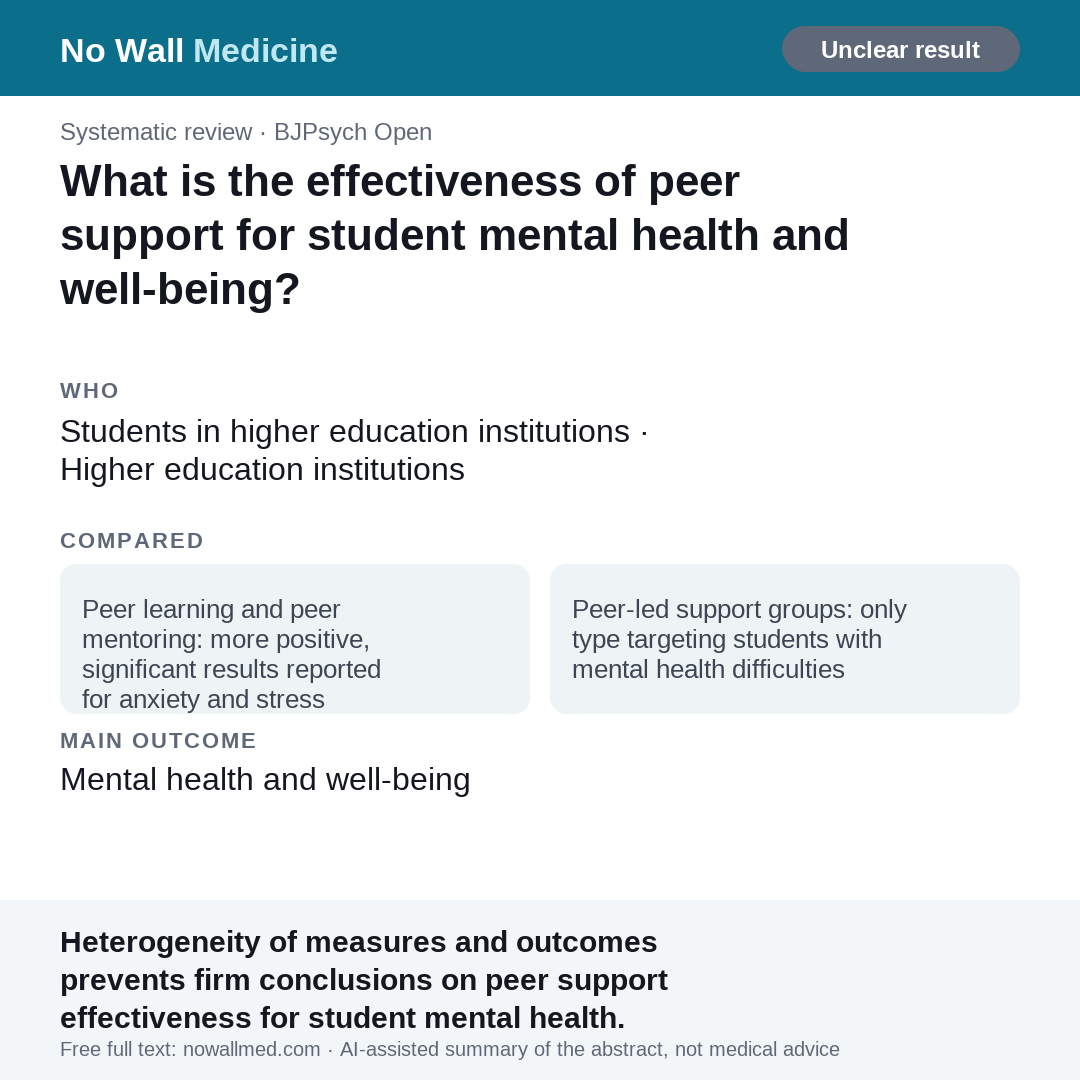
What is the effectiveness of peer support for student mental health and well-being?
Who
Students in higher education institutions · Higher education institutions
Compared
Peer learning and peer mentoring: more positive, significant results reported for anxiety and stress
Peer-led support groups: only type targeting students with mental health difficulties
Main outcome
Mental health and well-being
Bottom line: Heterogeneity of measures and outcomes prevents firm conclusions on peer support effectiveness for student mental health.
Limitation: Heterogeneity of measures and outcomes and most studies rated poor or fair risk of bias.
BJPsych Open · 2023-12-15Download image
Clinical question: What is the effectiveness of peer support for student mental health and well-being?
Why it matters: There are no agreed definitions of peer support, which makes it difficult to establish its impact on student mental health and well-being.
Key points
- Researchers reviewed 28 papers to evaluate different types of peer support in higher education settings.
- Peer learning and peer mentoring were associated with more positive, significant results for anxiety and stress outcomes.
- Peer-led support groups were the only type of intervention that targeted students with mental health difficulties.
Limitation the authors note: The heterogeneity of measures and outcomes prevents firm conclusions, and most studies were rated poor or fair in their risk of bias.
Headline and key points written with AI from the paper’s abstract, with every number checked against it. Read the paper before relying on them.
Was this summary helpful?
Cite this article
Pointon-Haas J, Waqar L, Upsher R, Foster J, Byrom N, Oates J. A systematic review of peer support interventions for student mental health and well-being in higher education. BJPsych Open. 2023. doi:10.1192/bjo.2023.603
Spotted a mistake? Suggest a correction
Top studies every Monday
The week’s key trials and guidelines in your specialties, plus any topics you follow. By email, free.
Get the weekly digest